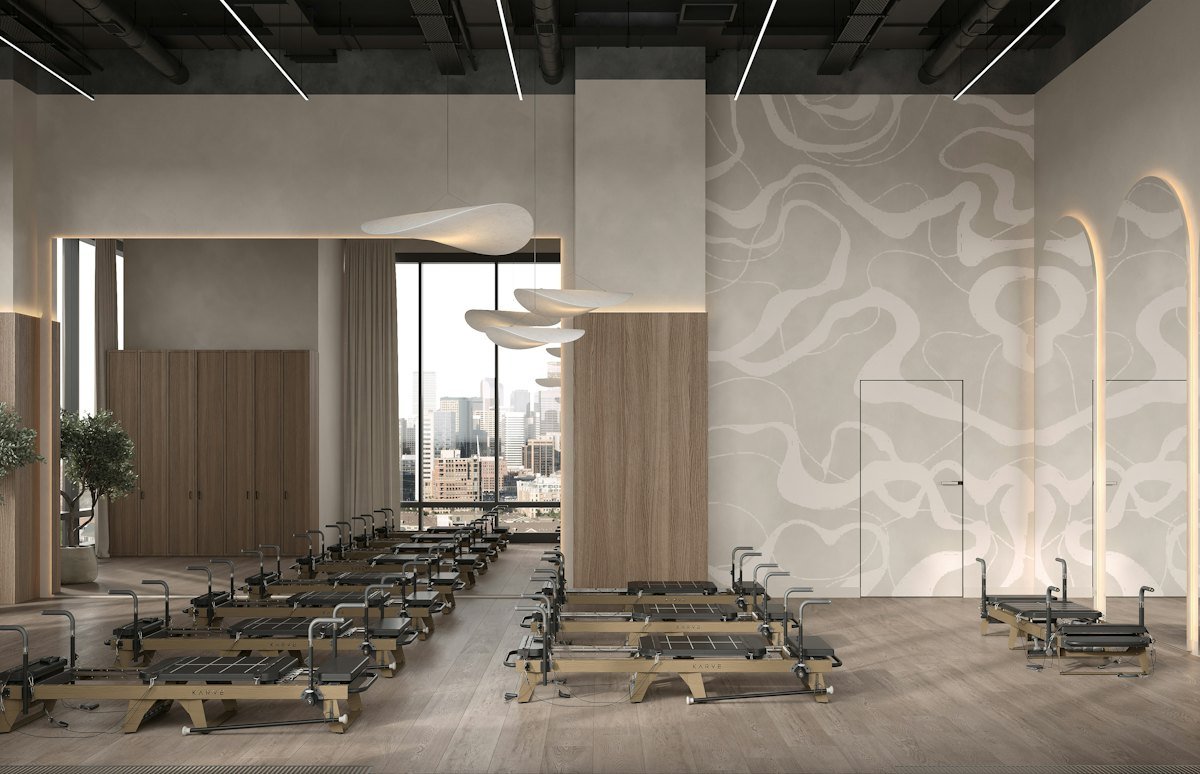
Two reformers in a spare bedroom and a twelve-machine Club Pilates franchise both count as opening a Pilates studio, yet the second can cost more than 60 times as much as the first. StudioGrowth’s model puts a two-reformer home studio at about $15,345, while Club Pilates’ 2026 disclosure document estimates $431,289 to $1,029,811 to open. Most independent reformer studios fall between those poles, at roughly $120,000 to $420,000 from lease to opening day.

Which number applies to you depends less on your taste in equipment than on the business you are actually building. So instead of one national average, this guide prices four founders, each a composite built from published 2026 figures, and shows where each budget goes.
Four founders, four opening budgets
| Founder | Space and machines | Cash to open (2026 estimates) |
|---|---|---|
| Owner-instructor, suburban storefront | About 1,000 sq ft, 8 reformers | About $123,000 in opening costs, $162,000+ with a cash cushion |
| Boutique owner, secondary city | 1,500 to 2,500 sq ft, 10 reformers | $280,000 to $420,000 |
| Franchisee | Brand-specified studio, 12 reformers typical | $431,289 to $1,029,811 (Club Pilates); $525,540 to $749,575 (JETSET) |
| Home studio teacher | 400 to 600 sq ft, 1 or 2 reformers | About $15,000 to $60,000 |
The 8-reformer storefront: $162,386 before the doors open
This is a common path for an experienced instructor who wants her own room: a second-generation retail unit, eight machines and the owner teaching most classes. Junocal’s September 2026 model of exactly this studio is one of the clearest line-item breakdowns published this year, and it makes a useful template for your own spreadsheet.
| Line item (8-reformer example) | Amount |
|---|---|
| Fit-out and build-out | $45,000 |
| Commercial equipment | $40,000 |
| Lease deposit and pre-opening rent | $15,000 |
| Permits, legal and professional fees | $4,000 |
| Launch marketing and signage | $4,000 |
| Technology, furniture and supplies | $4,000 |
| Contingency (10%) | $11,200 |
| Opening costs | $123,200 |
| Deepest early cash shortfall while classes fill | $39,186 |
| Minimum launch funding | $162,386 |
The equipment line holds up against current list prices. Eight Merrithew SPX Max reformers at $3,649 each come to $29,192; eight Balanced Body Studio Reformers at $4,600 come to $36,800. Add jumpboards, boxes and sticky pads, which Vibefam prices at $300 to $600 per machine, and $40,000 is about right for a midrange fleet. A direct-to-studio brand such as The Core Collab sells eight of its own machines for $23,992, which shows how much of a reformer’s price is the name on the frame.
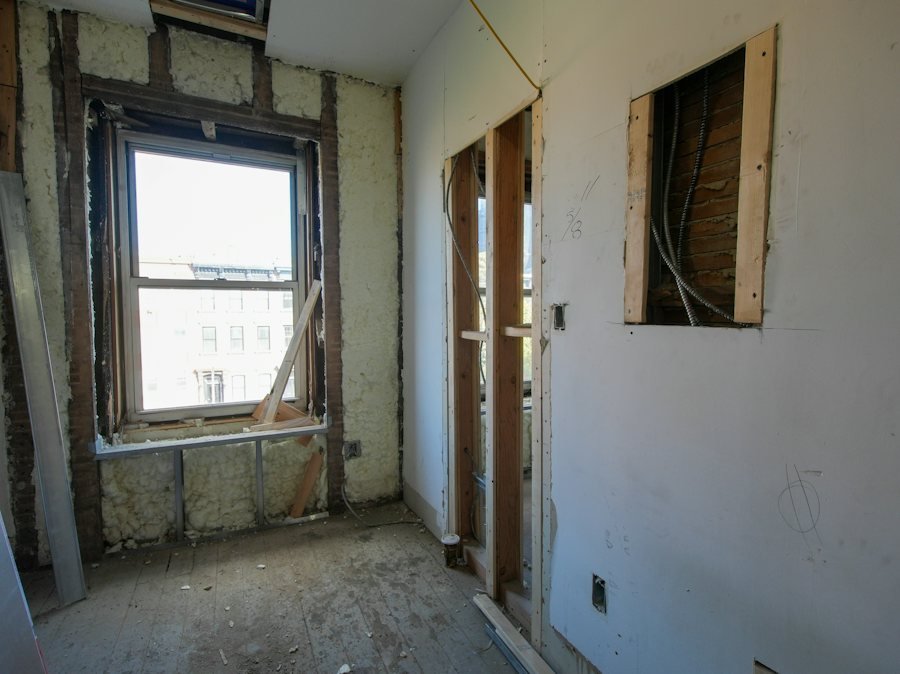
The $45,000 fit-out is the line that moves most. It assumes a space that was already finished as retail. The Core Collab measures about 105 square feet per reformer station, so eight machines need roughly 970 to 1,090 square feet including a small back-of-house area. At its quoted $80 to $150 per square foot for buildout, a raw shell of 900 square feet runs $72,000 to $135,000, which can wipe out the whole cushion in this budget.
Note the shortfall line, too. Junocal sizes the cash cushion from the deepest point of early losses rather than a rule of thumb, and warns that a flat “three months of expenses” can be too little for one studio and too much for another. For this owner, the gap between opening costs and money in the bank was nearly $40,000.
The 10-reformer boutique: where rent and payroll take over
Move up to ten machines with towers in a busier trade area, hire a roster of instructors, and the budget roughly doubles. Vibefam’s June 2026 estimate for a standard 10-reformer studio in a secondary city is $280,000 to $420,000, with the fleet alone at $50,000 to $80,000. Reformers with towers run $5,000 to $8,500 each, and mirrors, sound and AV add $5,000 to $14,000.
The bigger shift is that equipment stops being the main expense. In secondary cities, Vibefam puts buildout at $110 to $190 per square foot and triple-net rent at $30 to $55 per square foot a year, for studios of 1,500 to 2,500 square feet. As an example, an 1,800-square-foot space at the $42 rate Vibefam uses in its sample budget comes to $75,600 a year, or $6,300 a month, before utilities.
Then there is payroll. Group instructors earn $65 to $110 per class in Vibefam’s survey of US rates, and its sample first-year budget carries $175,000 in instructor pay and $35,000 in marketing, plus a $10,000 to $30,000 launch push. That is why the same source puts break-even on startup capital at 22 to 36 months, even with positive monthly cash flow arriving around months four to seven. A boutique owner is buying a bigger revenue ceiling with a longer payback.
The franchisee: buying the system, then paying for it monthly
Franchise numbers are the easiest to verify because the brand must publish them in Item 7 of its Franchise Disclosure Document. Club Pilates lists a $65,000 franchise fee ($48,750 for qualifying veterans) and a total initial investment of $431,289 to $1,029,811 in its 2026 FDD, as summarized by Franchise Direct. The required fitness equipment and furnishings package alone is $128,986 to $170,034.
JETSET Pilates publishes an Item 7 range of $525,540 to $749,575 and asks for $200,000 in liquid capital and a $500,000 net worth. A third-party summary of its 2026 FDD lists a $60,000 franchise fee, an equipment package of $52,500 to $70,100 and build-out of $190,000 to $275,000. Club Pilates’ parent, Xponential Fitness, says in its 2025 annual report that prospective franchisees need at least $250,000 in liquidity and a $500,000 net worth.
What the ongoing fees add up to, in one example
Club Pilates charges an 8% royalty and currently 2% for its brand fund, plus local advertising of at least $1,500 or 2% of the prior month’s sales, whichever is greater. For a hypothetical studio grossing $600,000 a year, royalty and brand fund alone come to $60,000, and the local ad minimum adds at least $12,000 more. An independent studio keeps that money but has to build its own booking system, playbook and brand.
For 2027: franchisors must refresh their FDDs each year, generally within 120 days of their fiscal year-end under the FTC Franchise Rule, so expect new Item 7 figures from both brands in the spring. Nothing about those updates has been announced; ask the franchise development team for the current document before comparing numbers.
The home studio: cheapest door in, lowest ceiling
An instructor teaching privates in a converted garage or spare room skips the lease, the buildout and most of the payroll. StudioGrowth’s model of a 400-to-600-square-foot home studio with one or two reformers comes to $15,345, and Mariana Tek’s budget tier for home-based or very small spaces runs $30,000 to $60,000 with two to four machines.

Machine choice matters more here, because one reformer is a large share of the budget. Current list prices include the Peak Pilates Fit at $3,195 (seen at $2,995 from some sellers in November), the Align-Pilates F3 folding reformer at $2,900 and the Balanced Body Allegro 2 at $4,050 on the maker’s own store. Running costs stay small: Insureon’s median premiums for Pilates instructors are about $350 a year for general liability and $500 for professional liability, and Arketa’s individual plans start at $49 a month billed annually.
The limit is capacity. One instructor and two machines can only sell so many hours a week, which is why StudioGrowth’s home model pays back fast but tops out early. Check your local zoning and any HOA rules on home businesses with client traffic first, since a cease-and-desist letter is the most expensive line item a home studio can get.
Line items that wreck otherwise good plans
Across the 2026 guides from equipment makers and software firms, the same overlooked costs come up again and again:
- Freight, installation and accessories. List prices rarely include delivery, and Balanced Body’s own store calculates shipping at checkout. Confirm what ships with each machine.
- Ship dates. Custom studio orders often take 8 to 12 weeks, per The Core Collab. Announcing an opening date before the equipment has a confirmed ship date is a classic way to pay rent on an empty room.
- Electrical, accessibility and drawings. Junocal lists these with pre-opening rent, insurance deposits and card-processing fees among the lines founders most often leave out.
- An extra bay squeezed in. In a four-reformer room, one empty spot removes 25% of class capacity, and cramming a fifth machine into space meant for four makes every class feel worse.
- Insurance at studio scale. A solo instructor’s policy is not a studio policy. Mariana Tek budgets $3,000 to $8,000 for a studio’s professional, general liability, property and workers’ comp coverage, and Vibefam adds an equipment rider at $200 to $500 a year.
- Software that scales with you. Mariana Tek estimates $150 to $450 a month for booking software; Momence does not publish prices, and reviewers report about $250 a month for a small single-location studio.
Every source agrees on one cushion: Mariana Tek tells founders to budget 20% to 30% above their initial estimate, and StudioGrowth recommends a 10% to 15% contingency on top of working capital.
Questions founders ask once the spreadsheet is open
Can I finance Pilates reformers instead of paying cash?
Yes. Manufacturers and equipment lenders offer financing; Vibefam estimates that a $60,000 reformer fleet financed over 36 to 60 months costs about $1,250 to $1,600 a month. SBA loans are another route, and StudioGrowth notes they usually require 10% to 25% down. Compare rates and terms with more than one lender.
Are used reformers a smart way to cut the cost to open a Pilates studio?
They can be. Vibefam reports that used reformers typically sell for 50% to 70% of retail, and The Core Collab estimates used commercial machines at roughly $1,500 to $4,000. Inspect spring age, bearings and the frame, and ask whether any warranty transfers to you.
What certification do I need to teach reformer classes in my own studio?
There is no single legal license, but insurers and clients expect training. Vibefam puts a PMA-approved comprehensive program of 450 to 600 hours at $3,500 to $7,500, and notes that a mat-only certification is not enough for reformer instruction in most US insurers’ eyes.
What do Pilates studios charge for classes and memberships?
Vibefam’s 2026 survey puts US reformer classes at $35 to $55 each and unlimited or high-frequency memberships at $189 to $250 a month, with intro packs of $99 to $159 for 14 days. Local competition sets your real ceiling, so price-check studios within a short drive.
How long does it take a new Pilates studio to turn a profit?
Estimates vary widely. Mariana Tek says profitability typically comes 12 to 18 months after opening, while The Core Collab cites month 9 to 12 for studios filling more than 65% of their spots. Larger boutiques with full instructor payrolls can take two to three years to earn back startup capital.
Three calls to make this week
- A commercial real estate broker. Ask for triple-net rents and tenant-improvement allowances on second-generation retail or fitness spaces of 1,000 to 2,000 square feet near your clients. Rent and buildout decide which of the four budgets you are really in.
- Two reformer dealers. Get a written quote for your full fleet with accessories, freight, installation and a confirmed ship date, so the equipment line stops being a guess.
- An SBA lender or your bank, plus a CPA. Bring the line-item budget with its cash-shortfall cushion and find out what you can borrow, what down payment it takes and how the purchases will be taxed.
More guides for fitness and service founders
- Small business startup costs in 2027: the complete guide
- What it costs to open a gym
- Club Pilates membership prices by plan
- What Pilates classes cost: mat, reformer and private
- The cost to open a med spa
- How much it costs to buy a franchise
- Business license costs by state
Pricing method: prices were researched in November 2026 for 2027 planning and may change. Studio budgets come from Junocal (September 2026), Vibefam (June 2026), StudioGrowth, Mariana Tek and The Core Collab; franchise figures from the Club Pilates 2026 FDD as summarized by Franchise Direct, JETSET’s franchise page and a third-party FDD summary; equipment prices from Balanced Body, Junocal and The Front Desk Review; insurance from Insureon. This is general information, not financial or legal advice. See our disclaimer.