



A sprained wrist on a Saturday sends you to urgent care. Two weeks later a cracked molar needs a crown, and the gym membership you bought in January renews on the same card statement. Those are three bills from three pricing systems: a self-pay urgent care visit usually runs $150 to $300, a crown $1,000 to $2,500 before dental coverage, and a gym anywhere from $10 to $480 a month. Only the first one involves your health insurance in any predictable way.

Scale that up and you get the national picture. Americans spent $15,474 per person on health care in 2024, according to the Centers for Medicare & Medicaid Services (CMS), and $556.6 billion of it came straight out of patients’ pockets. That figure does not even count the nail salon, the tattoo studio or the reformer class, which are paid entirely in cash.
This guide pulls together the 27 price guides in our health and beauty section and sorts them by the question that matters most for your wallet: who pays. It starts with care your insurance usually covers, moves through dental work (where coverage runs out fast), and ends with cosmetic, beauty and fitness spending, where every dollar is yours and every price is negotiable. For a quick personal estimate on a medical or dental procedure, try our medical and dental cost estimator.
Jump to a section
- 27 treatments and services at a glance
- Where America’s health dollars go
- Doctor visits, scans and procedures
- Dental work and the annual maximum
- Cosmetic surgery and med spa treatments
- Hair, nails, piercings and tattoos
- Gyms, trainers and recreation
- Six patterns that cost patients the most
- What changes on January 1, 2027
- Questions about health and beauty bills
27 treatments and services at a glance
The third column is the one to read first. A procedure your health plan covers is priced by your deductible and coinsurance, not by the sticker. A cash procedure is priced by the provider, which means shopping actually moves the number.
| Treatment or service | Typical US price | Who usually pays |
|---|---|---|
| Urgent care visit, self-pay | $150 to $300 | Insurance, after copay or deductible |
| CT scan | $250 to $750 imaging center; $800 to $3,000 hospital | Insurance, after deductible |
| Vasectomy (office) | $300 to $1,800 | Insurance; $0 under some state mandates |
| LASIK, both eyes | $4,000 to $5,600 | You; HSA/FSA eligible |
| Eyelid surgery | $3,000 to $6,000 uppers; $6,000 to $12,000 all four | Insurance only if vision is impaired |
| Root canal | $900 to $1,250; molar with crown $2,000 to $3,700 | Dental plan, up to annual max |
| Dental crown | $1,000 to $2,500 per tooth | Dental plan, often 50% |
| Braces | $3,000 to $8,500 | Dental plan pays a fixed ortho max |
| Invisalign | $1,800 to $9,500; most adults $5,000 to $5,700 | Same ortho max as braces |
| Porcelain veneers | $930 to $2,440 per tooth | You |
| Dental implant | $3,000 to $5,500 per tooth; $15,000 to $38,000 per arch | Mostly you |
| Breast reduction | $10,000 to $14,500 self-pay; about $3,300 insured example | Insurance, if approved |
| Rhinoplasty (cosmetic) | $9,000 to $15,000 | You |
| Tummy tuck | $9,000 to $16,000 | You |
| Liposuction | $3,500 one area to $22,000 full body | You |
| Lip filler | $400 to $850+ per syringe | You |
| Laser hair removal, full series | $250 to $2,000 small areas; $1,300 to $5,000+ large | You |
| Laser tattoo removal | $200 to $750 per session; $1,500 to $6,000+ total | You |
| Tattoo | $80 to $200 minimum; $6,000+ full sleeve | You |
| Piercing with jewelry | $45 to $180 | You |
| Acrylic nails | $40 to $80 per set; $520 to $2,000+ a year | You |
| Pedicure | $30 to $60 before tip | You |
| Gym membership | $10 to $480+ a month | You |
| Personal trainer | $50 to $100 a session; $100 to $160 premium clubs | You |
| Pilates classes | $10 to $25 mat; $35 to $60 reformer; $75 to $120+ private | You |
| Club Pilates membership | $79 to $397 a month | You |
| Tandem skydive | $199 to $250 advertised; $300 to $500 typical day | You |
Where America’s health dollars go
National health spending reached about $5.3 trillion in 2024, up 7.2% in a single year and equal to 18% of the economy, according to CMS. Hospitals took $1.63 trillion, physician and clinical services $1.11 trillion, and retail prescription drugs $467 billion. Every one of those categories grew faster than general inflation.
Health spending is projected to grow about 5.4% a year through 2034, faster than the economy, pushing its share of GDP from 18.0% to 20.6%.
CMS National Health Expenditure Projections, 2025 to 2034
Out-of-pocket spending, the money patients pay directly in deductibles, copays, coinsurance and cash prices, rose 5.9% to $556.6 billion in 2024. Spread across the population, that works out to roughly $1,600 a person, though the average hides an uneven reality: a healthy 30-year-old may spend almost nothing, while a family facing surgery and orthodontics in the same year can hit five figures.
The other force is coverage. CMS expects the insured share of Americans to slip from 91.8% in 2024 to 90.5% by 2034, and the enhanced Affordable Care Act subsidies that kept marketplace premiums low expired at the end of 2025. More people are buying bronze and high-deductible plans, which means more people are paying the full negotiated rate for the first several thousand dollars of care each year. For them, the shopping habits that used to apply only to LASIK and cosmetic work now apply to scans and office visits too.
Doctor visits, scans and procedures: the shoppable side of medicine
Medical care is the one part of this section where insurance usually sits between you and the price. That makes the sticker less important than two other numbers: how much of your deductible remains, and whether the place you go is in network. The same service can cost three or four times as much depending on the building it happens in.
Imaging shows that gap most clearly. A CT scan runs about $250 to $750 at an independent imaging center and $800 to $3,000 at a hospital outpatient department, for the same scan read by the same kind of radiologist. An MRI without insurance follows the same pattern at a higher price, roughly $400 to $1,000 at an imaging center against $1,500 to $3,500 at a hospital. If your deductible is unmet, the location choice is worth hundreds of dollars. The same logic applies to where you go for a minor injury: an urgent care visit without insurance usually costs $150 to $300, with X-rays, stitches and labs priced as add-ons, while an emergency room visit for the same sprain routinely costs far more.
Planned procedures sit between covered and cash. A vasectomy costs about $300 to $1,800 in a doctor’s office and $2,000 or more in a hospital, and some state mandates require plans to cover it at no cost, while many HSA-qualified plans charge the full rate until the deductible is met. Eyelid surgery runs $3,000 to $6,000 for the upper lids and $6,000 to $12,000 for all four; a visual field test showing that drooping lids block your sight is usually what gets the uppers covered, while lower-lid work is almost always cosmetic. LASIK is a pure cash purchase at about $4,000 to $5,600 for both eyes, well above the $299-per-eye teaser ads, but it qualifies for HSA and FSA dollars, which effectively discounts it by your tax rate. Male breast reduction follows the same covered-only-on-paper logic: gynecomastia surgery runs about $5,000 to $16,000 all in, and insurers that cover it at all want confirmed gland tissue and documented pain.
Two federal rules help here. Hospitals must post prices for common shoppable services online, and under the No Surprises Act, uninsured and self-pay patients are entitled to a written good faith estimate before scheduled care. If the final bill comes in at least $400 above that estimate, you can dispute it through the federal process.
Dental work: why the annual maximum matters more than the premium
Dental insurance is built differently from medical insurance. Instead of an out-of-pocket maximum that protects you, most plans have an annual maximum that protects the insurer, commonly somewhere around $1,000 to $2,000 a year. Preventive care is usually covered well, basic work like fillings at around 80%, and major work like crowns at around 50%. Once the plan has paid its annual maximum, everything else is yours. One crown and one root canal can exhaust it.
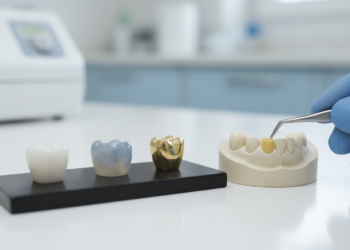
That structure explains why dental bills feel bigger than their sticker. A root canal costs about $900 to $1,250 on its own, but saving a molar costs $2,000 to $3,700 once the buildup and crown are added. A dental crown runs $1,000 to $2,500 per tooth, and the material you choose interacts with a common fine-print rule: the downgrade clause, under which the plan pays for a cheaper metal crown and you cover the difference for porcelain on back teeth.
Orthodontics run on a separate, fixed lifetime maximum, typically $1,000 to $2,000 per person. Traditional braces cost $3,000 to $8,500, and Invisalign ranges from about $1,800 for a short Express case to $9,500, with most adult cases near $5,000 to $5,700. Either way, the insurance contribution is a flat amount, so the remaining balance is what you need to budget.
Cosmetic and replacement dentistry is largely self-pay. Veneers cost about $930 to $2,440 per tooth in porcelain and $250 to $1,500 in composite, and a smile usually means six to ten teeth. Dental implants run $3,000 to $5,500 for a single tooth, all in, and $15,000 to $38,000 per jaw for a fixed full arch. For implants especially, compare a local prosthodontist or oral surgeon with the advertised implant centers line by line: extractions, bone grafts, the temporary teeth and the final bridge are often priced separately. Oral surgery quotes reward the same scrutiny: wisdom teeth removal averages about $2,685 for all four teeth, and the impaction code on each tooth moves the bill more than anything else.
Example: how an annual maximum plays out on a crown and root canal
This is a hypothetical illustration, not a quote. Say a molar needs a root canal ($1,100), a buildup ($300) and a crown ($1,400), for $2,800 total. A plan that pays 50% of major work would owe $1,400, but if its annual maximum is $1,500 and a filling earlier in the year used $200 of it, the plan can only pay $1,300. You owe $1,500. Splitting treatment across two plan years, where it is safe to do so, is one reason dentists sometimes stage major work in December and January. Ask your dentist whether waiting is clinically reasonable before planning around it.
Cosmetic surgery and med spa treatments: all cash, all quotes
Demand here keeps climbing. The American Society of Plastic Surgeons reported that cosmetic surgical procedures rose 7% in 2025, with the biggest jump, 24%, among patients 66 and older. Neuromodulators and hyaluronic acid fillers made up about 80% of minimally invasive procedures.
Cosmetic surgery quotes have three parts, and comparing only the surgeon’s fee is the classic error: the surgeon, the anesthesia, and the facility or operating room. A tummy tuck costs about $9,000 to $16,000 all in, before the two to six weeks many patients spend away from work. A cosmetic nose job runs about $9,000 to $15,000, though a nonsurgical liquid rhinoplasty, a septorhinoplasty that also fixes breathing, and a revision each price very differently. Liposuction scales with the number of zones treated, from about $3,500 for one small area to $22,000 for full body.
The one surgery in this group that insurance often pays for is a breast reduction. Self-pay packages run $10,000 to $14,500, while an approved patient on a typical job-based plan might owe around $3,300 after deductible and coinsurance. Approval usually depends on documented symptoms and the amount of tissue removed, so the paperwork is worth more than any discount.
Med spa treatments are cheaper per visit and more expensive per year, because almost all of them fade or require a series. Botox is priced by the unit, about $10 to $15 at most practices, and wears off in three to four months, so a full upper face that costs around $960 a visit can approach $3,000 or more a year. Lip filler costs about $400 to $850 or more per syringe and lasts roughly 6 to 12 months, so the number to budget is the yearly cost of keeping it. Laser hair removal advertises sessions from $29, but a full series runs about $250 to $2,000 for small areas and $1,300 to $5,000 or more for large ones. Tattoo removal costs $200 to $750 per session and $1,500 to $6,000 or more to finish, which is why an unlimited package can make sense for large or dark pieces.
Check credentials before price. For surgery, confirm the surgeon is board certified in plastic surgery and that the facility is accredited. For injectables and lasers, ask who actually performs the treatment and who supervises it; rules vary by state, and a bargain that ends in a correction procedure is not a bargain.
Hair, nails, piercings and tattoos: small tickets that repeat
Nobody puts a pedicure on a medical budget, but beauty services follow a pattern worth noticing: the first visit is cheap and the upkeep is not. The menu price is rarely the yearly price.
- Hair. A walk-in chain cut is the cheapest repeat visit in this section: Great Clips haircut prices ran $20 to $29 at the salons we checked, with kids and seniors paying $2 to $3 less, though a shampoo can add $8 to $27.
- Nails. A full set of acrylic nails costs $40 to $80, but fills every two to three weeks push the annual total to $520 to $2,000 or more. A basic pedicure runs $30 to $60 before tip, and paraffin, gel and medical pedicures each step the price up.
- Piercings. A piercing costs about $30 to $80 for the needle work, but jewelry, a later downsize and aftercare put most single piercings at $45 to $180. Solid gold jewelry can push one piercing past $300.
- Tattoos. A tattoo starts at a shop minimum of about $80 to $200 for something tiny and reaches $6,000 or more for a detailed full sleeve, before a 15% to 20% tip, the deposit and any touch-ups. Pricing a tattoo honestly includes pricing its possible removal, covered above.
The most useful habit in this category is annualizing. Multiply the per-visit price, plus tip, by how often you will actually go. A $55 gel pedicure every three weeks is a roughly $1,100-a-year line item, which is a perfectly reasonable thing to spend money on, as long as you decided to.
Gyms, trainers and recreation: paying for habits
Fitness spending is the easiest to justify and the easiest to waste, because the price per month means little until you divide it by the workouts you actually do. That cost-per-use figure is the thread running through every guide in this group.
A gym membership ranges from about $10 a month at budget chains to $480 or more at luxury clubs, and annual fees and cancellation rules change the yearly math more than most people expect. Studio fitness costs more per visit: Pilates classes run about $10 to $25 for mat, $35 to $60 for group reformer and $75 to $120 or more for a private session. Memberships at Club Pilates range from about $79 to $397 a month, commonly $109 for four classes, $199 for eight and $259 unlimited, so your cost per class depends on how many credits you really use.
A personal trainer costs about $50 to $100 a session nationally and $100 to $160 at premium clubs. The smartest way to buy training is by goal rather than by hour: eight sessions to learn form is a very different purchase from a six-month body recomposition plan. Home equipment follows the same membership logic: a new Peloton bike costs about $3,500 to own for three years once the $49.99 monthly All-Access fee is counted, while Peloton’s App+ on a budget bike runs closer to $1,545. Recreation sits at the far end of the spectrum. A tandem skydive is advertised from $199 to $250, but video, weekend slots, weight fees and a tip bring most jump days to $300 to $500.
Six patterns that cost patients the most
Read 27 price guides side by side and the same mistakes keep turning up, whether the bill is for a scan or a set of nails.
- Pricing the visit instead of the result. Laser hair removal, tattoo removal, Invisalign and implants all advertise a unit price for something that takes many units. Ask for the cost to finish.
- Ignoring the building. Hospital outpatient departments charge facility fees that independent imaging centers, surgery centers and offices often don’t. The CT scan gap of several hundred dollars is typical, not extreme.
- Assuming insurance will cover it. Eyelid surgery, breast reduction and some vasectomies are covered only when specific criteria are documented. Get prior authorization in writing before scheduling.
- Forgetting the dental annual maximum. Major dental work can blow through a plan’s yearly limit in one visit. Ask the office for a pre-treatment estimate that shows what the plan will pay.
- Buying teaser prices. $299 LASIK, $29 laser sessions and $199 skydives are real offers that apply to few buyers. The quote that matters names the procedure, the technology and every add-on.
- Financing at deferred interest. Medical credit cards often offer promotional periods where, if the balance isn’t fully paid by the deadline, interest is charged back to the purchase date. Read the terms before using one for cosmetic work.
What changes on January 1, 2027
No industry group publishes 2027 prices for crowns, filler or reformer classes, so the ranges in this guide are current prices for 2027 planning. Several rules that shape what you pay, however, are already set:
| Limit | 2026 | 2027 |
|---|---|---|
| ACA out-of-pocket maximum, self-only | $10,600 | $12,000 |
| ACA out-of-pocket maximum, family | $21,200 | $24,000 |
| HSA contribution limit, self-only | $4,400 | $4,500 |
| HSA contribution limit, family | $8,750 | $9,000 |
| HDHP minimum deductible, self-only / family | $1,700 / $3,400 | $1,750 / $3,500 |
| HDHP out-of-pocket maximum, self-only / family | $8,500 / $17,000 | $8,700 / $17,400 |
The out-of-pocket cap jumps about 13% for self-only coverage, the steepest rise in years. It is a ceiling, not a typical bill, but it marks the worst case for anyone facing surgery or a hospital stay in 2027. The final HHS rule for 2027 also expands who can buy catastrophic plans and allows lower-premium plans that shift more cost into deductibles. HHS itself estimates that up to 2 million fewer people may enroll in marketplace coverage. Open enrollment for 2027 marketplace coverage runs November 1 through December 15 on HealthCare.gov; some state exchanges set their own dates.
On prices themselves, CMS projects physician and clinical spending to grow about 5.5% a year and hospital spending about 5.2% a year through 2034. That is spending, not unit prices, but it points the same direction: budget for medical and dental quotes to run a few percent higher next year than this year. Insurance and tax rules have exceptions, so confirm how any of this applies to you with your plan, a licensed broker or a tax professional.
Questions about health and beauty bills
How much does the average American pay out of pocket for health care?
Americans paid $556.6 billion out of pocket in 2024, according to CMS, roughly $1,600 per person on average. The average hides wide variation: healthy adults may spend little, while a household facing surgery, orthodontics or a chronic condition can pay several thousand dollars or more in a year.
Can I use an HSA or FSA for dental work, LASIK or cosmetic procedures?
Dental treatment and LASIK generally count as eligible medical expenses under IRS rules. Purely cosmetic procedures, such as filler or a cosmetic tummy tuck, generally do not, though reconstructive surgery tied to a medical condition may. Gym memberships usually do not qualify. Check IRS Publication 502 and confirm with your plan administrator.
What is the most I can pay for covered care in 2027?
For ACA-compliant plans, the 2027 in-network out-of-pocket maximum is $12,000 for self-only coverage and $24,000 for family coverage. HSA-qualified high-deductible plans have a lower cap of $8,700 and $17,400. Out-of-network care, premiums and non-covered services do not count toward these limits, and dental plans are not subject to them.
Is it ever cheaper to pay cash instead of using insurance?
Sometimes, especially for imaging, lab work and urgent care when your deductible is unmet, because some providers offer discounted self-pay prices below the insurer’s negotiated rate. The trade-off is that cash payments may not count toward your deductible. Ask your insurer before choosing that route.
How can I get a price before treatment?
Insured patients can use their insurer’s cost estimator and ask the provider for the billing codes. Hospitals must post prices for common shoppable services online. If you are uninsured or paying yourself, the No Surprises Act entitles you to a written good faith estimate before scheduled care, and you can dispute a bill that comes in at least $400 higher.
Are cosmetic and beauty prices negotiable?
Often, yes. Because cosmetic surgery, med spa treatments, tattoos and studio memberships are cash businesses, providers set their own prices and many offer package rates, off-season promotions or membership pricing. Compare complete written quotes and never trade away credentials or safety for a lower price.
Three calls to make before you book anything big
Your insurer or plan administrator. Ask how much of your deductible remains, whether the provider and facility are in network, whether prior authorization is required, and, for dental, how much of the annual maximum is left.
The provider’s billing office. Ask for the procedure codes, a written estimate that lists every fee (surgeon, anesthesia, facility, follow-up visits), and the self-pay price if your deductible is unmet. Uninsured patients should ask for the good faith estimate by name.
One competitor. For anything shoppable, from an MRI to a set of veneers to a reformer package, a second quote is the single cheapest way to find out whether the first one was fair. Our medical and dental cost estimator gives you a benchmark before you dial.
Pricing method: prices were researched in November 2026 for 2027 planning and may change. Ranges summarize the individual guides linked above, which draw on provider price lists, official fee schedules and published surveys; 2027 limits come from HHS and the IRS. Medical, dental and insurance costs vary by provider, plan and location, so confirm details with a licensed professional or your insurer. See our disclaimer.