Which month of a baby’s first year costs the most at the formula shelf? Not the first one, when bottles hold an ounce or two, but months four and five, when a fully formula-fed baby can drink close to 900 ounces a month. Over the full year, powdered formula for one baby comes to roughly $950 with a warehouse-club store brand and about $2,050 with a premium name brand, and ready-to-feed bottles push the same year past $3,400. Consumer Reports’ formula savings guide, which assumes heavier drinkers, puts the range at $1,365 to $3,180 per child.

The shelf price of a can tells you surprisingly little about any of that. A $32 tub and a $60 tub only make sense once you know how many bottles each one mixes and how much your baby drinks at each stage, so what follows walks through the year in order: which months hit hardest, when the bill eases, and where a switch actually saves money.
Start with the price of a prepared ounce
Babylist notes that a 30.8-ounce tub of Similac 360 Total Care makes about 54 four-ounce bottles, or about 216 fluid ounces of formula, which works out to roughly 7 prepared ounces per ounce of powder. Most standard powders mix at a similar ratio, though your can’s label is the final word. Divide the shelf price per ounce of powder by seven and you have the number that drives every month below.
| Formula (retailer) | Listed price | Per ounce of powder | Per prepared fluid ounce (est.) |
|---|---|---|---|
| Kirkland Signature ProCare (Costco) | $63.99 for 84 oz | $0.76 | 11¢ |
| Member’s Mark Advantage Premium (Sam’s Club) | $36.98 for 48 oz | $0.77 | 11¢ |
| Parent’s Choice Advantage Premium (Walmart) | $24.97 for 23.2 oz | $1.08 | 15¢ |
| up&up Premium (Target) | $41.99 for 36 oz | $1.17 | 17¢ |
| Similac Advance (Walmart) | $38.97 for 30.8 oz | $1.38 | 20¢ |
| Similac 360 Total Care (H-E-B) | $49.97 for 30.8 oz | $1.62 | 23¢ |
| Enfamil NeuroPro (Target) | $59.99 for 36.4 oz | $1.65 | 24¢ |
Source: store-brand and Similac Advance prices from Consumer Reports’ March 2026 budget formula roundup; Similac 360 from H-E-B’s product listing; Enfamil NeuroPro from Target’s product page, all checked in November 2026. Per-prepared-ounce figures are our estimate at 7 fluid ounces per ounce of powder.
The cheapest can in that table costs less than half as much per bottle as the priciest one. Consumer Reports adds that all formula sold in the U.S. is tightly regulated and that there is little nutritional difference between premium brands and lower-priced ones, which is why the store brands at Costco, Sam’s Club, Walmart and Target, all made by Perrigo, keep showing up on its recommended lists.
Weeks one to four: small bottles, quick growth
The first week is cheap almost by accident. The American Academy of Pediatrics, writing on HealthyChildren.org’s feeding schedule page, says newborns should take no more than about 1 to 2 ounces per feed at first. Many families also leave the hospital with sample cans or ready-to-feed nursers, so the first purchase often slips into week two.
It does not stay small. By the end of the first month, the AAP expects at least 3 to 4 ounces per feeding, every three to four hours. Its rule of thumb for planning is about 2½ ounces of formula a day for every pound of body weight. An 8-pound baby, by that rule, drinks around 20 ounces a day; a 10-pounder, around 25.
This is the month to buy small. Babies sometimes need a different formula after the first few weeks, and a two-pack of 42-ounce warehouse cans is an awkward thing to be stuck with. One standard can, plus whatever samples you have, is enough to learn what your baby tolerates.
Months two to five: the costliest stretch of the year
Volume climbs fast through the second and third months, and the formula bill climbs with it. The AAP says a baby should usually average no more than about 32 ounces in 24 hours. WIC, the federal nutrition program, sets its own ceiling a little lower: the USDA’s maximum monthly allowances give a fully formula-fed baby up to 806 fluid ounces a month through 3 months of age and up to 884 fluid ounces at 4 and 5 months. Those caps make a sensible planning number for any family, WIC or not.
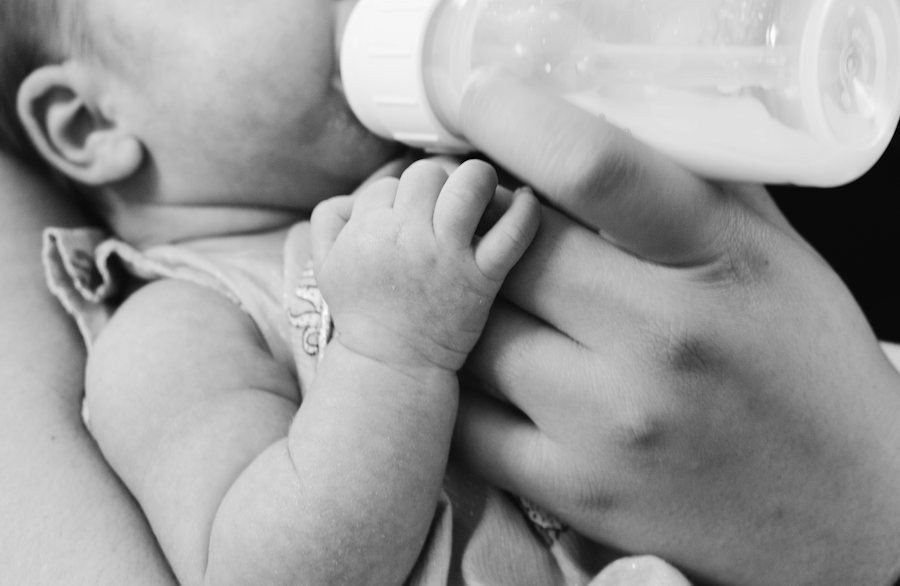
At 884 ounces, months four and five are the most expensive of the year. Here is what a month at each stage costs, at three price points.
| Stage (WIC monthly cap) | Kirkland ProCare | Similac 360 Total Care | Similac 360 ready-to-feed |
|---|---|---|---|
| Birth through 3 months (806 fl oz) | About $87 | About $186 | About $314 |
| 4 and 5 months (884 fl oz) | About $96 | About $204 | About $345 |
| 6 through 11 months (624 fl oz) | About $68 | About $144 | About $243 |
The ready-to-feed column is the one that surprises people. Babylist’s formula savings guide points out that roughly the same $50 buys about 54 four-ounce bottles of Similac 360 as powder but only about 32 as ready-to-feed. Premixed bottles earn their keep for night feeds, travel and daycare bags. Used for every bottle, they add around $1,400 to the year.
Months six to eleven: solids take part of the load
Once solid foods enter the picture, formula stops growing. The AAP describes a typical 6-month-old taking 6 to 8 ounces at each of four or five feedings a day, and WIC’s allowance for the 6-to-11-month stage drops to 624 fluid ounces a month, about 30% below the month-four peak. That trims a name-brand budget by about $60 a month and a warehouse-brand budget by under $30.
Keep the grocery list in view, though. WIC’s same food package adds infant cereal and jarred fruits and vegetables at this age, and families outside WIC buy those too, so the total feeding bill falls less than the formula line does. Around the first birthday, ask your pediatrician when and how to move off formula; that conversation decides when this expense ends.
Twelve months of bottles, added up
Add four months at the early cap, two at the peak and six at the later cap and you get about 8,700 fluid ounces of formula, or roughly 1,250 ounces of powder. Priced across the shelf, that becomes:
- Kirkland ProCare or Member’s Mark: about $950 to $960 for the year.
- Parent’s Choice or up&up: about $1,350 to $1,460.
- Similac Advance: about $1,720.
- Similac 360 Total Care or Enfamil NeuroPro: about $2,020 to $2,060.
- Ready-to-feed for every bottle: about $3,400.
These are our estimates from the cited prices, and they assume one baby, standard formula and no shortages. Babies who drink nearer the AAP’s 32-ounce daily ceiling all year land closer to Consumer Reports’ per-child numbers. Specialty and hypoallergenic formulas, which a pediatrician may recommend for allergies or reflux, cost more and are outside this math.
For 2027 there is no announced price change from any major maker, but there is a regulatory one in motion. On October 29, 2026, HHS announced an FDA proposed rule to update infant formula nutrient requirements for the first time in nearly 30 years, covering iodine, manganese, vitamin A and vitamin D, with public comments due February 26, 2027. It is a proposal, not a final rule, and the announcement sets no compliance date, so nothing in it should change what a can costs next year.
Where a year of formula gets cheaper
Brand choice is the big lever, and it is worth about $1,100 a year between a premium name brand and a warehouse store brand. The other levers are smaller but stack.
Membership math. Babylist lists a Costco membership at $65 a year. Against up&up at $1.17 an ounce, Kirkland’s 76 cents saves roughly $500 over the year, so the card pays for itself several times on formula alone.
Subscriptions. Both Babylist and Consumer Reports put auto-delivery discounts at 5% to 15% per order. On a $2,000 name-brand year, that is $100 to $300.
Brand programs. Babylist says Similac frequently sends $5-off coupons and that Enfamil awards 10 rewards points per dollar spent. Useful, but neither closes the gap to a store brand.
WIC. For income-eligible families, formula is free. Consumer Reports notes that WIC can provide up to 14 cans a month per infant, depending on can size and feeding stage.
One shortcut never belongs on this list. Consumer Reports, citing the American College of Emergency Physicians, warns that watering down formula can leave a baby short on nutrients and cause an electrolyte imbalance that may lead to seizures, and the AAP, FDA and CDC all warn against homemade formula.
“All infant formula sold in the US, including store brands, is regulated by the FDA, which means it must meet the same nutritional standards as name-brand options.”
Babylist, How to Save Money on Baby Formula (April 2026)
Three calls to make before the first can
- Your pediatrician. Ask whether a standard formula fits your baby and whether a store-brand version of the same type is fine to use. Any switch for a baby with allergies, reflux or prematurity should go through this call first.
- Your local WIC office. If money is tight, ask about eligibility before the baby arrives. The program’s monthly caps (806, 884 and 624 fluid ounces by stage) cover most or all of a typical baby’s formula.
- Your warehouse club or retailer. Price the store brand per ounce, check the membership fee against roughly $500 in yearly savings, and set up a subscription once you know which formula your baby tolerates.
Smaller formula questions parents ask
How many cans of formula does a baby go through in a month?
Using WIC’s monthly caps and the 216 ounces of prepared formula a 30.8-ounce tub makes, our estimate is about four cans a month through month five and about three a month from six to eleven months. Smaller cans mean more trips; Consumer Reports says some formulas take up to nine cans a month.
How much does formula cost for twins?
Roughly double. By our estimates, a first year of powder for two babies runs about $1,900 with a warehouse store brand and about $4,100 with a premium name brand, before any WIC benefits or subscription discounts.
Does a Costco membership pay for itself on formula alone?
For a formula-fed baby, usually yes. Babylist lists the membership at $65 a year, and the gap between Kirkland ProCare at 76 cents an ounce and Target’s up&up at $1.17 adds up to about $500 over the first year by our math.
Is it safe to buy baby formula from resale sites or secondhand?
Be cautious. Babylist warns against secondhand formula from third-party sellers, and Consumer Reports also cautions about secondhand cans. Buy sealed cans from established retailers and check the use-by date.
Can I switch formula brands to chase a sale?
Many families switch between standard formulas of the same type, and Consumer Reports finds little nutritional difference between premium and lower-cost brands. Check with your pediatrician first, especially for a specialty or sensitive formula, and switch to the same type rather than a different one.
Where these formula prices come from
- Best Lower-Cost Infant Formulas From Our Tests, Consumer Reports (March 3, 2026)
- 10 Ways to Save Money on Formula, Consumer Reports (April 15, 2025)
- 9 Ways to Save Money on Baby Formula, Babylist (updated April 29, 2026)
- Amount and Schedule of Baby Formula Feedings, American Academy of Pediatrics, HealthyChildren.org
- Maximum Monthly Allowances in the WIC Food Packages, U.S. Department of Agriculture
- First Major Update to Infant Formula Standards in Nearly 30 Years, U.S. Department of Health and Human Services (October 29, 2026)
- Similac 360 Total Care Infant Formula Powder, 30.8 oz, H-E-B (price checked November 2026)
- Enfamil NeuroPro Powder Infant Formula, 36.4 oz, Target (price checked November 2026)
More first-year costs to plan for
- Family costs in 2027: the complete guide
- What diapers cost from newborn to potty training
- The cost of having a baby, after insurance
- Daycare costs and the tax breaks that offset them
- What a full-time nanny costs per year
- Preschool costs by state
More related guides: Nuna stroller prices by model and situation
Pricing method: prices were researched in November 2026 for 2027 planning and may change. Shelf prices vary by store, region and promotion, and monthly and yearly totals are our estimates built from the cited prices and WIC volume caps. This article is general information, not medical advice; talk with your pediatrician about which formula and how much is right for your baby. See our disclaimer.