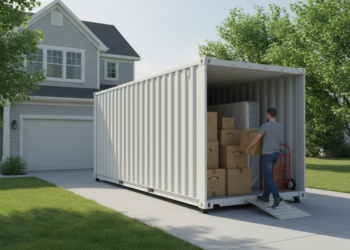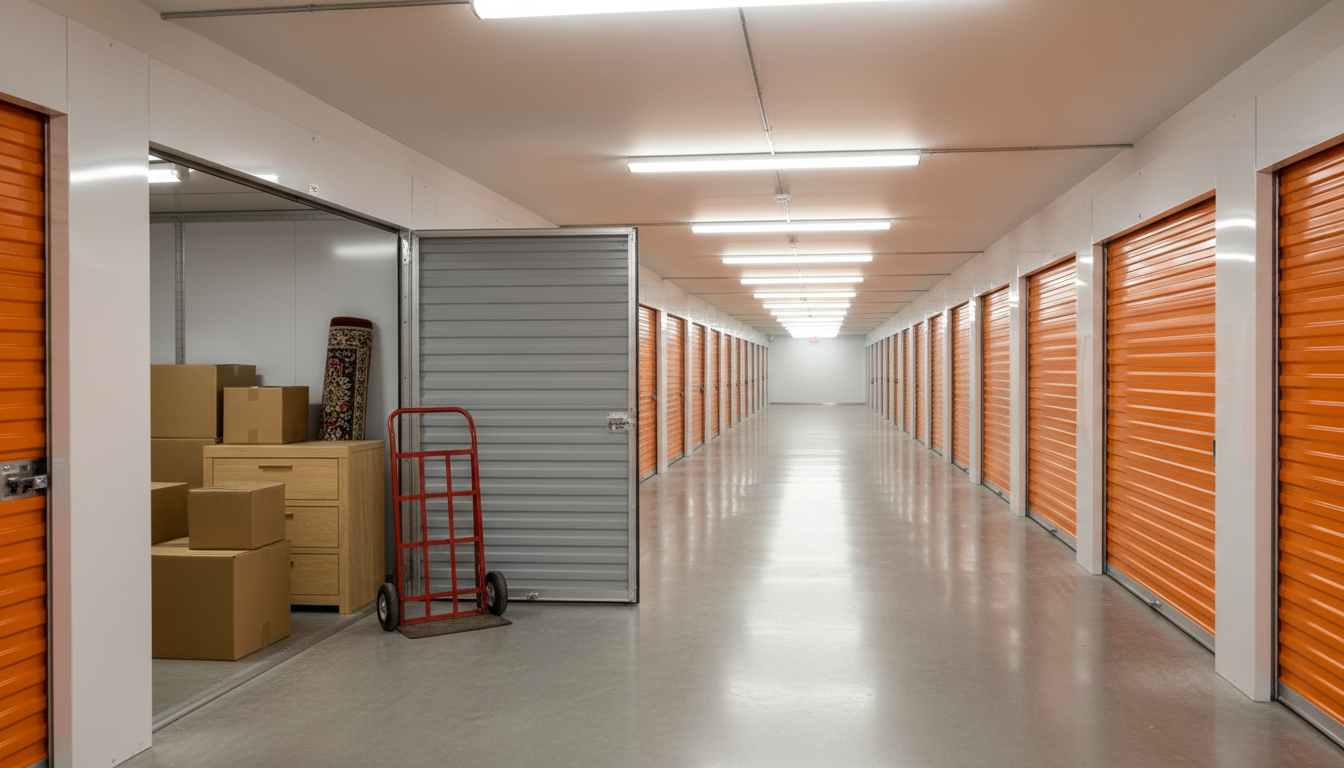
You reserve a 10×10 online, pay $1 for the first month, and move your apartment in on a Saturday. Heading into 2027, that same unit has a typical move-in rate around $80 a month, and storage units in general run from about $35 for a 5×5 to $130 for a 10×20, with climate control adding 10% to 25%. The catch is that the rate on the reservation page is an opening offer. By month six or seven, many renters are paying noticeably more for the same box, and the people who keep a unit for two years pay the most of all.

So price a storage unit the way the facility does: by size first, then by how long you will really keep it. A three-month stay during a move and a three-year “temporary” unit are two very different purchases.
Storing things as part of a move? Our free moving cost calculator adds truck, labor and storage into one estimate.
Storage unit prices by size, and what actually fits
These are average monthly move-in rates from SpareFoot’s 2026 rental data through May. They are national averages for standard units; your ZIP code can move them a long way in either direction.
| Unit size | Avg. monthly rate | Per sq ft | Typically holds |
|---|---|---|---|
| 5×5 (25 sq ft) | $34.89 | $1.40 | A closet’s worth: boxes, seasonal clothes, a bike |
| 5×10 (50 sq ft) | $50.92 | $1.02 | A studio or dorm room, a mattress set and boxes |
| 10×10 (100 sq ft) | $80.43 | $0.80 | A one-bedroom apartment with furniture |
| 10×15 (150 sq ft) | $109.03 | $0.73 | A two-bedroom apartment or small house |
| 10×20 (200 sq ft) | $130.14 | $0.65 | A three-bedroom house, or one car |
Look at the per-square-foot column. Small units cost more than twice as much per foot as large ones, which is why renters who rent “one size up to be safe” often pay less per foot but more overall. The better move is to measure. Stack boxes to the ceiling, stand mattresses on end, and leave a walking aisle only if you will need to reach things in the back. Plenty of people who book a 10×15 could have packed a 10×10 and saved roughly $29 a month at these averages.
Does your stuff need climate control?
Climate-controlled units usually cost 10% to 25% more than a standard drive-up unit, so an $80 10×10 becomes roughly $88 to $100. Pay for it when the contents can warp, crack, mold or melt:
- Worth it: wood and upholstered furniture, mattresses, electronics, photos and paper records, musical instruments, artwork, vinyl, wine, and anything stored through a Gulf Coast summer or a northern winter.
- Usually skip it: patio furniture, plastic bins of clothes and holiday decor, garden tools, metal shelving, and short stays of a month or two in a mild climate.
Climate-controlled space also tends to sit inside a building with hallway access, which helps keep dust and pests out. Drive-up units are easier to load. Some renters split the difference: a small climate-controlled unit for the fragile items and a larger standard unit for the rest.
Why your storage rent climbs after a few months
The industry has a name for it: existing customer rate increases, or ECRIs. Big operators price move-in rates low to win the online comparison, then raise rent on customers already in place, because moving a unit’s worth of belongings is a hassle most people will pay to avoid. Rental agreements generally say the facility can change rates on a month-to-month tenancy with written notice.
The gap shows up in public filings. Public Storage, the largest US operator, reported same-store realized rent of $22.00 per occupied square foot per year in the first quarter of 2026. On a 100-square-foot unit, that works out to about $183 a month, far above the national move-in averages in the table. Part of that reflects Public Storage’s heavy presence in expensive coastal metros, but it also reflects how much long-term tenants end up paying.
Individual cases can be steep. A consumer report from the Scripps “Don’t Waste Your Money” team described a renter whose 10×20 went from $169 to $173 and then to $285 the following month, while the same facility advertised that unit size to new customers for $84.
One 10×10, three lengths of stay
Hypothetical example for illustration. The rates, increase sizes and timing below are assumptions chosen to show how the math works, not a quote or any company’s policy.
Say you rent a 10×10 advertised at $95 a month with a $1 first month. You pay a $29 admin fee, buy a $15 disc lock and take a $12-a-month protection plan. The facility raises rent 12% in month 4 (to $106.40), then about 10% every six months after that ($117.04 in month 10, $128.74 in month 16, $141.61 in month 22).
| Line | 3 months | 12 months | 24 months |
|---|---|---|---|
| Rent | $191.00 | $1,180.52 | $2,728.91 |
| Protection plan | $36.00 | $144.00 | $288.00 |
| Admin fee and lock | $44.00 | $44.00 | $44.00 |
| Total | $271.00 | $1,368.52 | $3,060.91 |
| Real cost per month | $90.33 | $114.04 | $127.54 |
For the three-month mover, the $1 deal is excellent: the effective rate lands below the sticker price. For the two-year renter, the same unit averages about a third more than the advertised $95, and the last few months run near $142. Promotions reward short stays. If you expect to stay a year or more, the facility with a slightly higher rate and a written rate-lock or a history of small increases may be the cheaper one.
The admin fee, the lock and the protection plan
Three charges show up at checkout that rarely appear in the headline price:
- Admin fee. A one-time charge to open the rental. Public Storage’s own promotion terms cite a $29 administrative fee; other chains and independents charge similar amounts, and some waive it.
- Lock. Most facilities require a disc or cylinder lock and will sell you one at the counter. You can bring your own if it meets the facility’s rules, which usually saves a few dollars.
- Protection plan or insurance. Many facilities require proof of coverage. SpareFoot puts typical plans at about $10 to $30 a month for $2,000 to $5,000 of coverage, and Neighbor’s insurance guide notes that higher limits can run $65 a month or more. Plans sold at the counter are often a damage-protection contract rather than insurance, with their own exclusions and deductibles.
Before buying the facility’s plan, check your renters or homeowners policy. Many include “off-premises” coverage for belongings kept away from home, often limited to a share of your personal property limit, and many facilities accept a declarations page as proof. If your policy covers it, that can save $120 to $360 a year. Our renters insurance cost guide explains what a typical policy includes.
Where a storage unit costs the most
Location swings the price more than any feature. StorageCafe’s May 2026 report put the national weighted average street rate, across all sizes and both climate types, at $133 a month. Among the cities it named:
| City | Avg. monthly street rate (all sizes) |
|---|---|
| Glendale, CA | $280 |
| Santa Clarita, CA | $189 |
| Santa Rosa, CA | $167 |
| US average | $133 |
| Omaha, NE | $100 |
| Montgomery, AL | $81 |
Within a single metro, a facility 15 minutes farther out can be 20% to 40% cheaper than one by the highway exit. If you will visit the unit only a few times, the drive is usually worth it.
Storage unit prices heading into 2027
Renters have the upper hand for now. Yardi Matrix reported that national advertised storage rates were down 1.8% year over year in September 2026, with climate-controlled rates down 2.1% and standard units down 1.6%, after several years of heavy construction. That is why move-in promotions are so common.
No national 2027 rate change has been announced, and operators set prices unit by unit, often daily. With new construction slowing and analysts at Marcus & Millichap pointing to improving vacancy, expect move-in rates in 2027 to hold near today’s levels or firm up slightly in some markets. Existing-customer increases are likely to continue either way, since they are a core part of how large operators grow revenue.
Keep paying, or clear it out?
Storage makes financial sense when the stay has an end date. When it does not, run this check every six months:
- Compare a year of rent to replacement value. If 12 months of storage costs more than buying the contents again secondhand, sell, donate or haul away the bulk. A $114-a-month unit is about $1,370 a year.
- Ask for the old rate after an increase. Call, mention the current move-in price for your unit size, and ask them to match or soften it. It does not always work, but managers have discretion.
- Downsize the unit. After a year, most people have pulled out things they needed. A 10×10 down to a 5×10 saves about $30 a month at average rates.
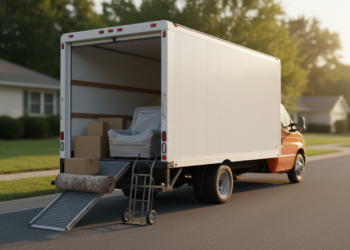
- Price the switch. Moving to a new facility’s $1 promo can cut your rent, but add a truck rental and a weekend of your time before you decide.
- Clear it properly. For the stuff nobody wants, compare a junk removal crew with a small dumpster.
Before signing anywhere, get four answers in writing: the full first-month total with fees, the move-out notice rule, how often and how much rates have recently risen for existing tenants, and whether a 6- or 12-month rate lock is available.
Storage unit questions renters ask
What happens if I stop paying for my storage unit?
Facilities charge late fees and can deny access after a missed payment. If the balance stays unpaid, state lien laws let the operator sell the contents at auction after a required notice period, which varies by state. Contact the facility early if you fall behind.
Is it cheaper to prepay for a storage unit?
Some facilities offer a discount or a free month for prepaying several months, and prepaying can sometimes lock your rate for that period. Ask whether unused months are refunded if you move out early before paying ahead.
Do I need to give notice before moving out of a storage unit?
Most month-to-month agreements require notice, often by a set date before your next billing cycle, and many do not prorate a partial month. Read the move-out clause so you are not billed for an extra month.
Are peer-to-peer storage spaces cheaper than a storage unit?
Renting a garage, basement or driveway spot from a homeowner through a marketplace can cost less than a facility, especially in expensive cities. Access hours, security and coverage differ by listing, so compare those terms, not just the price.
Can I deduct the cost of a storage unit on my taxes?
Personal storage is generally not deductible. Storage used for a business, such as inventory or equipment, may count as a business expense. Rules depend on your situation, so confirm with a tax professional.
Related cost guides
- Moving cost calculator
- How much do movers cost: read how they bill you
- Renters insurance cost: a real policy vs the rent fee
- Junk removal cost: priced by how much truck you fill
- Dumpster rental prices: pick the size by your project
- Postage stamp prices: what each envelope really needs
More related guides: PODS moving cost
Pricing method: unit-size rates and protection plan ranges from SpareFoot’s 2026 rental data (published May 2026); city averages from StorageCafe’s May 2026 report; national rate trends from Yardi Matrix (September 2026 data); realized rent from Public Storage’s first-quarter 2026 results; admin fee from Public Storage’s published promotion terms; consumer case from Scripps’ “Don’t Waste Your Money” reporting; insurance ranges from Neighbor. The 10×10 example is hypothetical. Prices were researched in October 2026 for 2027 planning and may change; confirm current rates and terms with the facility. See our disclaimer.