Should you pay cash for a battery that no longer earns a federal tax credit, or rent one from a company that still collects it? That is the choice a Tesla Powerwall 3 now comes down to. One unit typically costs $13,000 to $16,500 installed, according to 2026 installer price guides, and since January 1, 2026 a homeowner who buys it gets no federal credit back. In parts of Texas, Tesla will instead lease you two of them for about $35 a month, as long as you buy your electricity from Tesla too.

Below we price three ways to get a Powerwall 3 on your wall for 2027, run each one over ten years, and say which household each path suits. Pairing the battery with new panels? Our solar panel cost guide covers the array side of the same decision.
What one Powerwall 3 costs to buy and install now
Tesla does not publish a single installed price; it quotes by address. Installer guides fill the gap. SmartEnergyUSA puts the unit alone at $9,300 to $10,500 and the installed job at $13,000 to $16,500, with the difference going to labor, electrical work and permits. NRG Clean Power, a California installer, quotes the same $13,000 to $16,500 range and calls about $15,000 typical for a single unit. Home Energy Decisions cites EnergySage marketplace data of roughly $15,600 for an installed 13.5 kWh battery.
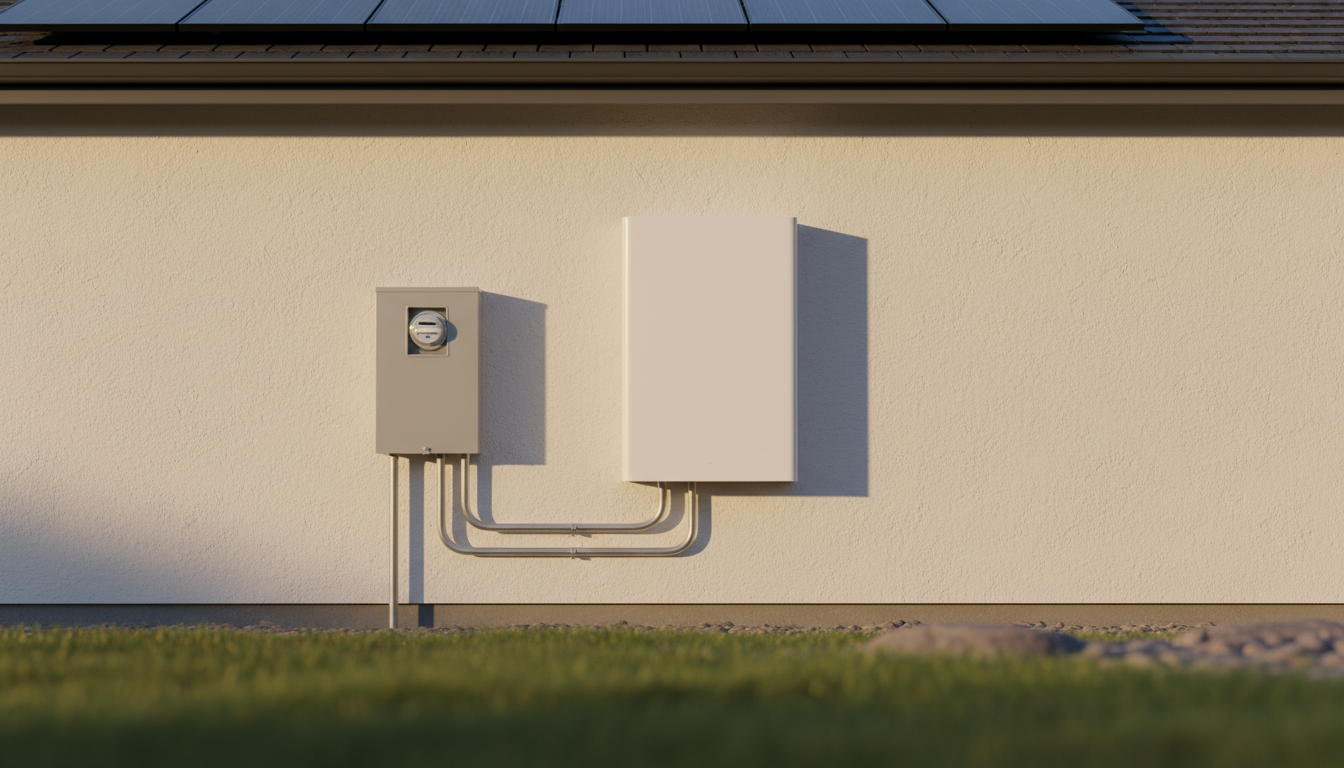
For that money you get 13.5 kWh of stored energy, 11.5 kW of continuous output and a solar inverter built into the cabinet, which is the main reason the Powerwall 3 is cheaper to pair with new panels than older batteries that needed a separate inverter. Divide the installed price by capacity and you are paying about $960 to $1,220 per kWh.
| Line on the quote | Typical 2026 price | Source |
|---|---|---|
| Powerwall 3 unit (13.5 kWh, built-in inverter) | $9,300 to $10,500 | SmartEnergyUSA |
| Installed single Powerwall 3 | $13,000 to $16,500 | SmartEnergyUSA, NRG Clean Power |
| Powerwall 3 Expansion (13.5 kWh, no inverter), hardware only | $5,900 plus installation | NRG Clean Power, citing Tesla |
| Maximum system size | One Powerwall 3 plus three Expansions, 54 kWh | Tesla, via Drive Tesla |
| Panel upgrades, trenching, special permits | Quoted per home | Installer site visit |
The credit that vanished, and the one that did not
Until the end of 2025, a homeowner who bought a battery could claim 30% of its cost under Section 25D, the residential clean energy credit. The 2025 budget law ended it, and the IRS states the credit does not apply to expenditures after December 31, 2025. On a $15,000 install that is $4,500 you no longer get back, which is why older articles quoting a net price near $10,000 are now wrong for buyers.
Batteries owned by a company are treated differently. Under Section 48E, energy storage keeps a full credit for projects that begin construction by December 31, 2033, stepping down to 75% in 2034 and 50% in 2035, according to a Pierce Atwood analysis of the law. Storage is not caught by the July 4, 2026 construction deadline that now limits solar panels. A leasing company can claim that credit and pass some of the value to you through a lower payment. Rules on parts from prohibited foreign entities tighten each year, starting in 2026, so the supply of qualifying batteries may shrink, but nothing announced so far ends the leasing credit in 2027.
Path one: pay cash and own every kilowatt-hour
Owning is the simplest path and, at full price, the most expensive one up front. You pay roughly $15,000 for one unit, the battery is yours, and you choose your electricity plan, your backup reserve and whether to join a utility program. You also carry the risk: the battery comes with a 10-year warranty, and after that any repair is your bill.
Ownership pays off fastest where a local utility writes a big check. NRG Clean Power’s October 2026 figures for a $15,000 install in California show how wide the gap is:
- PG&E, SCE and SDG&E customers: no rebate at standard income, because the state’s SGIP general-market budget is closed. Net cost stays $15,000.
- SMUD (Sacramento): a $5,400 rebate brings it to $9,600, plus up to $110 a quarter for letting the utility draw on the battery.
- Riverside Public Utilities: $6,750 off, for a net of $8,250.
- Pasadena Water and Power: up to $7,425 off, for a net near $7,575.
- Low-income or high-fire-risk households in the big three utilities: SGIP equity tiers pay $1,000 to $1,100 per kWh, up to $14,850 for one Powerwall 3, which can cover nearly the whole job.
Outside California, check your own utility before you check Tesla. Tesla’s own $500 Powerwall rebate required installation by September 30, 2026 and has ended.
Need more than 13.5 kWh? How the Expansion changes the math
The Powerwall 3 Expansion adds another 13.5 kWh but no inverter, so it extends how long you can run, not how much you can run at once. NRG Clean Power reports Tesla lists the hardware at $5,900 before installation, against $9,300 or more for a second full Powerwall 3. If one unit’s 11.5 kW of continuous output already covers your critical loads, the Expansion is the cheaper way to buy hours. If you need to run a large air conditioner and a well pump at the same time, a second full unit is the safer quote to request.
Path two: lease from someone who still gets 30%
The most aggressive offer on the market right now is Tesla’s own. In August 2026, Tesla Electric launched a Powerwall lease in Texas areas with retail electric choice. The headline is about $35 a month for two Powerwalls with $0 standard installation and a one-time $100 order fee. Electrek’s reading of the terms shows how that number is built:
- The gross lease is about $122 a month in year one and rises 3% a year.
- Enrolling in the Tesla Electric Backup plan earns an $87 monthly credit, which brings year one to about $35 plus tax.
- The credit starts only after installation, permission to operate and enrollment, and it lasts only while you stay a Tesla Electric customer and meet the program rules.
- Tesla dispatches the batteries into the Texas grid as a virtual power plant and keeps at least a 20% reserve for your outages.
- Homes needing electrical upgrades or unusual permits may pay extra, and homes with solar panels are not eligible.
Outside Texas, leases and power purchase agreements come from solar companies, usually bundled with panels. Their pricing is set per contract, so compare them on the total of all payments, the escalator and what happens when you sell the house. A lease is easiest to live with when you plan to stay put; a buyer has to qualify to take it over or you may have to pay it off.
Ten years of payments on three Powerwall 3 setups
The table below is a worked example, not a quote. It uses the published figures above and assumes each program kept its current terms for ten years, which none of them guarantees. Tesla’s lease term and buyout terms were not stated in the reports we reviewed, so treat that column as the cost of ten years of payments, not of ownership.
| Cash, no rebate (PG&E area) | Cash with SMUD rebate | Texas lease, two units | |
|---|---|---|---|
| Storage | 13.5 kWh | 13.5 kWh | 27 kWh |
| Day-one cost | $15,000 | $9,600 | $100 |
| Ten-year payments | None | None | About $16,780 gross |
| Program credits over ten years | Depends on rate plan | Up to $4,400 | About $10,440 if enrolled throughout |
| Ten-year net outlay | $15,000 | About $5,200 at the maximum payout | About $6,440 |
| Who owns it in year 11 | You | You | Tesla, unless the contract says otherwise |
Two things jump out. Per kWh of storage, the Texas lease is the cheapest seat in the house, but it ties you to one electricity provider and gives Tesla first call on your battery. And a generous utility rebate can make plain ownership cheaper than any lease, with none of the strings.
Which path fits which house
| If this describes you | Lean toward | Why |
|---|---|---|
| Your utility pays $5,000 or more per battery | Buy | The rebate does what the federal credit used to, and you keep control. |
| Texas, retail choice area, no solar, outages are the worry | Tesla lease | Two batteries of backup for less than most people pay for one. |
| Adding new solar at the same time, no local rebate | Compare a lease or PPA with a cash bid | Only a company-owned system can still capture the 30% credit. |
| Likely to sell within five years | Buy, or skip | A lease has to be transferred or paid off at sale. |
| You want backup only for a fridge, lights and Wi-Fi | Price a smaller option too | A standby generator or a smaller battery may cover it for less. |
One more factor for 2027: NRG Clean Power reports that Section 232 import tariffs on solar and storage equipment took effect in August 2026. Tesla has not announced a 2027 Powerwall price, so plan with today’s quotes and expect an installer to honor a written price for a limited window only.
Powerwall questions installers hear after the quote
Can one Powerwall 3 run my central air conditioner?
Often, but not always. A Powerwall 3 supplies 11.5 kW continuously and more for brief surges, which covers many central AC units, but a large older compressor can draw too much when it starts. Ask the installer for a load calculation and, if needed, a soft-start device for the AC.
What does the Powerwall 3 warranty cover?
Tesla gives 10 years and, per published spec summaries, guarantees at least 70% of the original capacity at the 10-year mark with unlimited cycles. Installation workmanship is usually warranted separately by the installer, so get that term in writing too.
Does a Powerwall 3 work without solar panels?
Yes. It can charge from the grid, store power for outages and, on time-of-use rates, shift your usage to cheaper hours. Without solar, an extended outage will drain it, since nothing recharges it until the grid returns.
Is a Tesla Powerwall 2 price lower, and is it worth buying instead?
Tesla’s current US lineup centers on the Powerwall 3, so a Powerwall 2 offer today usually comes from leftover installer stock, priced by that installer. The older unit has no built-in solar inverter, so compare full installed quotes, including any separate inverter, rather than the battery price alone.
Keep pricing your home energy setup
- Home improvement costs in 2027: the complete price guide
- Solar panel cost: cash, loan or lease without the credit
- Whole house generator cost by the kW you need
- Average cost of electricity per month
- Home EV charger installation cost
Three calls to make before you commit
- Your electric utility. Ask what it pays for a home battery, whether the budget is open, and what a battery program pays each year. This one answer can move your net cost by $5,000 or more.
- Two installers, one of them not selling Tesla. Get written, itemized bids for the same capacity, with any panel upgrade priced separately, so you can see whether the battery or the electrical work is driving the number.
- A tax professional, if a lease is on the table. Confirm how the contract treats the 48E credit, the escalator and a home sale. For a purchased battery, ask whether any state credit applies where you live, since the federal one is gone.
Pricing method: prices were researched in November 2026 for 2027 planning and may change. Figures come from installer price guides (SmartEnergyUSA, NRG Clean Power, Home Energy Decisions citing EnergySage), Tesla specifications reported by Drive Tesla, reporting by Electrek and Solar Power World on Tesla’s Texas lease, and a Pierce Atwood analysis of federal energy credits. Incentives and lease terms change often; confirm current terms with your utility, installer and a licensed tax professional. See our disclaimer.