On July 12, 2026, the Postal Service raised mailing prices an average of 4.8%, and the cheapest way to reach every house on a street went from 24.7 cents to 26 cents a piece. That Every Door Direct Mail (EDDM) retail rate is the floor of direct mail cost for 2027. Add printing and a design and a local postcard drop lands around $0.38 to $0.61 per home, while a postcard addressed to a rented, targeted list typically runs $0.55 to $1.20 a piece, plus the names.

The cheaper piece is not always the cheaper customer. A small business with a few thousand dollars has three places to send it: every mailbox on chosen carrier routes, a rented list of people who fit a profile, or its own past customers. Each wins under different conditions, and the deciding number is cost per new customer, not cost per stamp.
Three ways to spend the same mail budget
The figures below combine USPS postage with published 2026 vendor pricing from Oppizi, DirectMail.io and 4over4. They are planning ranges for a 5,000-piece postcard campaign; your printer’s quote will be more precise.
| Path | Who gets it | Postage per piece | All-in per piece | 5,000 pieces, all in |
|---|---|---|---|---|
| EDDM retail | Every address on the routes you pick | $0.26 | $0.38 to $0.61 | $1,900 to $3,050 |
| Rented prospect list | Named households or businesses that match filters | $0.395 to $0.467 (Marketing Mail letter rates) | $0.57 to $1.28 with list rental | $3,050 to $6,900 |
| Your own customer list | Past buyers and leads you already have | Same Marketing Mail rates, or $0.65 First-Class postcard stamp | $0.85 to $1.50 at small volumes | Rarely 5,000; 1,000 pieces runs $850 to $1,500 |
Every Door Direct Mail: cheapest per mailbox, priciest per stranger
EDDM skips the address list entirely. You pick carrier routes on the USPS map, bundle your mailers, and the carrier leaves one at every stop. At the retail rate that is $260 in postage per 1,000 pieces and $1,300 for 5,000, according to 4over4’s 2026 pricing guide. There is no list to rent and, at the retail counter, no permit or annual fee. The bulk (BMEU) version of EDDM carries a lower per-piece rate but requires a permit and an annual fee.
The rules shape the budget. Retail EDDM is capped at 5,000 pieces per ZIP code per day and expects at least 200 pieces. Every piece must qualify as a flat, meaning taller than 6.125 inches, longer than 11.5 inches or thicker than a quarter inch, and the same rate applies up to 3.3 ounces. That is why EDDM printers start at sizes like 6.5 by 9 inches, and why a standard 4 by 6 postcard does not qualify.
Printing is the smaller half of the bill. Oppizi puts a 6 by 9 postcard at $0.08 to $0.25 per piece at volume, and a freelance designer at about $200 to $500 per piece. Postage typically makes up 35% to 60% of a campaign’s total cost, by Oppizi’s count, so shaving the print spec rarely moves the total much.
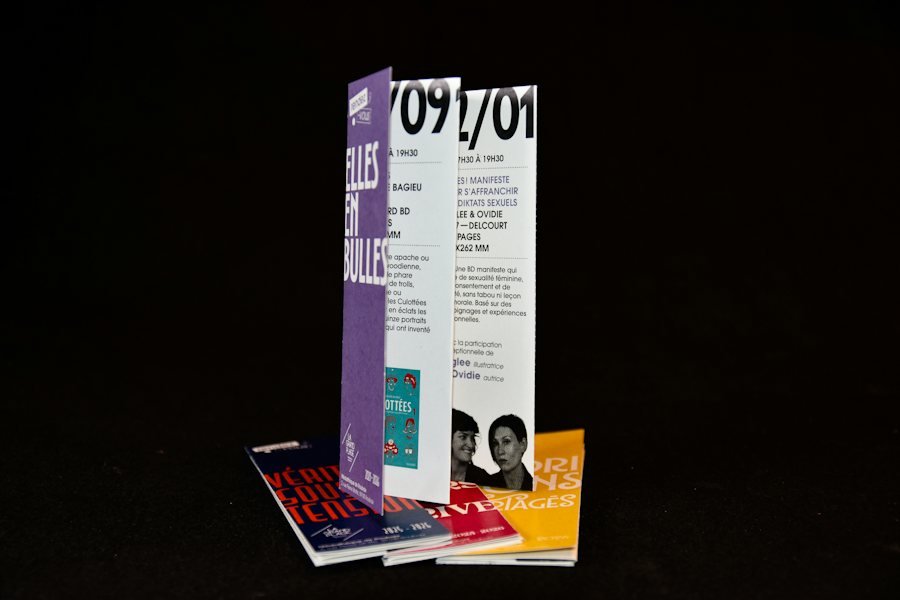
The weakness is waste. A route includes renters when you sell roof replacements, apartment dwellers when you mow lawns, and neighbors who hired someone last spring. EDDM makes sense when nearly everyone on a route is a plausible buyer: a pizzeria, a dentist, a dry cleaner, a new gym. Industry response benchmarks are built on addressed mail, and no credible published figure exists for saturation drops, so judge EDDM on your own tracked results, with a unique phone number, code or landing page on every card.
Renting a list: more per piece, fewer wasted doorsteps
A rented list lets you mail only homeowners, only households with a pool, only businesses with ten or more employees, or only people who moved in last month. Oppizi lists basic demographic names at $0.02 to $0.08 each and behavior-based records at $0.30 or more. The mail itself goes out at USPS Marketing Mail commercial rates, which require at least 200 pieces or 50 pounds and depend on how finely the mail is sorted.
| Marketing Mail letter, commercial | Before July 12, 2026 | From July 12, 2026 |
|---|---|---|
| 5-Digit | $0.372 | $0.395 |
| 3-Digit (replaced AADC) | $0.407 | $0.435 |
| Mixed | $0.433 | $0.467 |
Most small businesses never touch those tiers themselves. A print-and-mail house presorts, applies postage and passes the rate through inside its per-piece price. DirectMail.io’s 2026 pricing puts a 4 by 6 postcard at $0.50 to $0.75 all in at 10,000 to 50,000 pieces a month, a 6 by 9 at $0.65 to $1.00 and a #10 one-page letter at $0.55 to $0.85. Below 5,000 pieces a month, its postcard range climbs to $0.85 to $1.50.
What the extra money buys is response. DirectMail.io cites a DMA and ANA benchmark range of 2.7% to 3.2% for prospect lists, and Oppizi quotes 3% to 5% from the ANA/DMA Response Rate Report 2018. Treat these as responses, not sales: calls, scans and visits that still need converting. Triggered lists such as new movers do better, at 8% to 14% in DirectMail.io’s range.
Your own customers: the priciest stamp, the cheapest sale
Mailing people who already bought from you costs the most per piece, simply because the list is short and short runs print expensively. It also pays back best. The same benchmark sources put house-list response at 4.4% to 5.3% (DirectMail.io) or 5% to 9% (Oppizi, citing the 2018 ANA/DMA report), and DirectMail.io reports retention campaigns returning 12:1 to 21:1 against 3:1 to 7:1 for acquisition. Those ROI figures are vendor-compiled, so read them as direction, not promise.
For a list under a few hundred names, plain First-Class postage can be simpler than a bulk mailing: $0.65 for a postcard stamp and $0.82 for a one-ounce Forever-stamp letter since July 2026. Above 200 pieces, a mail house will usually beat that with Marketing Mail.
Two service businesses, one budget, opposite answers
These are hypothetical examples built from the ranges above, not real campaigns.
The pizzeria: EDDM
Nearly every household within two miles orders takeout, so targeting adds little. Five thousand 6.5 by 9 cards on eight nearby routes: $1,300 postage, $400 to $1,250 printing, $200 to $500 design. Total: $1,900 to $3,050. If an average first order brings $15 of profit, the drop needs roughly 127 to 203 new orders to break even, or about 2.5% to 4% of homes reached, before repeat visits.
The pest control company: rented list
Only owner-occupied single-family homes are worth reaching. A rented list of 3,000 such homes at $0.02 to $0.08 a name, postcards at $0.55 to $1.20 each and $200 to $500 design comes to $1,910 to $4,340. If a new annual plan brings $250 of first-year profit, the mailing pays back with 8 to 18 sign-ups, under 1% of the list.
Swap the businesses and both mailings look worse. Low-ticket, high-frequency sellers can live with saturation’s waste; high-ticket sellers with a narrow buyer cannot. The break-even response rate, total cost divided by profit per customer, then divided by pieces mailed, is the one calculation worth doing before any quote.

For calibration, DirectMail.io reports consumer acquisition costs of $32 to $48 for mid-funnel offers, $14 to $28 in retail and quick-service restaurants, and $60 to $120 in financial services and insurance. If your break-even CPA sits well below your industry’s range, fix the offer or the list before you fix the printer.
A January without a postage hike, and a July that may bring one
USPS used to raise mailing prices every January and July. For 2027, Walsworth reported on October 30, 2026 that the Postal Service will not implement a January 2027 increase for market-dominant mail, the group that includes First-Class Mail and Marketing Mail. The next increase for those products is expected in July 2027; a 6% to 7% figure circulating in the trade press is a forecast, not a filed price. The weekly fuel surcharge starting in January 2027 applies to shipping products such as Priority Mail and Ground Advantage, not to postcards or Marketing Mail.
The practical takeaway: first-half 2027 mailings should cost what they cost today, and anything planned for late summer should carry a postage cushion. Mail Processing Associates suggests budgeting 5% to 6% annual postage growth.
Direct mail pricing questions owners ask after the first quote
How much does direct mail cost for 1,000 pieces?
At the EDDM retail rate, postage for 1,000 pieces is $260 before printing. Addressed postcards from a mail house usually run $0.85 to $1.50 each at that small volume, or $850 to $1,500, according to DirectMail.io’s 2026 pricing.
Why do some vendors quote direct mail per thousand?
Direct mail pricing is often quoted as CPM, the cost per thousand pieces. Oppizi lists EDDM postcards at $300 to $550 CPM and standard postcards at $550 to $1,200 CPM, which is the same as $0.30 to $0.55 and $0.55 to $1.20 per piece.
Do nonprofits pay less for every door direct mail or Marketing Mail?
Nonprofit Marketing Mail rates are much lower. Mail Processing Associates reports nonprofit 5-Digit letters at $0.185 from July 12, 2026, against $0.395 for commercial mail. Eligibility requires USPS authorization, so confirm with your post office.
How fast do responses to a postcard come in?
Most arrive quickly. DirectMail.io’s benchmarks say about 80% of postcard redemptions happen within 14 days, so plan staffing and follow-up for the first two weeks after the drop.
Is direct mail advertising cost higher than digital ads?
Per impression, yes. Oppizi compares direct mail CPMs of $500 to $1,500 or more with $10 to $30 for digital display. Mail can still win on cost per customer when its response rate is far higher, so compare results, not impressions.
Three calls to make before you print a single card
- Your own records. Pull every past customer and lead with a mailing address. If you have 500 or more, mail them first; it is the cheapest response you will buy.
- A local EDDM printer. Ask for a quote on your chosen routes at a qualifying flat size, with postage shown separately, so you can check it against the $0.26 retail rate.
- A print-and-mail house with list access. Ask for the per-name list price, the presort tier your mailing will reach and an all-in per-piece number for the same card.
Put the two outside quotes next to your break-even math. Whichever needs the lower response rate to pay for itself is the one to mail first, and the tracked results from that drop will tell you what to do with the next budget.
Other marketing line items, priced
- Cost of printing by quantity and shop type
- Business card prices, from basic to luxe
- UPS Store printing prices
- Billboard cost per month and per customer
- Google Ads cost, budgeted from a customer
- Local SEO services pricing
- Small business startup costs: the complete guide
More related guides: Times Square billboard cost, from $130 photos to spectaculars
Pricing method: prices were researched in November 2026 for 2027 planning and may change. Postage figures reflect USPS rates effective July 12, 2026 as reported by Mail Processing Associates and 4over4; vendor ranges come from Oppizi and DirectMail.io 2026 pricing guides. Response and acquisition benchmarks are vendor-compiled. Confirm postage with USPS and get written quotes before mailing. See our disclaimer.