




The costliest casket decision usually gets made in the first ten minutes at the funeral home, in a selection room arranged so the middle model feels like the sensible one. Most adult caskets sell for about $1,000 to $5,000. A 20-gauge steel model can be ordered online for about $1,299.99 with delivery to the funeral home, the National Funeral Directors Association’s 2023 price study put the median metal casket at $2,500, and bronze or copper models run past $10,000.

Very little of that spread buys anything the family will notice at the graveside. Most of it comes from where the casket is bought, which features get added, and what nobody mentioned until the bill arrived. Below are the six mistakes that inflate the cost of a casket most often, each with the price it adds, plus what the federal Funeral Rule already guarantees you.
Casket prices by material, and where the listings land
Material drives the base price. Gauge describes steel thickness, and the lower number is the thicker sheet, so 18-gauge costs more than 20-gauge. The typical ranges below come from a July 2026 Parting Stone summary; the right-hand column shows real price-list examples gathered by ThePricer in October 2026 from funeral homes and online sellers.
| Casket type | Typical range | Example listings seen in 2026 |
|---|---|---|
| Cloth-covered, fiberboard or cardboard | $500 to $1,500 | $150 to $275 for basic models |
| 20-gauge steel | $1,000 to $3,000 | $1,299.99 to $1,399.99 online; $1,499 to $2,799 at funeral homes |
| 18-gauge steel | Higher end of steel | $2,795 to $4,295 at funeral homes |
| Wood veneer | $1,000 to $3,000 | $2,195 to $4,895 for selected wood and veneer models |
| Solid hardwood | $2,000 to $7,000+ | Included in the wood range above |
| Stainless steel | $2,000 to $5,000 | $4,599 to $5,295 |
| Bronze or copper | $3,000 to $10,000+ | $7,299 to $15,995 |
| Wicker, bamboo or seagrass (eco) | $500 to $2,500 | Varies by maker |
Mistake 1: Walking into the selection room before reading the price list
Federal law gives you the right to see casket prices before you see the caskets. Under the FTC Funeral Rule, a funeral home must show you its casket price list when you ask about caskets or before it shows them to you in person, and it must give price information over the phone. Few families use that right. They walk the room first, and the room does the selling.
Clark Howard’s consumer team, citing the FTC, notes that the average shopper picks one of the first three models shown, usually the middle-priced one. In a room of steel caskets, “middle” can easily mean an 18-gauge casket in the $2,795 to $4,295 band when a 20-gauge one at half the price would look the same under a spray of flowers. Ask for the full casket price list by email the night before, circle two or three models in your budget, and ask to see those.
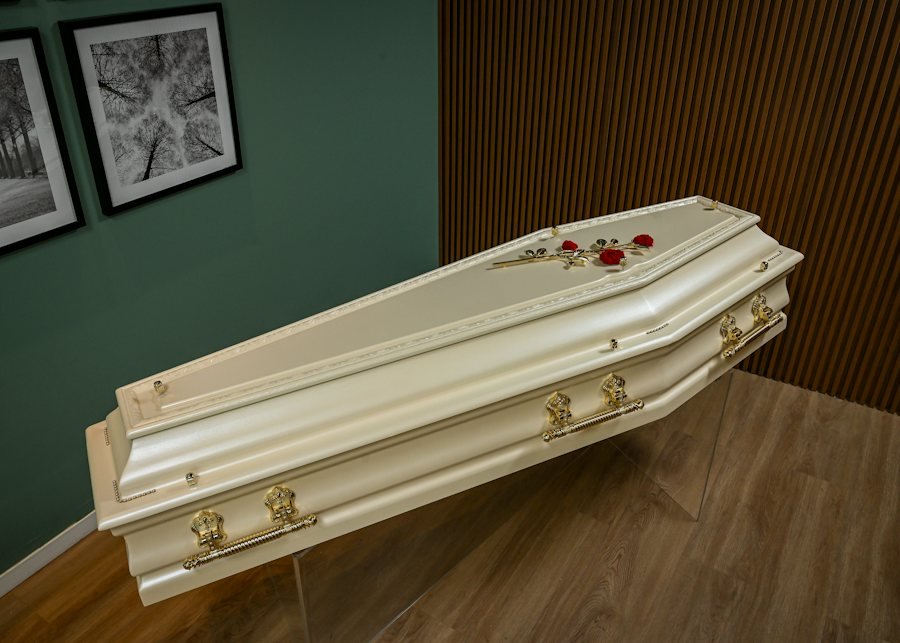
Ask directly whether the home carries a cloth-covered or basic wood model, since those can sit far below the steel models on the floor.
Mistake 2: Buying from the funeral home without one outside quote
Funeral homes are entitled to mark up merchandise, and some are reasonable about it. The only way to know is to compare. Checkbook’s undercover shoppers found the least expensive oak casket at different funeral homes ranging from $1,010 to $5,085. The same pattern shows up in steel: ThePricer’s examples put online 20-gauge caskets at $1,299.99 to $1,399.99 delivered, against $1,499 to $2,799 on funeral home lists.
| Where you buy | Listed price range | Delivery terms |
|---|---|---|
| Costco | $1,299.99 (Prime President) to $1,599.99 (Prime Hampton) | Shipping included |
| Walmart | From $995 to over $5,100 | Free delivery on most models; a handling fee may apply if not shipped to a funeral home |
| Amazon | From $999 (Titan cloth-covered); $1,299 for a Titan Andover steel model | Free shipping on the examples listed |
| Funeral home (20-gauge steel) | $1,499 to $2,799 | No delivery step |
One outside quote is enough. Take a printed listing to the arrangement meeting and some homes will meet it rather than lose the sale. If they will not, you can still buy elsewhere, as Mistake 4 explains.
Mistake 3: Paying for a seal that preserves nothing
“Protective,” “sealer” and “gasketed” caskets have a rubber gasket around the lid. The pitch, spoken or implied, is that the seal protects the body. It does not. Clark.com and ThePricer both point out that gaskets and seals do not preserve remains.
The cost shows up as an upgrade. If a sealer feature is what moves you from a 20-gauge model at $1,499 to $2,799 on funeral home lists to an 18-gauge one at $2,795 to $4,295, you may pay more than $1,000 extra for something that preserves nothing. If a family wants a steel casket for its look or sturdiness, a 20-gauge model does the job. If anyone tells you a sealed casket will keep out water or slow decomposition, ask them to put that in writing. Few will.
Mistake 4: Assuming an online casket comes with a funeral home penalty
Plenty of families never price a casket online because they assume the funeral home will add a fee, refuse the delivery or make things awkward. Federal law closes all three doors.
“The funeral provider may not refuse, or charge a fee, to handle a casket bought elsewhere.”
Federal Trade Commission, Funeral Rule overview
The FTC’s consumer guidance adds that the funeral home cannot require you to be there when the casket is delivered. One gap: the Funeral Rule covers funeral providers, not third-party casket sellers, so your protection on the retail side is the seller’s own terms. Those terms carry real costs if something goes wrong. ThePricer reports that Titan’s published return policy charges a 30% restocking fee plus return shipping, which is $390 on a $1,299 casket before freight.
Before you click “buy” on an online casket
- Confirm with the funeral home the exact delivery address, receiving hours and the date of the service.
- Get the promised delivery date from the seller in writing, and ask what happens if it misses.
- Check the exterior dimensions against the cemetery’s vault or liner, especially for oversized models.
- Read the return and damage policy, including any restocking fee and who pays freight.
- Ask the funeral home to inspect the casket on arrival and report damage the same day.
Mistake 5: Buying a casket for a cremation
No state or local law requires a casket for cremation, according to the FTC, and any funeral home that offers cremation must tell you alternative containers are available and make them available. Those containers are made of unfinished wood, pressed wood, fiberboard or cardboard, and typically cost $50 to $300, with an NFDA median of $160. Buying even a basic $1,299 steel casket for a body headed to the crematory is roughly $1,100 spent on something that will be burned.
Families who want a viewing first have a middle path. Rental caskets use a removable interior liner, so the visible casket is reused. A Norwalk funeral home’s 2026 price list shows rentals at $880 to $1,010, and other homes list them around $699 to $899. Check whether the rental quote already includes the cremation container, since some homes charge for both.
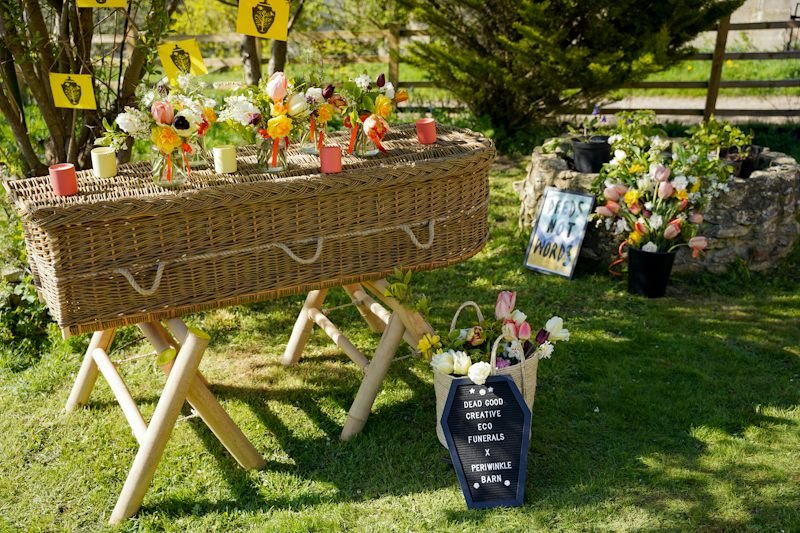
For burial, the cheaper alternatives are not second-rate. Wicker, bamboo and seagrass caskets run about $500 to $2,500, and they are the expected choice in green burial sections, where many cemeteries do not allow metal caskets or vaults. A plain pine box, a cloth-covered model or a simple woven casket can look more personal than a mid-range steel casket. If cost is the main worry, our guide to charities and programs that help with funeral costs lists the help available by situation.
Mistake 6: Budgeting for the casket and forgetting the box around it
No state law requires an outer burial container, but many cemeteries do, because a concrete liner or vault keeps the ground from settling over the grave. That second box is easy to leave out of a budget. One funeral home price list cited by ThePricer shows a basic grave box at $1,295 and a lined vault at $1,895, which can make the container cost more than the casket itself.
The Funeral Rule requires a separate outer burial container price list when you ask, so request it alongside the casket list. Then add the grave itself. Our guides to burial plot prices and the full cost of a burial cover opening and closing fees, which the cemetery bills separately.
Pricing transparency is not improving quickly. The FTC opened a review in October 2022 on whether funeral homes should have to post prices online and held a workshop in September 2023, but it had not issued a proposed rule as of November 2026, so no federal online-price requirement is set for 2027. In the FTC’s own undercover phone survey of 278 funeral providers in 2023, 73 (26%) gave no price information after business hours. Getting the casket and container price lists in writing is still on you.
Casket questions families ask next
Is there a price difference between a casket and a coffin?
The shape differs more than the price. A coffin is six-sided and tapers toward the feet, while a casket is rectangular, usually with a hinged or split lid. Material and finish set the price for both. Most models sold in the United States are caskets, so coffins are less common and are often simple wood designs.
Does the casket price include the vault or grave liner?
No. The outer burial container is priced separately, on its own price list. One funeral home list cited by ThePricer shows a basic grave box at $1,295 and a lined vault at $1,895. Ask the cemetery whether it requires one before you buy.
Will Medicare or Social Security pay for a casket?
Medicare does not cover funeral costs. Social Security pays a one-time $255 death payment, but only to a surviving spouse or eligible child, and it covers a small share of any casket. Veterans may qualify for burial benefits through the VA; confirm eligibility directly with the agency.
Is an 18-gauge casket worth it over a 20-gauge?
Lower gauge means thicker steel, so 18-gauge is sturdier and usually costs more: funeral home examples run $2,795 to $4,295 against $1,499 to $2,799 for 20-gauge. Neither preserves the body. The upgrade buys heft and finish, not protection.
Can a cardboard or cloth-covered casket be used for burial?
Often, yes, though cemetery rules decide. Basic cloth-covered and cardboard models list for about $150 to $275, and green burial grounds may require biodegradable caskets. Ask the cemetery about its container rules before ordering.
Three calls to make before the arrangement meeting
- The funeral home. Ask for the General Price List, the casket price list and the outer burial container price list by email. Note the cheapest model they carry, and whether they will match an outside price.
- The cemetery. Ask whether it requires a vault or liner, what size it accepts, and whether a green section allows a wicker, pine or cardboard casket without one.
- One outside seller. Price a comparable model from Costco, Walmart, Amazon or a casket retailer, and get a delivery date to the funeral home in writing before you commit.
Those three calls take about an hour and usually show where the next thousand dollars would go. For the rest of the bill, see the complete guide to family costs in 2027.
The rest of the funeral bill, priced
- Family costs in 2027: the complete guide, from pets to funerals
- Average funeral cost, broken into four bills
- What a burial costs, from $0 to $25,000+
- Headstone prices and cemetery rules
- Cremation cost, line by line
- Mausoleum crypt and private mausoleum prices
More related guides: Burial vault vs grave liner cost · Obituary prices, from free to a metro paper · Embalming costs and when you can skip it
Pricing method: prices were researched in November 2026 for 2027 planning and may change. Casket ranges come from Parting Stone (July 2026), ThePricer (October 2026), Clark.com retailer listings (April 2025), Checkbook and the NFDA 2023 General Price List Study; legal points come from the FTC Funeral Rule. Funeral law varies by state, so confirm details with your funeral provider or state funeral board. See our disclaimer.












