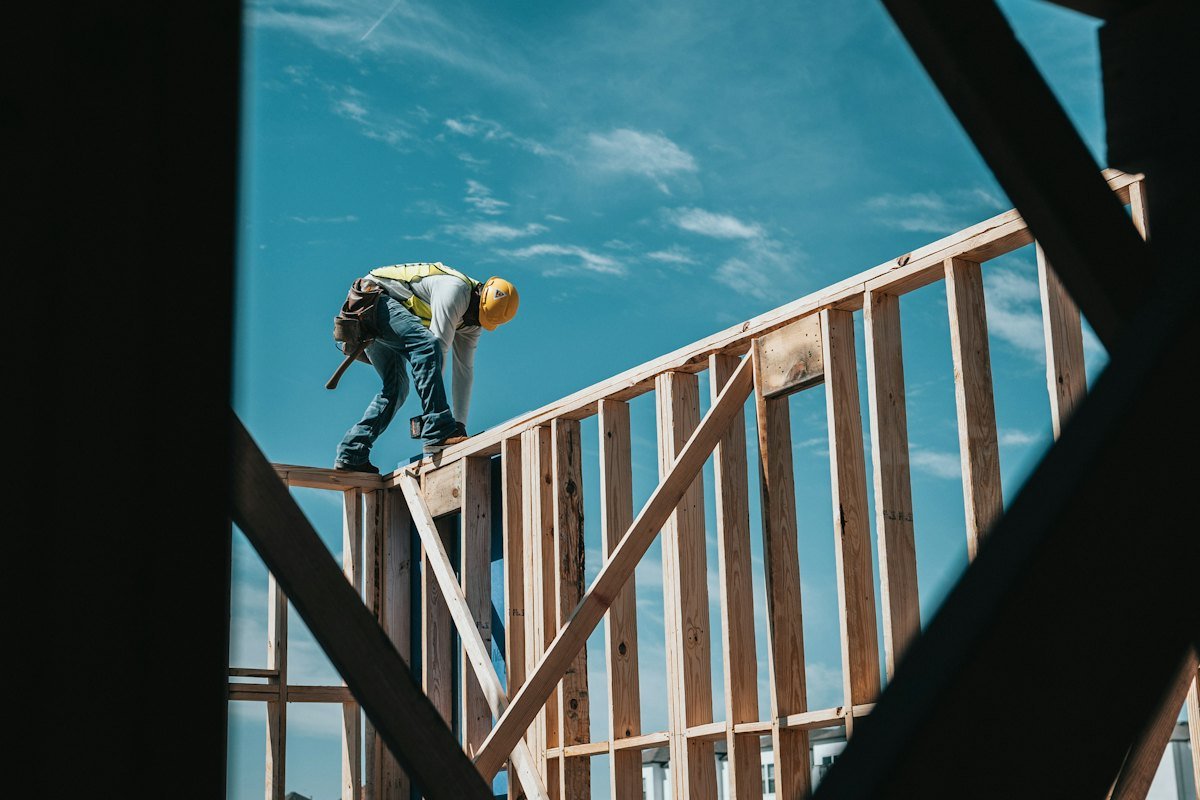
Two carpenters leave the same framing crew on the same Friday. One is billing kitchen remodels from his own pickup within a month. The other wants to bid commercial build-outs and finds she needs a bonded company, a payroll and months of cash before the first draw check clears.

Both started a construction company, and their bills sit roughly tenfold apart. Jobber’s August 2026 guide puts a solo handyman or remodeler at $10,000 to $25,000 to launch and a general contractor with employees and vehicles at $50,000 to $100,000 or more. A 2026 startup model for a commercial-capable firm in Cincinnati runs $58,000 to $495,000.
So the useful question is not the national average. It is which of four companies you are actually starting. Below, each one is priced from first filing to first year using published license fees, insurance medians and 2026 truck prices. The four budgets are examples built from those figures, not quotes from real firms.
Four first-year budgets, side by side
| Example company | Who it fits | Biggest single line | Example first-year total |
|---|---|---|---|
| 1. Solo remodeler, Texas | One person, repair and remodel work, no employees | Tools and cash reserve | $10,000 to $25,000 |
| 2. Licensed solo builder, California | Sole owner with a CSLB license who subcontracts the trades | The truck, if bought new | About $20,000 to $70,000 |
| 3. Residential GC with two hires, Florida | Certified contractor, small crew, owner still on the tools | Payroll float and workers’ comp | $50,000 to $100,000+ |
| 4. Commercial-ready GC | Bidding bonded commercial jobs | Heavy equipment and working capital | $58,000 to $495,000 |
Budget 1: the Texas remodeler who keeps the truck he already owns
Texas is the cheapest place in this walk-through to hang out a shingle because the state does not issue a general contractor license at all. Cities fill the gap. Fort Worth charges $168.75 a year to register as a building contractor. El Paso asks general contractors to keep a $50,000 blanket construction bond and $100,000 in liability coverage on file. Electrical, plumbing and air conditioning work stays licensed by the state through TDLR, so a remodeler without those licenses subcontracts them.
- City registration: $168.75 a year in Fort Worth; other cities set their own fees.
- Business registration or LLC: $50 to $800, depending on the state and whether you use a filing service.
- General liability: Insureon’s Texas median for general contractors is $152 a month, about $1,824 a year.
- Commercial auto: a $254 monthly median in Texas. A personal auto policy may not cover a truck used for paid work, so ask your agent before the first job.
- Tools: $2,000 to $15,000 or more.
- Estimating and job software: $30 to $300 or more a month.
- Working cash: $5,000 to $50,000 or more.
Add the low ends and the company opens for close to $10,000, most of it tools and a cash cushion. The danger in this budget is how little stands in the way. With almost no paperwork to clear, the first big expense is often a job that runs long, and a new owner with no reserve ends up financing the client’s kitchen on a credit card.
Budget 2: a licensed California builder, still a crew of one
California licenses contractors through the Contractors State License Board, and the state’s own fees are modest. The bond and the truck are what move the total.
| Line item | Example cost |
|---|---|
| CSLB original application | $450 |
| Initial license, sole owner (good for two years) | $200 ($350 for a corporation, LLC or partnership) |
| $25,000 contractor bond | Premium set by the surety; Insureon’s median contractor bond runs about $126 a year |
| General liability | California median of $144 a month, about $1,728 a year |
| Truck | $40,085 for a 2026 Ford F-150 XL ($37,290 MSRP plus $2,795 destination), or $10,000 to $60,000 used |
| Tools | $2,000 to $15,000 |
| Working cash | $5,000 to $50,000 |
Forming an LLC changes the paperwork more than the fees. CSLB lists a separate $25,000 bond of qualifying individual for the responsible managing officer or employee, waived in some cases when that person owns at least 10% of the company, plus LLC worker bond and liability insurance requirements where they apply. Applicants also take an open-book asbestos exam before the license issues.
A solo owner with no employees can file for a workers’ compensation exemption, with one catch that surprises people: concrete (C-8), HVAC (C-20), asbestos abatement (C-22), roofing (C-39) and tree service (D-49) contractors cannot. As of November 2026 we found no announced change to CSLB’s fee schedule for 2027, and the two-year renewal for a sole owner stays at $450 ($700 for other entities).
The license costs $650. The decision between a new and a used truck swings this budget by $30,000. That is where the planning effort belongs.
Budget 3: a Florida general contractor who hires two people in month one
Florida’s certified general contractor license is a statewide credential, and the application fee depends on the calendar: $145 if you apply between September 1 and April 30, $245 from May 1 through August 31, according to Jobber’s summary of DBPR fees. The computer-based exam starts at $135 and covers three parts: business and finance, contract administration and project management. Certified applicants must carry liability and property damage coverage and workers’ compensation (or hold an exemption), and they submit credit reports with FICO scores for themselves and their business. Renewal runs $130 every two years.
The license is a rounding error next to the people. Using Insureon’s Florida medians for general contractors, the insurance line alone looks like this for a small crew with one work truck:
- General liability: $104 a month, or $1,248 a year.
- Workers’ compensation: $532 a month, or $6,384 a year.
- Commercial auto: $351 a month, or $4,212 a year.
- Total: about $11,844 a year before tools, builder’s risk or an umbrella policy.
Then comes the truck. A 2026 Ford F-250 XL starts at $45,975, or $48,770 with the $2,795 destination charge, and a crew hauling materials usually needs that class of pickup or a trailer. The line that sinks first-year contractors, though, is payroll. Employees get paid every week; homeowners and builders pay on draw schedules. Budget enough cash to cover wages for the full gap between your first payday and your first collected draw, then add a job’s worth of slack, because the first draw is rarely on time.
Why the same crew costs twice as much to insure in California as in Pennsylvania
Insureon’s median workers’ compensation premium for general contractors is $590 a month in California and $171 a month in Pennsylvania.
Insureon general contractor cost data, updated July 2026
Workers’ comp rates are set state by state, which is why a company that looks identical on paper can carry a very different insurance bill. Here is the same three-policy package across four states, using Insureon’s monthly medians:
| State | General liability | Workers’ comp | Commercial auto | Yearly total |
|---|---|---|---|---|
| California | $144 | $590 | $270 | $12,048 |
| Florida | $104 | $532 | $351 | $11,844 |
| Texas | $152 | $306 | $254 | $8,544 |
| Pennsylvania | $57 | $171 | $259 | $5,844 |
Medians describe Insureon’s applicants, not your quote. Your trade, payroll, claims history and the work you actually do (roofing rates differently from interior trim) set the final premium. Our business insurance cost guide covers which policies clients and states tend to require.
Budget 4: bidding commercial work, where equipment and float swallow the budget
The top of the range belongs to companies that plan to bid commercial and public jobs. HowMuchToStartABusiness’s 2026 model for a Cincinnati construction company breaks the $58,000 to $495,000 total into seven lines:
| Line | Low | High |
|---|---|---|
| Heavy equipment and tools | $15,000 | $200,000 |
| Working capital, three to six months | $18,700 | $140,300 |
| Trucks and vehicles | $10,000 | $80,000 |
| Insurance and bonding | $8,000 | $40,000 |
| Licensing and permits | $2,000 | $15,000 |
| Project management and estimating | $2,000 | $10,000 |
| Marketing and bid preparation | $2,000 | $10,000 |
The same model puts ongoing costs at $8,000 to $60,000 a month, which is the number to stare at. Two lines in the table are choices rather than requirements. Renting excavators and lifts per job keeps the equipment row near its low end until you know how many days a year a machine would actually work. Working capital is not optional: commercial jobs often pay slower than residential ones, and the cash has to carry payroll and suppliers in between.
Commercial clients also add policies a remodeler can skip. Insureon’s national medians for general contractors are $1,635 a year for builder’s risk and $1,680 for an umbrella policy. Public and many private commercial jobs require performance and payment bonds, and the amount a surety will write for you depends on its review of your financial statements and track record, so meet a surety agent before you bid your first bonded job, not after you win it.
Questions new contractors ask their accountant first
Do I need an LLC to start a construction company?
No state in our examples requires one, but many contractors form an LLC or corporation to separate business debts from personal assets. Filing fees run about $50 to $800 depending on the state. In California, an LLC license costs $350 instead of $200 and adds its own bond and insurance requirements, so price both structures before you file.
How much money should I have saved before quitting my job to start a construction company?
Enough to cover your own living costs plus the business’s working capital until jobs pay reliably. Startup models we reviewed budget $5,000 to $50,000 in working cash for small contractors and three to six months of expenses, $18,700 to $140,300, for a commercial-capable firm. A CPA can help you size the cushion from your actual bids.
Is it cheaper to start as a subcontractor than as a general contractor?
Usually, yes. A subcontractor working one trade needs that trade’s tools and license and can lean on the general contractor’s site insurance requirements and schedule. Many owners subcontract for a few years to build cash and references, then move up to general contracting once they can carry payroll and bonding.
What software does a new construction company need?
At minimum, estimating, invoicing and bookkeeping. Job management platforms aimed at contractors run about $30 to $300 or more a month, depending on users and features. Start with the smallest plan that produces professional estimates and tracks job costs, and upgrade once you have a crew to schedule.
How long does it take to start a construction company?
A solo remodeler in a city with simple registration can be working within weeks. Licensed states take longer because of exams, background checks and bond filings, and a commercial-capable firm typically needs two to six months, according to the 2026 Cincinnati startup model we cite. Check current timelines with your state licensing board.
Which of the four budgets is yours
Four questions sort almost every new contractor into the right column:
- Will anyone besides you be on payroll in year one? If yes, you are in Budget 3 or 4. Get a workers’ comp quote for your state before you price anything else.
- Does your state license general contractors? In California or Florida, budget the application, exam and two-year renewal. In Texas, call your city’s building department instead.
- Do you need a new truck? A new F-150 XL at about $40,000 against a sound used pickup is the largest swing most small budgets will see.
- Will your first clients require bonds? If you plan to bid commercial or public work, talk to a surety agent and an accountant before the first bid, because bonding capacity follows your financial statements.
Answer no to all four and you can open for the price of good tools, a liability policy and a few months of cash. Answer yes to the first and last, and plan to raise or borrow six figures.
Other numbers to run before you file the paperwork
- Small business startup costs in 2027: the complete guide
- What an LLC costs over five years, state by state
- Business insurance cost and the policies you may be required to carry
- How much a CPA charges for small business work
- Lawn care business start-up cost, month by month
- Cleaning business startup cost, from solo to first hire
Pricing method: prices were researched in November 2026 for 2027 planning and may change. Figures come from the Contractors State License Board fee list and licensing pages, Jobber’s 2026 startup and Florida licensing guides, Insureon’s 2026 general contractor premium data, iSeeCars 2026 Ford MSRP data, Texas city registration requirements compiled by ContractorLicenseRequirements.com, and HowMuchToStartABusiness’s 2026 Cincinnati model. Budgets are illustrative examples, not quotes. Confirm requirements with your state licensing board, an insurance agent and a CPA. See our disclaimer.