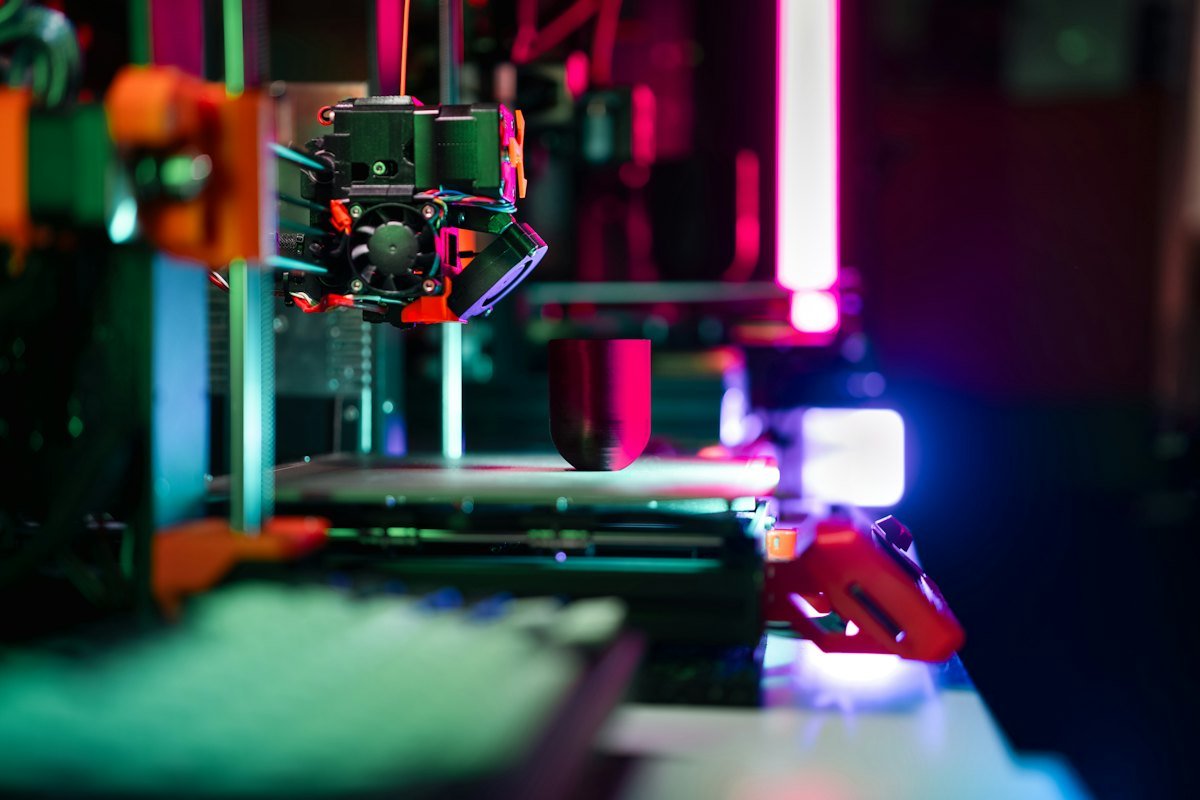
A 10-centimeter plastic figurine and a palm-sized aluminum bracket can come off the same online quote page, and the bracket costs about 13 times as much. In June 2026 quotes collected by All3DP through the Craftcloud marketplace, the figurine came to $29.61 delivered and the bracket to $378.16. For most small plastic parts, expect roughly $20 to $45 delivered from an online service, $0.05 to $0.25 per gram at a public library that prints for patrons, and well under a dollar in filament on a printer you own. Metal starts near $80 for a tiny titanium bracket and commonly lands between $300 and $500.

So the useful question is not what 3D printing costs in general. It is what your part costs by the route that suits it. Below, four typical buyers are priced start to finish, using published quotes, library fee schedules and printer list prices you can check for 2027 planning.
Four buyers, four bills at a glance
| Buyer and part | Cheapest suitable route | Delivered price | Step-up option | Step-up price |
|---|---|---|---|---|
| Hobbyist: 10 cm figurine | FDM, PLA | $29.61 | SLA, standard resin | $72.59 |
| Small seller: 100 cable clips | FDM, ASA | $25.43 (about $0.25 each) | MJF, Nylon 11 | $113.40 |
| Fixer: one replacement gear | FDM, ABS | $22.16 | Metal, 316L stainless | $61.42 |
| Engineer: topology-optimized bracket | Metal LPBF, AlSi10Mg aluminum | $378.16 | Metal LPBF, 316L stainless | $480.33 |
Five printing processes, one sentence each
Quote pages assume you know the acronyms. You only need these five:
- FDM: melts plastic filament (PLA, PETG, ABS, ASA) and lays it down in lines; the cheapest process and the one on most home desks.
- SLA (resin): cures liquid resin with light for smooth, fine detail; standard resins run about $40 to $80 per kilogram, per MakerVerse, several times the price of PLA.
- SLS: sinters nylon powder with a laser, so parts need no support structures and come out tough.
- MJF: HP’s powder process for nylon; similar parts to SLS, often priced for batches.
- LPBF, SLM or DMLS: the metal processes, which melt aluminum, steel or titanium powder layer by layer in an inert-gas chamber.
Buyer 1: one figurine, three ways to make it
Someone who wants a single display piece, a board-game miniature or a gift has the most options, and the cheapest is often the public library. Many library makerspaces charge only for the plastic, by weight, including support material:
| Library | Published fee | A 40-gram print (example) |
|---|---|---|
| Aurora Public Library District (Illinois) | $0.05 per gram | $2.00 |
| Glendale Public Library (Arizona) | $0.10 per gram | $4.00 |
| Baltimore County Public Library (Maryland) | $0.25 per gram filament, $0.50 per gram resin | $10.00 filament, $20.00 resin |
The catch is capacity, not price. Baltimore County caps objects at 6 by 6 by 6 inches and eight hours of print time, Aurora allows three jobs per person per month, and Glendale says prints usually take seven to ten business days. Aurora also does not refund failed prints.
An online service is faster and less fussy. The PLA figurine in All3DP’s test was $18.44 for the part plus $11.17 shipping. Paying for smooth SLA resin pushed it to $72.59, which is worth it for a painted miniature and wasted on a test fit. Size, more than intricacy, moves these quotes: a four-piece PETG cosplay helmet came to $119.70, four times the detailed figurine, because it simply uses more material and machine hours.
Buyer 2: the small seller printing a hundred of something
Batches are where 3D printing cost drops off a cliff. One cable clip ordered alone carried a $14.71 part price. One hundred of them came to $16.58 for the parts and $25.43 delivered, about a quarter apiece, because setup, handling and shipping were spread across the whole order.
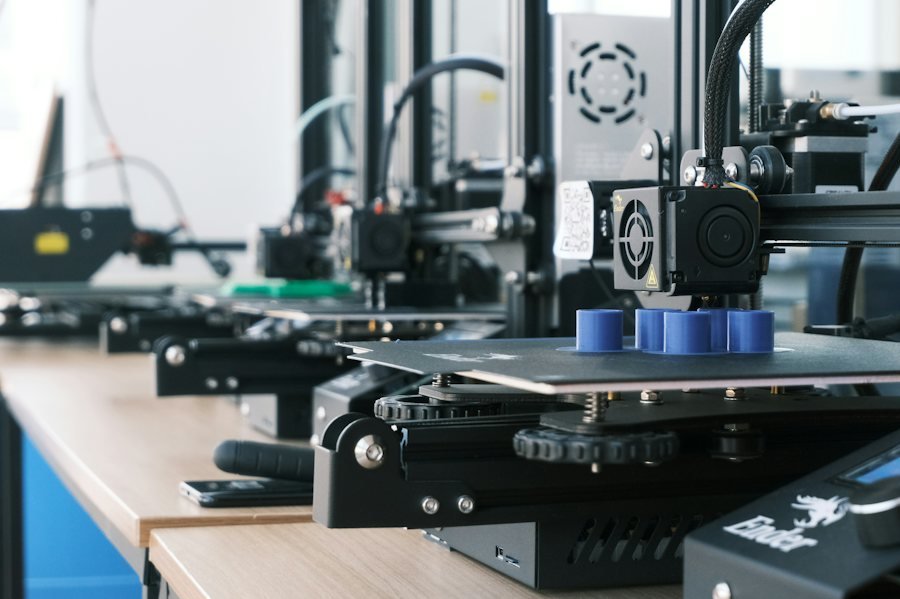
A seller who plans to restock every month should still run the numbers on owning a printer. PLA has become a commodity: Fabbaloo’s January 2026 survey of 1-kilogram spools found a median of $14.72, with Bambu Lab’s own PLA Basic at $22.99 for one spool and $14.94 per kilogram in a 10-pack. At $15 a kilogram, a 20-gram product uses about 30 cents of plastic. Budget 10 to 15% extra for failed prints, as MakerVerse advises, and remember that the bigger expense is your time at the printer and the packing table. If you sell on a marketplace, our Etsy shop cost breakdown covers the listing and transaction fees that come off each sale.
One clip: $14.71 for the part alone. One hundred clips: $25.43 delivered.
Craftcloud quotes reported by All3DP, June 2026
Buyer 3: a broken gear and the material question
The person replacing a cracked dishwasher rack wheel, a vacuum latch or a gear in an old mixer is buying function, not looks. That changes the math in two ways. First, cheap PLA is often the wrong choice; it softens with heat and wears quickly in moving parts, which is why All3DP’s cheapest suitable gear was ABS at $14.71 for the part and $22.16 delivered. Five gears cost $69.90.
Second, engineering materials climb fast. The same gear quoted at $54.70 in carbon-fiber nylon, $185.61 in PEEK and $275.78 in Ultem 1010, part price only. A 316L stainless version was $61.42 delivered, cheaper than either high-temperature plastic. For a household repair, ABS, PETG or nylon covers nearly every case; PEEK and Ultem are for parts that live near engines, sterilizers or open flame.
Minimum charges also shape small orders. All3DP found that a phone stand’s maker had a $26 minimum order and that shipping made up more than 40% of the total, so the lowest part price on a quote page is not always the lowest delivered price. Compare totals at checkout, not the headline number. Post-processing such as sanding, dyeing or tighter tolerances adds $5 to $20 or more per part, according to MakerVerse.
Buyer 4: the engineer ordering metal
Metal 3D printing cost belongs in its own category. The topology-optimized bracket in All3DP’s test cost $361.40 in AlSi10Mg aluminum plus $16.76 shipping, and $480.33 in 316L stainless. MakerVerse puts outsourced metal parts anywhere from about $300 to more than $10,000 depending on size, alloy and finish.
Titanium gives the clearest benchmarks. JLC3DP’s April 2026 guide prices Ti6Al4V at $5 to $20 per cubic centimeter, with a 30 by 20 by 10 millimeter bracket at about $80 to $150 and a functional part around 100 millimeters at $200 to $600. The powder itself, $300 to $600 a kilogram, is a small slice. Machine time accounts for 40 to 70% of the price and post-processing for 20 to 50%, because supports are fused to the part and must be cut or ground away, and parts typically need stress relief first. Protolabs makes the same point: in metal printing, material is not the main cost driver.
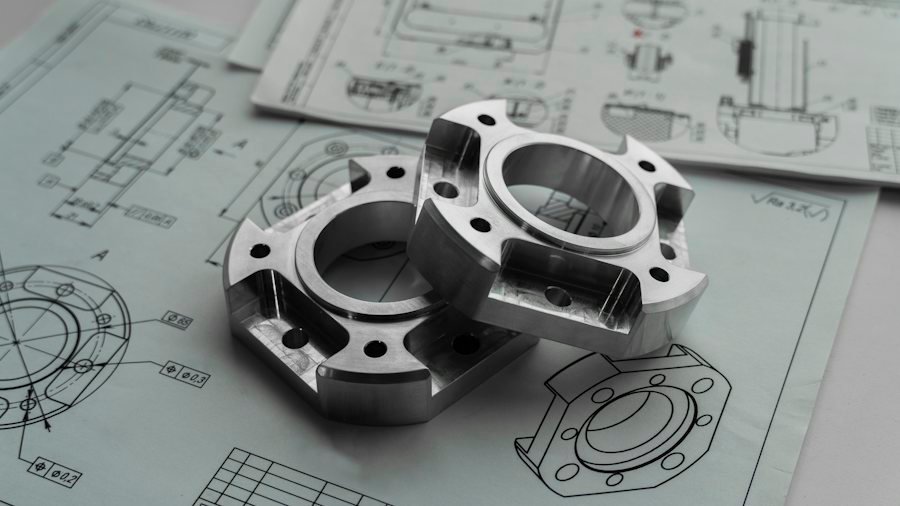
That is why design changes save more than shopping around. In JLC3DP’s estimates, hollowing or optimizing a part cuts cost about 40%, orienting it flat about 25%, and batching reduces unit cost 20 to 50%. Its sample aerospace bracket fell from roughly $320 solid to $190 after topology optimization. And printing is not always the expensive option: the same organic-shaped bracket quoted $1,494.12 by CNC machining from aluminum 6061, nearly four times the printed price.
Owning a printer versus paying per part
Your own FDM printer
Bambu Lab’s spring 2026 list prices ran $219 for the A1 mini, $299 for the A1 and $399 for the P1S, with multicolor combos at $329 to $639. After that, a small part costs cents in plastic. You absorb failed prints, maintenance and the learning curve, and you are limited to filament plastics.
An online service
Nothing up front, and access to resin, nylon powder and metal you will never own. But a one-off small part rarely lands under $20 delivered once minimums and shipping are added, and turnaround is days, not hours.
Rough break-even: if each one-off order runs about $23 delivered, a $219 printer pays for itself somewhere around the tenth part, before counting your time or the parts that fail. Anyone printing more than a dozen plastic objects a year is usually better off owning one. Anyone needing three parts, or anything in nylon, resin or metal, should order out.
Cheaper plastic, tariff-exposed machines
The two halves of the hobby are moving in opposite directions. Filament keeps getting cheaper: Fabbaloo found that only three brands in its January 2026 survey, Bambu Lab, Prusa and eSun, still priced 1-kilogram PLA above $20. Printers, mostly made in China, are exposed to U.S. tariffs. Tom’s Hardware reported in April 2025 that Bambu Lab’s H2D, launched at $1,899, was relisted at $2,399, and by April 2026 PrintPal listed it at $2,549 and up. We found no announced 2027 list-price changes from the major desktop brands as of November 2026, so treat today’s prices and holiday sales as the baseline for 2027 and check the maker’s store before buying.
Smaller questions with price answers
How is 3D printing cost calculated?
Services price on material volume, machine time, labor and finishing, plus minimums and shipping. MakerVerse notes that raw material is often under 20% of the final price of a part, so a bigger or taller part costs more mainly because it ties up a machine longer.
Is resin printing more expensive than filament?
Usually. Standard resins cost about $40 to $80 per kilogram, per MakerVerse, while median 1-kilogram PLA was $14.72 in Fabbaloo’s January 2026 survey. Baltimore County Public Library charges $0.50 per gram for resin prints against $0.25 for filament.
Is metal 3D printing cost lower than CNC machining?
Sometimes. For a complex, organic shape it can be: All3DP’s topology-optimized bracket was $378.16 printed in aluminum against a $1,494.12 CNC quote. For simple blocky parts, machining is often cheaper. Get both quotes for anything over a few hundred dollars.
Why does an online 3D printing quote have a minimum charge?
Each order needs file checks, machine setup, removal and packing regardless of size. All3DP found one maker with a $26 minimum order, and shipping alone made up more than 40% of a small phone-stand order. Grouping several parts into one order spreads those fixed costs.
How much does finishing add to a 3D printed part?
MakerVerse puts post-processing at $5 to $20 or more per part, and 30 to 50% of the base print cost where tight surface finish or tolerances are required. Metal parts carry more, since supports must be cut away and parts often need heat treatment.
Getting a real number for your file this week
- Weigh it first. Load the file into a free slicer such as Bambu Studio, PrusaSlicer or Cura and note the grams of filament, supports included. That one figure prices a library job and tells you whether a home print costs cents or dollars.
- Call your library. Ask whether it prints for patrons, its per-gram fee, size limit and wait time. For a one-off decorative part, this is usually the cheapest route.
- Upload to two marketplaces and compare delivered totals. Check the price after shipping and minimums, try one cheaper material and one step up, and price five or ten units to see how fast the per-part cost falls.
- For metal, ask for a design review before you order. Hollowing, flat orientation and fewer supports can cut a quote by a quarter to 40%, more than any discount code.
More printing and small-batch price guides
- Small business startup costs in 2027: the complete guide
- Cost of printing, by quantity and shop
- UPS Store printing prices
- Business card prices, basic to luxe
- What it costs to open an Etsy shop
- UPS Ground shipping costs and fees
More related guides: FedEx printing cost by job
Pricing method: prices were researched in November 2026 for 2027 planning and may change. Service quotes come from All3DP’s June 2026 Craftcloud test; process, material and post-processing ranges from MakerVerse; titanium benchmarks from JLC3DP; filament prices from Fabbaloo’s January 2026 survey; printer list prices from PrintPal’s April 2026 buyer’s guide; and library fees from each library’s own website. Quotes for your file will differ. See our disclaimer.