Short answer first, since you may be holding a quote right now. At an independent shop, a timing belt replacement on a typical four-cylinder or V6 lands between about $700 and $1,500, and the price falls toward the bottom of that range on a small Honda and climbs toward the top on a VW or a front-drive V6. Only two facts about your engine decide which end you are on: whether it has a belt at all, and how many hours it takes to reach it.

Below are the questions owners ask, in the order they usually ask them, each answered with current 2026 shop data for 2027 planning. If you want a number for your exact car and ZIP code, our car repair cost estimator gives a second opinion in about a minute.
Does my car even have a timing belt?
Possibly not, and this is the cheapest question to settle. Many current engines use a metal timing chain that is designed to last the life of the engine and has no scheduled replacement. ConsumerAffairs notes that chains often carry no service interval at all, while belts tend to last 60,000 to 100,000 miles. Your owner’s manual or maintenance schedule will list “timing belt” as a line item if your engine has one.
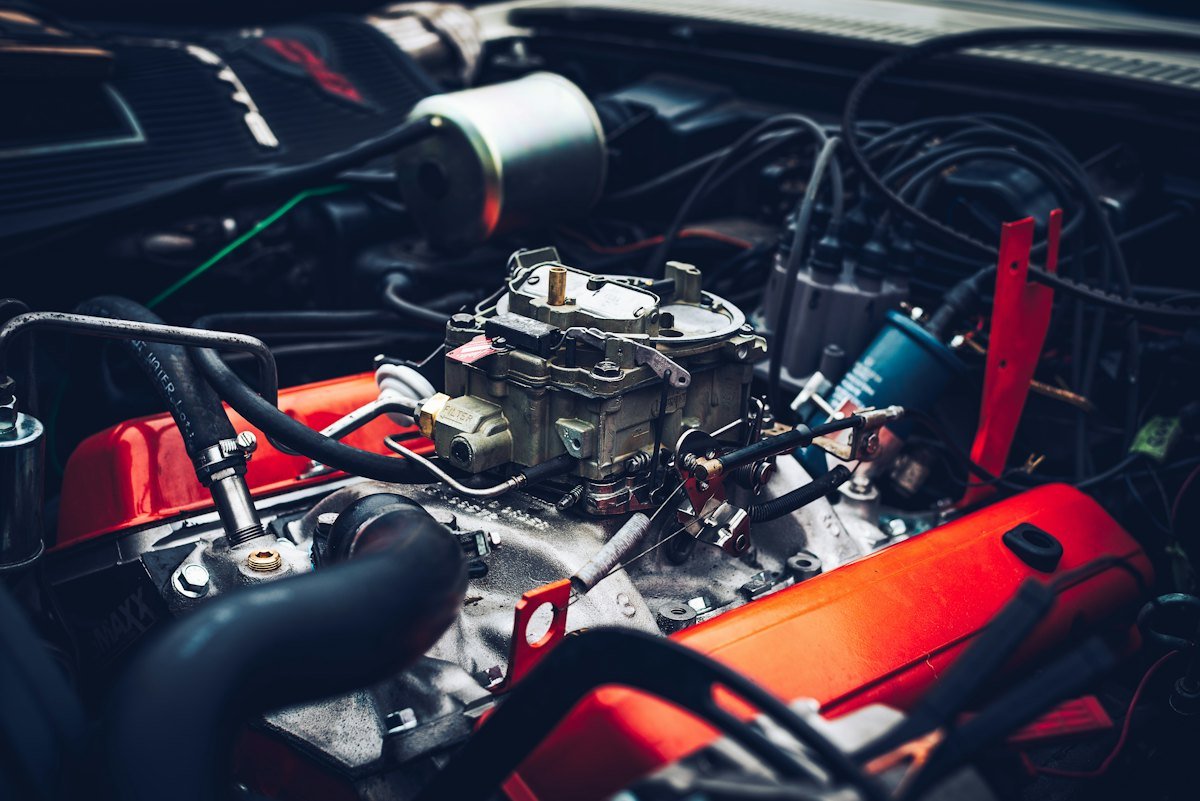
Some broad patterns help. Honda moved its four-cylinder engines to chains during the 2000s (the Civic switched with its 2006 redesign), but the 3.5-liter V6 in the Pilot, Odyssey, Ridgeline and older Accord V6 still runs a belt. Most current Toyota engines use chains, while the V6 in early-2000s Tacomas and 4Runners used a belt. Older Subaru boxer engines and several Volkswagen and Hyundai engines also use belts.
How to check in five minutes without a mechanic
- Open the maintenance section of the owner’s manual and search for “timing belt.” A replacement mileage paired with a number of years means you have one.
- Look at the front or side of the engine. A large plastic cover over the end of the engine usually hides a belt; a chain lives inside a sealed metal cover bathed in oil.
- Call a dealer service desk with your VIN. They can tell you in one sentence.
What will my engine’s belt job cost?
National averages blur a job that varies more by engine than by region. These are the model-level ranges published by RepairPal (estimates updated September 2026) and ConsumerAffairs (updated February 2026). Both cover parts and labor for the belt job itself, before tax.
| Vehicle | Typical range | Source |
|---|---|---|
| 2005 Honda Civic | $424 to $689 | ConsumerAffairs |
| Honda CR-V (1997 to 2001) | $710 to $1,026 | RepairPal |
| Toyota Tacoma (2001 to 2004) | $780 to $1,316 | RepairPal |
| Honda Accord | $799 to $1,219 | RepairPal |
| 2003 Toyota 4Runner | $858 to $1,354 | ConsumerAffairs |
| Hyundai Santa Fe | $1,043 to $1,518 | RepairPal |
| Honda Odyssey | $1,076 to $1,522 | RepairPal |
| 2016 Honda Pilot | $1,156 to $1,452 | RepairPal |
| Volkswagen Jetta | $1,331 to $1,714 | RepairPal |
| 2016 Volkswagen Jetta | $1,693 to $2,096 | ConsumerAffairs |
Across all cars, ConsumerAffairs puts the typical bill at $887 to $1,302, split between $297 and $437 in parts and $590 to $866 in labor. Jerry, which aggregates estimates from about 40,000 drivers, lands in the same neighborhood at roughly $950. If your engine has a chain and it has failed, that is a different and larger job: ConsumerAffairs, citing RepairPal, puts chain replacement at $2,100 to $2,750.
Why did one shop say $500 and another $1,500?
Usually because the two quotes describe different jobs. The belt itself is cheap; the hours are not. Jerry puts typical labor at three to six hours, and a transverse V6 tucked against the firewall sits at the long end because the shop has to support the engine, pull a mount and work around the accessories. That is why a Civic belt job and a Pilot belt job can differ by $700 with nearly identical parts.
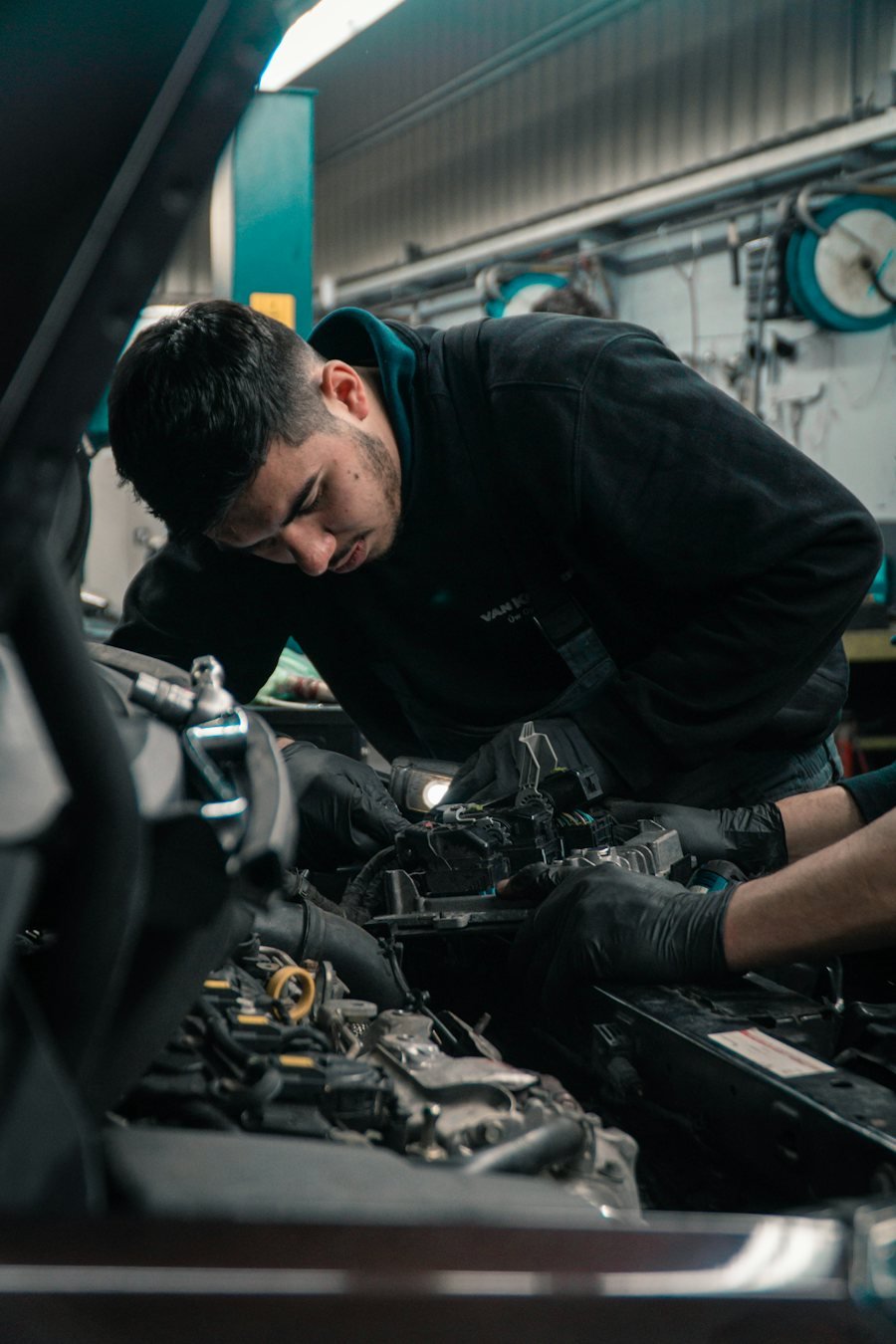
The second reason is what is in the box. A low quote is often the belt alone. A higher one usually includes a full kit: belt, tensioner, idler pulleys, seals and the water pump. RepairPal is explicit that its belt estimates leave out the water pump, tensioners and pulleys, even though it recommends replacing them at the same time. Ask each shop for a parts list and compare line by line before comparing totals.
Third, the brand of parts. ConsumerAffairs reports that aftermarket parts often cost 20% to 50% less than dealer parts. Reputable suppliers such as Gates and Aisin make complete kits; a Gates PowerGrip kit with water pump (TCKWP304A) listed at $403.99 on Zoro in November 2026. A good independent shop using a name-brand kit is not cutting a corner. A no-name kit from an online marketplace on an interference engine is a different story.
Should the water pump go in at the same time?
On most engines where the belt drives the pump, yes. The pump sits behind the timing covers, so replacing it later means paying for nearly the same teardown twice. ConsumerAffairs estimates that doing both together saves around $400 in labor, and a pump that starts leaking six months after a new belt can contaminate that belt with coolant.
The exception is an engine where the water pump is driven by the accessory belt rather than the timing belt. There, adding the pump buys no labor savings, and a shop that insists on it deserves a polite question. ConsumerAffairs also suggests a second opinion if a shop pushes a long list of extra parts. Tensioners and idlers are different: they spin on the same belt, wear on the same schedule and fail the same way, so replacing them is sensible insurance.
How far past the interval can I push it?
That depends on what happens when the belt breaks, and that depends on engine design. In an “interference” engine, the valves and pistons share space at different moments. Automotive writer Larry Carley explains on AA1Car that when the belt snaps, the camshaft stops and the result can be bent valves and possibly a broken piston, damage that “can cost several thousand dollars to repair.” In a non-interference engine, a broken belt usually means a tow and the same belt job you put off, with no internal damage.
Carley also concedes that a belt may run another 10,000 or 20,000 miles past its interval before failing. That is the gamble in plain terms: on a non-interference engine you risk a tow; on an interference engine you risk the engine. Many belt-driven engines, including Honda’s 3.5-liter V6, are interference designs, though some, such as Toyota’s older 3.4-liter V6, are not. AA1Car publishes an interference-engine list compiled from Gates and AERA data; if yours is on it, the math rarely favors waiting.
Intervals are not always right, either. Ford’s 1.0-liter EcoBoost uses a “wet” belt that runs in engine oil, and in August 2026 NHTSA upgraded its investigation into failures on about 135,551 Fiestas, Focuses and EcoSports from the 2014 to 2021 model years.
Reported failures averaged about 70,000 miles, and 98% happened before Ford’s original 150,000-mile replacement interval.
NHTSA investigation details, as reported by CarScoops, August 2026
Ford has since shortened the interval to 100,000 miles or six years and is reimbursing eligible owners for related engine repairs. NHTSA had not decided on a recall as of the latest reports, so if you own one of these cars, a recall decision in 2027 is worth watching, and keeping repair receipts is wise.
Dealer, independent shop or my own garage?
Dealers usually sit at the top of the ranges above because of higher labor rates and factory parts. On a car still under a powertrain warranty, or a model with a known quirk, the dealer’s experience can be worth the premium. For most cars past warranty, an independent shop that does belt jobs every week and uses a name-brand kit is the value pick. Ask how many of your engine they have done this year.
Doing it yourself saves the labor, which is most of the bill, but this is not a Saturday oil change. Cam and crank timing must line up exactly, some engines need special locking tools, and one tooth off on an interference engine can undo the savings in a single turn of the key. It is a realistic project only for experienced home mechanics with the service manual and the right tools.
More timing belt questions, answered briefly
Does car insurance or an extended warranty cover timing belt replacement?
Car insurance does not pay for scheduled maintenance, and most extended warranties and service contracts exclude wear items like belts. Damage after a belt failure may or may not be covered depending on the contract and whether maintenance was kept up, so read your contract and keep service records.
Can a mechanic just inspect the belt instead of replacing it?
On many engines the belt sits behind covers that take real labor to remove, and a belt can look fine on the outside while its cords are near the end of their life. Manufacturers set replacement by miles and age for that reason, so an inspection is not a reliable substitute.
Does a timing belt wear out if the car is rarely driven?
Yes. Rubber ages with time and heat, which is why maintenance schedules list a time limit as well as a mileage limit, such as Ford’s revised six years on the 1.0-liter EcoBoost. A low-mileage car can still be due.
Should I replace the serpentine belt during timing belt replacement?
Often it makes sense. The accessory belt usually comes off to reach the timing covers, so replacing it during the job adds the part cost and little labor. Ask the shop to quote it as a separate line.
How long will my car be at the shop?
The work itself typically takes three to six hours, according to Jerry, but many shops keep the car for the day, especially if parts have to be ordered for a less common engine. Call ahead so the kit is waiting when you drop it off.
Your next move, by where the odometer sits
| Your situation | What to do |
|---|---|
| Engine has a timing chain | Nothing scheduled. Keep up oil changes and have a rattle on cold start checked promptly. |
| Belt engine, well short of the interval | Note the mileage and the age limit in your calendar. Start saving about $1,000 to $1,500. |
| Within about 15,000 miles of the interval | Get two itemized quotes for the full kit with water pump, tensioner and idlers. |
| At or past the interval, interference engine | Book the job now. The repair you are avoiding costs several times more. |
| Buying a used car with no belt record | Assume it is due and take the cost off your offer, or ask for receipts. |
Other repair bills worth knowing before your next service
- Car ownership costs in 2027: the complete price guide
- Car repair cost estimator
- What an alternator replacement costs, by engine layout
- Transmission fluid change vs flush prices
- Brake pad and rotor replacement prices
- Car battery replacement costs at seven retailers
- Oil change prices per visit and per year
More related guides: Head gasket replacement cost, line by line · Transmission replacement cost, from junkyard to new
Pricing method: prices were researched in November 2026 for 2027 planning and may change. Estimates come from RepairPal (updated September 2026), ConsumerAffairs (updated February 2026), Jerry (updated November 2026), a Zoro parts listing and reporting on NHTSA’s Ford 1.0-liter EcoBoost investigation by CarScoops (August 2026). Your shop’s quote depends on your vehicle, location and parts choice. See our disclaimer.