At REI’s posted bike shop rates, one e-bike tune-up a year for five years costs $1,800 to $2,250. That is roughly twice the list price of a Lectric XP4, and it is the best argument for budgeting an electric bike by the year instead of by the sticker. New e-bikes sell for about $600 to $4,000, and Consumer Reports’ March 2026 buying guide says most of the better ones cost at least $1,000. Add a battery, shop service and insurance, and our five-year estimates land between about $3,100 and $8,100.

Those totals come from three real bikes at three price points, priced line by line below. Nothing official changes e-bike prices for 2027, so treat the stickers here as current prices for 2027 planning. The one genuine 2027 development is money flowing the other way: several state and city rebate programs have application windows open next year.
Three bikes, three stickers
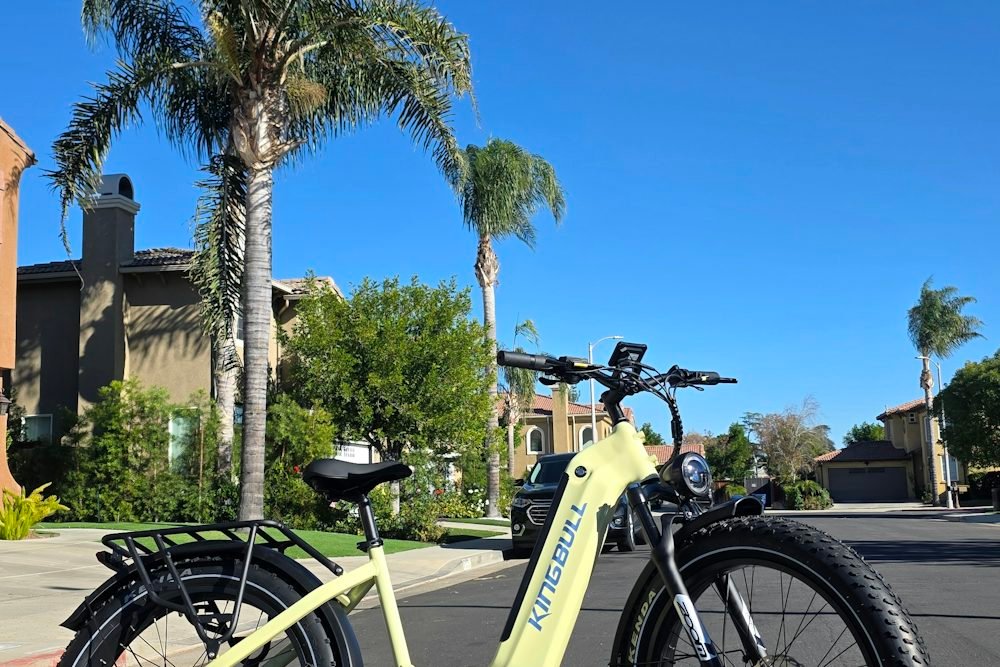
We picked one bike from each band of the market. The budget pick is the Lectric XP4, a folding direct-to-consumer bike that lists at $999; Electrek reported in January 2026 that Lectric cut $100 off every model, dropping the XP4 to $899. The middle pick is Aventon’s Level 3 commuter, which 99 Spokes lists at $1,699 to $1,899 for the 2026 model, with a 733-watt-hour battery and a 500-watt hub motor.
The premium pick is a bike-shop model, the Trek Verve+ 3 Gen 3, listed by 99 Spokes at $2,999 to $3,599. It uses a Bosch mid-drive motor and a 545-watt-hour Bosch battery. The higher price buys a motor that responds to pedal pressure, wider dealer support and a battery from a brand shops know how to diagnose. It also buys a more expensive battery replacement, which matters later.
Five years on the books, line by line
| Five-year cost item | Lectric XP4 (budget) | Aventon Level 3 (mid) | Trek Verve+ 3 (premium) |
|---|---|---|---|
| Purchase, list price | $999 | $1,899 | $3,599 |
| One replacement battery | $200 to $500 | $200 to $500 | $500 to $1,000 |
| Five annual shop tunes | $1,800 to $2,250 | $1,800 to $2,250 | $1,800 to $2,250 |
| Electricity, about 500 full charges | About $66 | About $66 | About $49 |
| Five-year total, no insurance | $3,065 to $3,815 | $3,965 to $4,715 | $5,948 to $6,898 |
| Optional theft and damage insurance | $500 to $750 | $500 to $750 | $750 to $1,250 |
| Five-year total, insured | $3,565 to $4,565 | $4,465 to $5,465 | $6,698 to $8,148 |
Our estimates. Bike prices from Electrek and 99 Spokes; battery ranges from Upway’s June 2026 battery repair guide; tune prices from REI; insurance from Velosurance; electricity at the 2026 U.S. residential average forecast by the EIA.
How we built these five-year estimates
We assumed a rider who fully charges about 100 times a year, buys one replacement battery by year five, books one professional tune each year at REI’s member or non-member e-bike rate, and insures the bike at its purchase value. We used the list price rather than a sale price. Electricity for the Lectric uses the Aventon’s 733 Wh battery as a ceiling because its own capacity was not in our sources. A rider who wrenches at home, rides less or skips insurance will spend less; a daily commuter in a hilly city may need brakes and tires on top of the annual tune.
The pattern is the point. On the two cheaper bikes, upkeep costs more than the bike itself. Only at the premium end does the purchase stay the largest single line.
The battery is a second purchase, not a part
Upway’s battery guide says most lithium packs are rated for 500 to 1,000 full charge cycles, and most e-bike batteries carry a two-year warranty. A rider charging fully twice a week reaches the low end of that range in about five years, which is why our table budgets one replacement.
What that replacement costs depends on whose name is on the pack. Upway puts a generic replacement at $200 to $500 and a name-brand pack from Bosch, Shimano, Specialized or Trek at $500 to $1,000. Specialized and Trek batteries alone run $600 to $900 before labor. Repair is sometimes an option: a diagnostic runs $50 to $100, a battery management board $80 to $200 and a full cell rebuild $300 to $600, which only makes sense when a new pack would cost more.
Do not chase the cheapest pack on a marketplace site. Consumer Reports advises buying only e-bikes and replacement batteries tested by Underwriters Laboratories or another nationally recognized lab, and warns against aftermarket batteries. A battery fire costs far more than the $300 you saved.
Shop labor outgrows a cheap bike
REI’s Boulder shop lists its E-Bike Tune at $360 for co-op members and $450 for everyone else, against $152 and $190 for a standard bike tune. Its e-mountain bike tune runs $476 and $595. Members get 20% off shop services, and parts are extra. Independent shops set their own rates, so call two before you assume REI’s prices apply where you live.
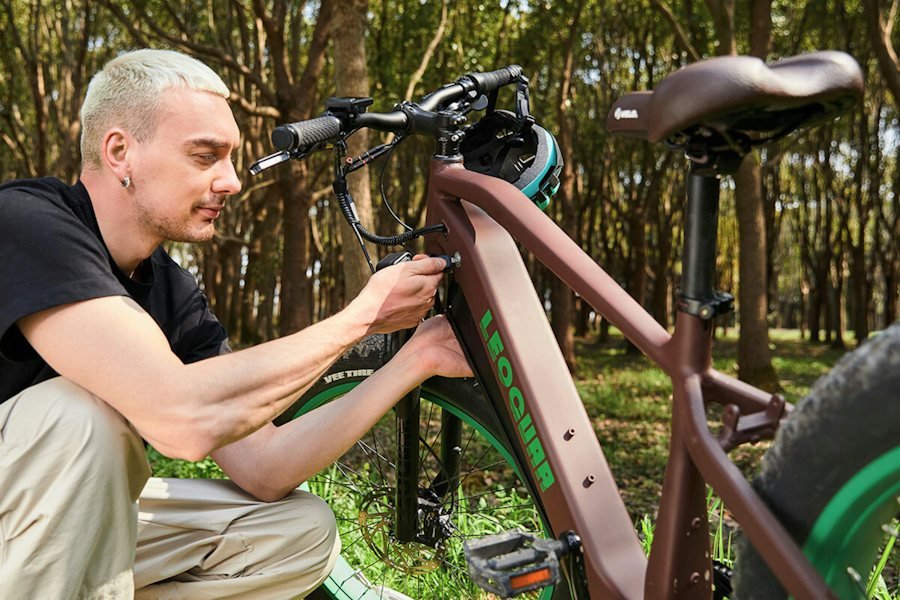
The price gap between a regular tune and an e-bike tune is the cost of the motor, wiring and display a mechanic has to check. It is also why a cheap online e-bike is not as cheap as it looks: the same labor rate applies whether the bike cost $899 or $3,599. Some direct-to-consumer brands have few shop partners, and some shops decline to work on bikes they do not sell. Ask a local shop whether it services your brand before you order.
You can cut this line in half by learning the basics. Adjusting brakes, keeping the chain clean and checking tire pressure are ordinary bicycle chores. Leave the motor, controller and battery to a shop.
Insurance is priced off the sticker
Standalone e-bike insurance typically costs $100 to $300 a year, or about $9 to $25 a month, according to Velosurance’s November 2026 cost page. Insured value does most of the work. Velosurance’s bands run $100 to $150 a year for a $1,000 to $2,000 bike, $150 to $250 for $2,000 to $4,000, and $250 to $400 above $4,000. Two bikes on one policy take 10% off, and three or more take 15%.
Insurance is the one line in our table you can reasonably skip. If you lock the bike indoors at both ends of the trip, the math favors self-insuring a $999 bike. Leave a $3,600 bike outside a train station every day and the $150 to $250 a year looks cheap. Before buying a separate policy, ask your homeowners or renters insurer in writing whether a motorized bike is covered and for how much.
Electricity rounds to pocket change
The EIA’s December 2025 outlook put the average U.S. residential electricity price at 18.02 cents per kilowatt-hour for 2026, up from 17.29 cents in 2025, as ConsumerAffairs reported. At that rate, filling the Aventon’s 733 Wh battery from empty costs about 13 cents, and the Trek’s 545 Wh battery about 10 cents. In New England, where the same forecast put rates near 30 cents, a full charge costs about 22 cents. Even 500 charges barely clear $100 anywhere in the country. It is the smallest line in the table by a wide margin.
Rebates that can wipe out year one in 2027
A rebate can knock out the purchase line entirely on a budget bike. Tern’s list of 2026 to 2027 incentive programs, updated October 30, 2026, includes these U.S. programs:
- Colorado: a $1,000 income-qualified rebate, plus $300 for a cargo or adaptive e-bike, one per lifetime. Registration windows open January 11 to 18 and March 15 to 22, 2027. A separate $225 point-of-sale tax credit at participating retailers is available once per calendar year.
- Washington State (WE-Bike): $300 or $1,200 depending on household income, with applications open until March 2027.
- Austin, Texas (Austin Energy E-Ride): up to $600 per e-bike, or up to $1,300 for customers in its assistance program.
- Rhode Island: up to $350 or 30% of the price, whichever is less, and up to $750 or 75% for income-qualified buyers.
- Pasadena, California: $500, or $1,000 for income-qualified utility customers. Standard funding for the fiscal year is fully allocated; income-qualified money remained.
None of the programs on that list is federal, and most run first-come or by lottery, so confirm terms directly with the program before you buy. Many require buying from a participating retailer, which can rule out a direct-to-consumer brand.

The monthly test: when an e-bike earns its keep
Divide each five-year total by 60 and the decision gets simple. Our estimates work out to about $51 to $64 a month for the Lectric without insurance, $66 to $79 for the Aventon, and $99 to $115 for the Trek. Insured at the top of the ranges, the Trek reaches about $136 a month.
- Add up what the bike would replace each month: parking, a transit pass, rideshares, gas and the wear on a car you might drive less or sell.
- If that number beats the monthly figure for the bike you want, the e-bike pays for itself within five years.
- If it only beats the budget bike’s figure, buy the budget bike, and spend part of the difference on a good lock and a shop that will service it.
Electric bike cost questions buyers ask next
How much is an ebike that is actually good?
Consumer Reports puts e-bike prices at about $600 to $4,000 and says most of the better ones cost at least $1,000. Bike-shop models can run $6,000 to $7,000 or more, though that money often buys features commuters do not need.
How much is e-bike insurance per month?
Velosurance says standalone e-bike insurance typically costs $9 to $25 a month, or $100 to $300 a year. The bike’s insured value is the biggest factor, followed by deductible, location and coverage choices.
Can an old e-bike battery be rebuilt instead of replaced?
Often. Upway prices a full cell rebuild at $300 to $600 and a diagnostic at $50 to $100. A rebuild makes the most sense on name-brand packs, where a new battery can cost $500 to $1,000.
What is the difference between Class 1, 2 and 3 e-bikes?
Consumer Reports explains that Class 1 and Class 2 e-bikes provide assistance up to 20 mph, while Class 3 bikes assist up to 28 mph. Local rules on where each class may ride vary, so check your city’s regulations.
Is financing an electric bike a good idea?
It can be if the loan is truly interest-free. Consumer Reports notes that some point-of-sale lenders offer 0% plans but can also charge interest rates between 10 and 30 percent, which can add hundreds of dollars to a mid-priced bike.
Where the e-bike numbers come from
- Electric Bike Buying Guide, Consumer Reports (updated March 27, 2026)
- Lectric eBikes just did something it almost never does: a real price cut, Electrek (January 23, 2026)
- 2026 Aventon Level 3 and 2026 Trek Verve+ 3 Gen 3, 99 Spokes
- Boulder Bike Repair, Tune-ups & Maintenance, REI (2026)
- How Much Does It Cost to Fix an E-Bike Battery?, Upway (June 28, 2026)
- What’s the average cost of e-bike insurance?, Velosurance (November 13, 2026)
- Your electric bill will probably go up in 2026: Here’s why, ConsumerAffairs, citing EIA (December 23, 2025)
- 2026–2027 E-Bike Incentive Programs in North America, Tern Bicycles (October 30, 2026)
Other wheels, other price tags
- Car ownership costs in 2027: the complete price guide
- What a regular bike costs, from hybrids to trail bikes
- How much a motorcycle costs, new or used
- Golf cart prices and eight-year costs by powertrain
- What the average new car costs out the door
- Tesla Model Y price and five-year ownership cost
More related guides: BMX build vs complete bike costs
Pricing method: prices were researched in November 2026 for 2027 planning and may change. Five-year totals are our estimates built from the published prices cited above, not quotes; brands, shops and rebate programs set their own terms. See our disclaimer.