$2,295. That is the low end of the total startup investment Cruise Planners disclosed in its 2025 franchise disclosure document, and it is real: low cost franchises in the US start around $2,000 and climb to roughly $165,000 before you reach the territory of sandwich shops and gyms. The catch is that the price tag tells you less about risk than about what you are actually buying.

Under $10,000, you are usually buying a sales license and a booking system. Between $5,000 and $80,000 in commercial cleaning, you are often buying a book of customer accounts that someone else controls. Past $70,000, you finally start buying a business with a location, employees and equity you can sell. Price each franchise by which of those three things it is, and the “best” cheap franchise becomes much easier to spot.
Cheap franchises sorted by what your money buys
These figures come from franchisor disclosures (Item 5 fees and Item 7 investment tables) as reported by the brands or by franchise data trackers in 2025 and 2026. Every brand updates its FDD each year, so treat them as a starting point, not a quote.
| Franchise | Franchise fee | Total initial investment | Ongoing royalty | What you are buying |
|---|---|---|---|---|
| Jazzercise (associate instructor) | $1,250 | About $2,170 to $2,965 | Up to 20% of class revenue | A license to teach |
| Cruise Planners | Up to $10,995 ($6,995 for veterans) | About $2,295 to $23,367 | 0% to 3% of commissionable sales | A travel sales license |
| Dream Vacations | Tiered packages, up to about $10,500 | Roughly $1,800 to $24,000 | Small share of commissions | A travel sales license |
| JAN-PRO (unit) | About $3,000 to $11,000 | Varies with account package | Royalty plus management fees | Cleaning accounts |
| Vanguard Cleaning Systems (unit) | Package-based | About $4,135 to $39,755 | Royalty plus management fees | Cleaning accounts |
| Stratus Building Solutions (unit) | Package-based | About $4,450 to $79,750 | Royalty plus management fees | Cleaning accounts |
| Kumon | About $1,000 to $2,000 | About $73,000 to $165,000 | Flat monthly fee per student, per subject | A learning center |
| Pillar To Post | $58,500 | About $102,690 to $134,290 | Percentage of revenue | A home inspection business |
| Mathnasium | $49,000 | About $127,000 to $166,000 | 10% of gross or $1,500 a month minimum, plus $650 a month | A learning center |
Notice how the royalty structure changes as the price rises. The cheapest brands take a slice of commissions or class fees you personally generate. The pricier ones charge a percentage of a business that can run with staff, which is exactly why they cost more.
Under $10,000: a license to sell, not a business to sell later
Home-based travel agencies and fitness instructor franchises dominate every “franchises under $10,000” list for a simple reason: there is almost nothing to build. Cruise Planners and Dream Vacations give you booking technology, supplier relationships, training and marketing templates. Jazzercise gives you choreography, music and the brand. You supply the customers.
- Income equals your sales. A travel franchisee earns commissions on bookings. No bookings, no income, no matter how good the training was.
- The fee is not the whole bill. Monthly technology and marketing fees, errors and omissions insurance, and seller-of-travel registration in states such as California and Florida sit on top of the advertised number.
- Resale value is thin. What a buyer would pay for is your client list and repeat bookings, and those live in your relationships more than in the franchise.
- Veteran pricing is real money. Cruise Planners lists a $6,995 franchise fee for qualified veterans versus up to $10,995 standard, a $4,000 difference.
This tier works best for people who already sell, already have a network, or want a part-time side business with a capped downside. It works poorly for anyone expecting the brand to produce customers.
Commercial cleaning “unit” franchises: you are buying accounts
JAN-PRO, Vanguard, Stratus, Anago and Coverall sell what the industry calls unit franchises. A regional master franchisee lands office, medical and retail cleaning contracts, then hands a package of those accounts to you. A larger package means more monthly billing and a larger upfront fee. Anago’s disclosed range, about $11,265 to $69,535, shows how wide the spread can get.
The model can work, but read it for what it is. The master franchisee usually handles billing and keeps the customer relationship, then deducts royalty and management fees before paying you. Industry write-ups put the combined cut at roughly 10% to 25% of gross billing. If a client cancels, your contract decides whether and how quickly the master must replace that billing, and many “guarantees” last only a few months or promise best efforts rather than dollars.
One $4,000-a-month cleaning package, run to the bottom line
Hypothetical example for illustration, using the ranges above and typical small-business costs. Not a quote or the results of any real franchisee or brand. Say a unit package delivers accounts billing $4,000 a month and you clean them yourself in the evenings.
| Monthly line | Amount |
|---|---|
| Gross billing | $4,000 |
| Royalty and management fees at an assumed 20% | -$800 |
| Supplies and equipment wear | -$250 |
| Liability insurance and bonding (about $3,000 a year) | -$250 |
| Fuel and vehicle costs | -$250 |
| Left before taxes | $2,450 |
If those accounts take 100 hours a month to clean, you are earning about $24.50 an hour before self-employment tax, with no paid time off. That is a job you bought. It becomes a business only when you hire cleaners, add accounts and stop holding the vacuum yourself, and the moment you hire, payroll, workers’ compensation and turnover enter the math. Our cleaning business startup cost guide prices the independent route, where you keep the full $4,000 but must win every account yourself.
$70,000 to $165,000: where you start owning an asset
The next tier buys something different: a location or territory, a staff, and a business a stranger might pay you for later. Tutoring and home inspection are the classic examples. Kumon’s investment runs about $73,000 to $165,000, mostly for a leased center, furniture and working capital, while its franchise fee is only about $1,000 to $2,000. Its royalty is unusual too: a flat monthly fee per enrolled student per subject (about $42.75 starting January 2026) instead of a percentage of revenue. Mathnasium charges a $49,000 franchise fee and the greater of 10% of gross receipts or $1,500 a month.
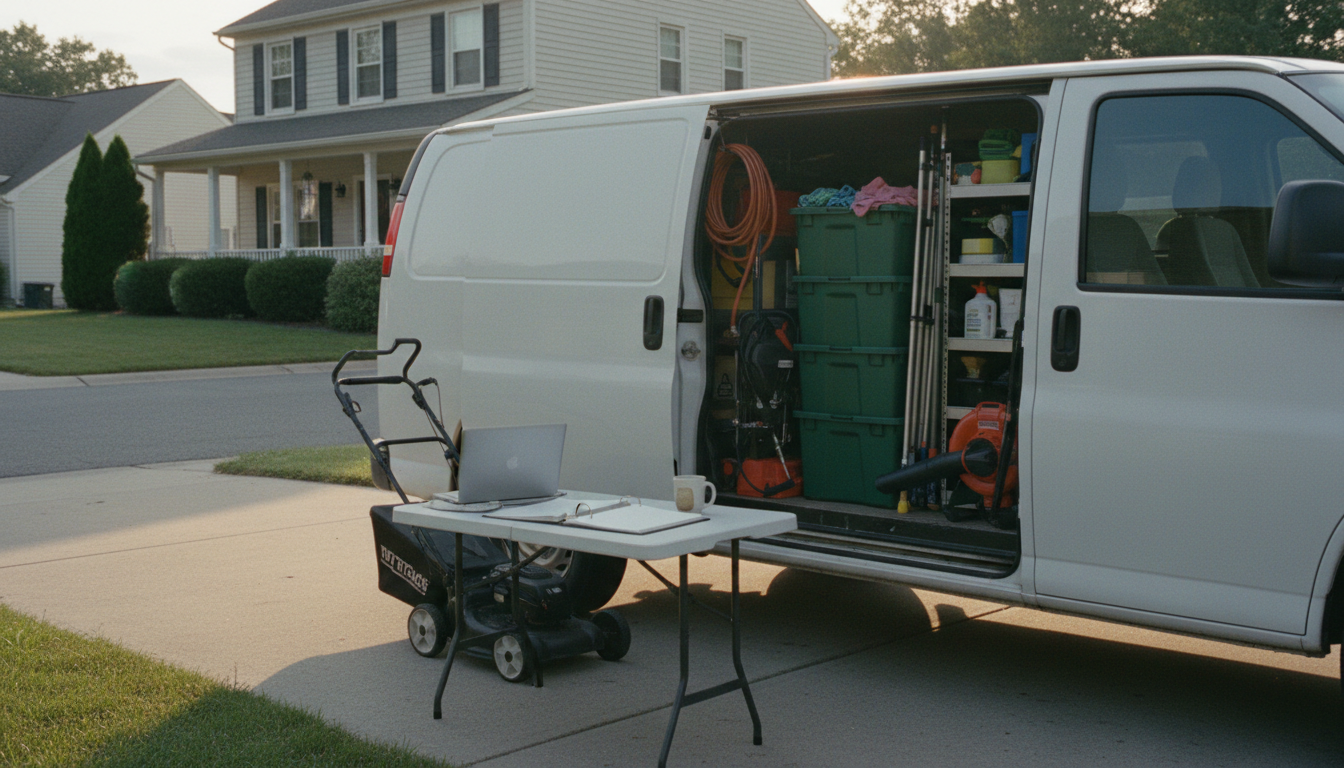
Pillar To Post shows the home-based version of this tier. At roughly $102,690 to $134,290, most of the money goes to the fee, training, equipment, a vehicle and marketing to real estate agents rather than to a storefront. The same pattern holds across lawn care, pest control, restoration and senior-care referral brands: the van-and-laptop model keeps rent off the books, but territory fees and launch marketing push totals past $100,000.
Is there such a thing as a low cost restaurant franchise?
Not really, at least not by the standard of the brands above. Subway, long the cheapest big sandwich brand to open, lists a $15,000 franchise fee and a total investment of $207,050 to $476,900, not counting real estate. Food brands need hoods, refrigeration, a buildout that passes health inspection and enough working capital to survive slow first months.
The famous exception is Chick-fil-A’s $10,000 initial fee, but the company owns the restaurant and selects operators through a highly competitive process, so the low fee buys a management role rather than a business you own. Our Chick-fil-A franchise cost guide breaks that model down. Otherwise, the cheapest legitimate routes into food are kiosks and non-traditional locations inside airports, stadiums or convenience stores, vending, or a food truck, and even those rarely land under $50,000 once equipment is counted.
2027: cheaper SBA loans for small deals, tougher eyes on franchisors
- Confirmed SBA fees for fiscal 2027. For 7(a) loans approved from October 1, 2026 through September 30, 2027, the SBA’s upfront guaranty fee is 2% of the guaranteed portion on loans of $150,000 or less, 3% from $150,001 to $700,000, and 3.5% on the first $1 million above that. Loans of $700,000 or less to rural businesses, manufacturers and some food supply-chain businesses pay 0%.
- 10% down is still the rule. Since the SBA’s SOP 50 10 8 took effect June 1, 2025, SBA loans require at least a 10% equity injection, and franchise brands must again appear in the SBA Franchise Directory for their franchisees to borrow.
- Federal enforcement is sharper. In March 2026 the FTC announced a $17 million settlement with Xponential Fitness over franchise disclosure violations, its largest Franchise Rule redress to date, after warning in 2024 that franchisors may not charge fees left out of the FDD.
- Prices are not yet published. Most brands issue new FDDs between March and May. Expect 2027 fees and investment ranges similar to or slightly higher than the figures here, especially for buildout-heavy concepts.
Seven things to check in the FDD before any money moves
- Item 7, high end. Budget for the top of the range plus six to twelve months of your own living costs. The “additional funds” line often covers only three months.
- Item 6, every recurring fee. Technology, marketing fund, minimum royalties, renewal and transfer fees. Add them up per month.
- Item 19. If the brand publishes financial performance data, look at the median, not the top quartile. If it publishes none, ask why.
- Item 20. Count closures, transfers and terminations. Then call former franchisees from the list, not only the ones the sales team suggests.
- Item 21. Audited financials show whether the franchisor can actually support you.
- The 14-day rule. Federal law requires you get the FDD at least 14 calendar days before you sign or pay. Pressure to move faster is a red flag.
- A franchise attorney. A flat-fee FDD review costs far less than a bad 10-year agreement. This guide is general information, not legal or financial advice.
For the full breakdown of how franchise fees, royalties and renewal costs stack up over a contract term, read our franchise fee guide.
Low cost franchise questions
Are there legitimate franchises under $10,000?
Yes. Home-based travel brands such as Cruise Planners and Dream Vacations, and fitness instructor franchises such as Jazzercise, disclose total investments that can start around $2,000. They are sales and service licenses, so income depends almost entirely on your own selling.
Can I get an SBA loan for a cheap franchise?
Often, if the brand is listed in the SBA Franchise Directory and you can put at least 10% down. Very small amounts are sometimes easier to fund with SBA microloans, a home equity line or personal savings, and many low-cost franchisors offer in-house payment plans.
What are the best low cost franchises for part-time owners?
Travel agency and fitness instructor franchises are the most flexible, because there is no storefront or staff to manage. Commercial cleaning units can be run in evenings, but the work is physical and account schedules are set by clients.
Is a franchise fee refundable if I change my mind?
Usually not once you sign. Some franchisors refund part of the fee if you fail training or they reject your site, but the terms are in the franchise agreement and Item 5 of the FDD. Read them before you pay anything.
Do franchises offer veteran discounts?
Many do. Members of the VetFran program commonly offer reduced franchise fees to veterans, and Cruise Planners, for example, lists a $6,995 fee for qualified veterans instead of up to $10,995. Ask every brand directly, since discounts change with each FDD.
Related cost guides
- Franchise fee 2027: the check at signing vs the 10-year bill
- Chick-fil-A franchise cost 2027
- McDonald’s franchise cost 2027
- 7 Brew franchise cost 2027
- Cleaning business startup cost 2027
- Vending machine business cost 2027
- Cost to start a business 2027
Pricing method: prices were researched in November 2026 for 2027 planning and may change. Figures come from franchisor websites and FDD data (Items 5, 6 and 7) published by the International Franchise Association, Subway and franchise data trackers for 2025 and 2026 disclosures, FY2027 SBA 7(a) fee notices, SBA SOP 50 10 8 guidance and FTC announcements. Franchisors update their FDDs every year. This site is not affiliated with any brand named here, and nothing here is legal or investment advice. See our disclaimer.