The most common budgeting mistake with a first embroidery machine is treating the price on the box as the whole purchase. The machine is the part you pay once; software, thread, backing and upkeep keep billing you for as long as the hoop keeps moving.

For 2027 planning, the sticker prices are easy to pin down. Brother sells its 4×4-inch SE700 combo for $499.99 on sale and lists the 5×7-inch PE900 at $1,179.99 on its own site. Ricoma’s 10-needle EM-1010 carries an $8,225 cash price, and Brother’s flagship Luminaire XP3 sits at $20,999.99. Count three years of running costs and those four machines land at roughly $1,000 to $2,200, $1,800 to $3,100, $10,100 to $13,600 and $24,600 to $29,400. The rest of this guide shows where those totals come from and which tier earns back its money.
Four machines, three years of bills
The table adds what each machine needs to stay productive for three years. Launch supplies use SewingMachinesPlus’s August 2026 cost guide, which puts hoops, software basics, stabilizer and thread at $400 to $800 for a home setup and recommends budgeting 5% to 10% of the purchase price each year for maintenance. For the commercial machine we used ZenBusiness’s startup ranges for thread, backing and hoops instead, since a shop buys in bulk from day one.
| Machine | Price | Software | Starting supplies | Upkeep, 3 years | 3-year total |
|---|---|---|---|---|---|
| Brother SE700 (4×4 combo) | $500 | $0 to $720 | $400 to $800 | $75 to $150 | $975 to $2,170 |
| Brother PE900 (5×7) | $1,180 | $0 to $720 | $400 to $800 | $177 to $354 | $1,757 to $3,054 |
| Ricoma EM-1010 (10 needles) | $8,225 | $0 to $1,287 | $650 to $1,600 | $1,234 to $2,468 | $10,109 to $13,580 |
| Brother Luminaire XP3 | $21,000 | $0 to $1,287 | $400 to $800 | $3,150 to $6,300 | $24,550 to $29,387 |
Two things jump out. On the cheap machines, the extras can cost more than the machine itself. On the expensive ones, upkeep becomes the line to watch, because a percentage of $21,000 is real money every year, busy season or slow.
What $500 and $1,180 buy at the hobby end
The difference between Brother’s two popular entry machines is mostly hoop size, and hoop size decides what you can make. The SE700 listing shows a 4×4-inch maximum field, 135 built-in designs and 103 sewing stitches, so it doubles as an ordinary sewing machine. A 4×4 field handles monograms, small chest logos and patches. It cannot stitch a full-back design or a large tote graphic without splitting it into pieces and re-hooping, which is slow and easy to misalign.
The PE900 does embroidery only, with a 5×7-inch field, 193 built-in designs and Wi-Fi for sending files from a computer. That extra 3 inches of length is where most hobbyists feel boxed in first, which is why the PE900 is the safer buy for anyone who expects to keep at it. Both carry Brother’s 1/2/25-year limited warranty. Both stitch one color at a time, so a five-color logo means five thread changes by hand.
Digitizing software, the bill that comes later
Built-in designs run out of novelty fast. The moment you want your own artwork, a customer’s logo or custom lettering, you need software that converts images into stitch files. Hatch’s price page lists its Composer edition at $45 a month for 16 months ($720 in total) and the full Digitizer at $99 a month for 13 months ($1,287), and offers a free 30-day trial.
Commercial machines often bundle software. Ricoma includes its Chroma Inspire program with the EM-1010, which is why the table shows $0 as the low end for that tier. Software is also where many new sellers discover a second missing piece: a stitch file needs clean artwork, and a business without a logo may first have to price what professional logo design costs before anything can be digitized.
Thread, backing and needles: pennies per piece, dollars per year
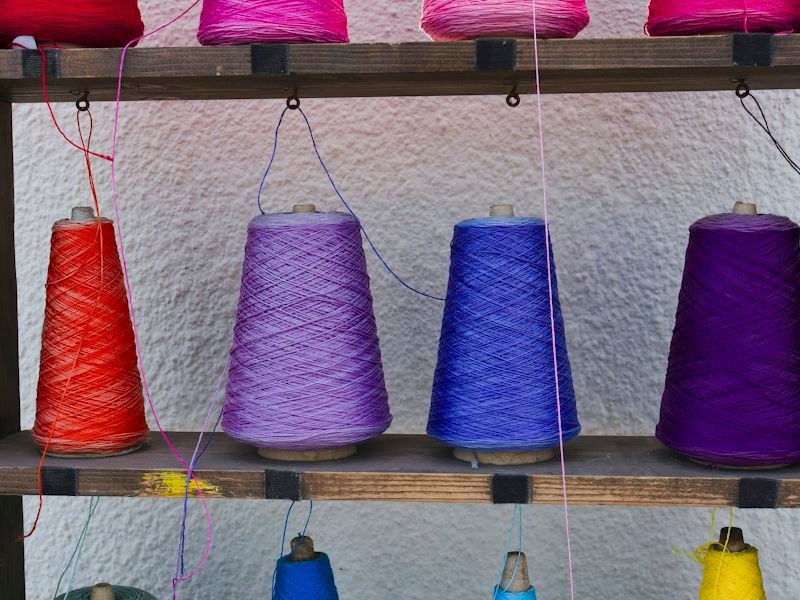
Consumables look trivial at the stitch level. Ricoma’s guide to embroidery business costs estimates about 16 cents of thread, stabilizer, bobbin and needle for a 7,000-stitch design, a 2019 figure that still shows the scale. The cost lives in inventory. You need every color a customer might ask for, in the weight and sheen you trust, plus cut-away and tear-away stabilizers for different fabrics.
ZenBusiness’s October 2026 startup breakdown budgets these opening amounts for a commercial setup:
- Initial thread inventory: $300 to $600
- Backing and stabilizer: $150 to $400
- Hoops and specialty frames, including cap frames: $200 to $600
- Blank apparel for samples: $400 to $1,200
Sample blanks are the line people forget. Every new customer wants a test piece, and every test piece is a shirt or cap you cannot sell.
Ten needles and a 60-month loan: the Ricoma math
Multi-needle machines change the economics because they hold several colors at once and stitch without you standing over them. That is the difference between a hobby and a production tool, and the price reflects it. Ricoma’s EM-1010 page pairs the $8,225 price with a promotional 5.99% APR over 60 months on a Ricoma credit card: $159 a month and $9,540 in total payments, so financing adds about $1,315. The same disclosure lists a 29.99% purchase APR outside the promotion, and a down payment is required, so read the terms before signing anything at a trade show.
The machine comes with a 5-year limited warranty and 90 days of onsite coverage, which matters more than it sounds. A shop machine that sits idle waiting for a part is costing you orders, not just repair money.
How many pieces before a commercial machine pays for itself
ZenBusiness says shops typically bill $5 to $20 per piece, depending on stitch count. Ricoma’s cost guide notes that blank caps can be bought for as little as $2 and other blanks for $2 to $5 from distributors. Here is a hypothetical example of how that adds up for the EM-1010:
- Charge $15 for an embroidered cap, the middle of the common range.
- Subtract a $2 to $5 blank and about 16 cents of materials, leaving roughly $10 to $12.84 per piece. Use $10 to stay conservative.
- Divide the three-year cost of $10,109 to $13,580 by $10: about 1,010 to 1,360 pieces.
- Spread over 156 weeks, that is about 7 to 9 pieces a week, before you count your own time.
A steady team-uniform or corporate client clears that bar quickly. A seller hoping for occasional custom orders may not. If your orders will come through a marketplace, factor in what an Etsy shop costs month by month, since listing and transaction fees come out of that $10 margin.
Selling under a shop name instead of your own usually means registering it, and the fee for filing a DBA is small next to the machine but easy to overlook. Running the same numbers on the PE900 shows why many sellers start there: its three-year cost is recovered in a few hundred pieces, but one-color-at-a-time stitching caps how many you can turn out in a week.
The $21,000 Luminaire is a different kind of purchase
Brother’s Luminaire XP3 listing shows a 10 5/8 by 16-inch field, 1,554 built-in designs, 17 presser feet, projection guidance and a 2/6/25-year premium warranty. It sews, quilts and embroiders. For a quilter or garment maker who wants one top-tier machine for everything, that breadth is the point.
As a business tool it is harder to justify. It costs about two and a half times the EM-1010, and upkeep budgeted at 5% to 10% a year adds $1,050 to $2,100 annually. Anyone who mainly wants to sell embroidered goods gets more production per dollar from a multi-needle machine. Anyone building a clothing line with sewn and embroidered pieces should price both routes before deciding.
Used machines, imports and what 2027 may change
ZenBusiness puts a new commercial single-head machine at $7,000 to $15,000 and a used one at $2,500 to $6,000, noting that used machines typically come without a warranty. That gap is tempting, but without a warranty every hidden fault becomes your repair bill and your lost week of orders. Ask for the stitch count, service records and a sew-out before paying.
Imports carry their own surcharge. SewingMachinesPlus warns that import duties can add 10% to 30% to a machine bought overseas. Neither Brother nor Ricoma has published 2027 price lists, so plan on today’s figures, and treat any sale price as temporary until you see the invoice.
Settle these before you pay for any machine
- The largest design you will make, measured in inches, so the hoop fits it in one pass.
- How many colors a typical design uses, which tells you whether single-needle thread changes will wear you out.
- Whether software is included, and if not, which edition you need after a free trial.
- The total of all financing payments and the APR after any promotion ends.
- Who services the machine locally, and what the warranty covers in parts, labor and onsite visits.
- A yearly maintenance line of 5% to 10% of the purchase price in your budget.
Embroidery machine questions from first-time buyers
How much is an embroidery machine for a beginner?
SewingMachinesPlus puts entry-level single-needle machines at $300 to $1,200 in its 2026 guide. Brother’s own site lists the SE700 combo at $499.99 on sale and the embroidery-only PE900 at $1,179.99.
What does a multi-head embroidery machine cost?
SewingMachinesPlus lists multi-head industrial systems at $11,000 to $47,000 or more, compared with $5,000 to $12,000 for a single-head commercial machine.
Can I try embroidery software before I buy it?
Yes. Hatch offers a free 30-day trial of its embroidery software with no credit card required, which is enough time to test whether you need the Composer or Digitizer edition.
How long are embroidery machine warranties?
Brother lists a 1/2/25-year limited warranty on the PE900 and SE700 and a 2/6/25-year premium warranty on the Luminaire XP3. Ricoma lists a 5-year limited warranty with 90 days of onsite coverage on the EM-1010. Check what each period covers before you buy.
Should a beginner buy a combo sewing and embroidery machine?
Only if you will sew regularly. A combo like the SE700 saves buying two machines, but the embroidery-only PE900 has a larger 5×7-inch field, which matters more once you start making bigger designs.
Price sources
- PE900 Wireless Embroidery Machine, 5×7 Embroidery Area, Brother USA
- SE700 Computerized Sewing and Embroidery Machine, 4×4 Area, Brother USA
- Luminaire 3 Innov-is XP3 Sewing, Embroidery and Quilting Machine, Brother USA
- Ricoma EM-1010, Ricoma (price and financing disclosure)
- Hatch Embroidery Pricing, Hatch Embroidery
- Embroidery Machine Cost: What Hobbyists and Shops Should Expect, SewingMachinesPlus (August 9, 2026)
- How to Start an Embroidery Business in 8 Steps, ZenBusiness (updated October 7, 2026)
- Top 10 embroidery business costs + ways to reduce them, Ricoma Blog (May 2, 2019)
More costs for a small making business
- Small business startup costs: the complete 2027 guide
- Online vs storefront: what it costs to start a boutique
- 3D printing prices, from desktop plastic to metal
- Business license cost by state, city and trade
- LLC cost: the five-year bill by state
- Opening an Etsy shop: what you pay, month by month
Pricing method: prices were researched in November 2026 for 2027 planning and may change. Machine prices are manufacturer list or sale prices at the time of research; three-year totals are our estimates built from the ranges cited above. See our disclaimer.