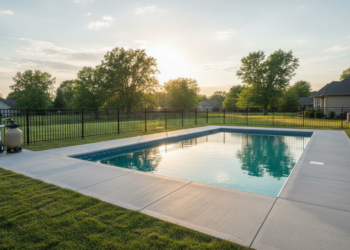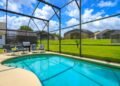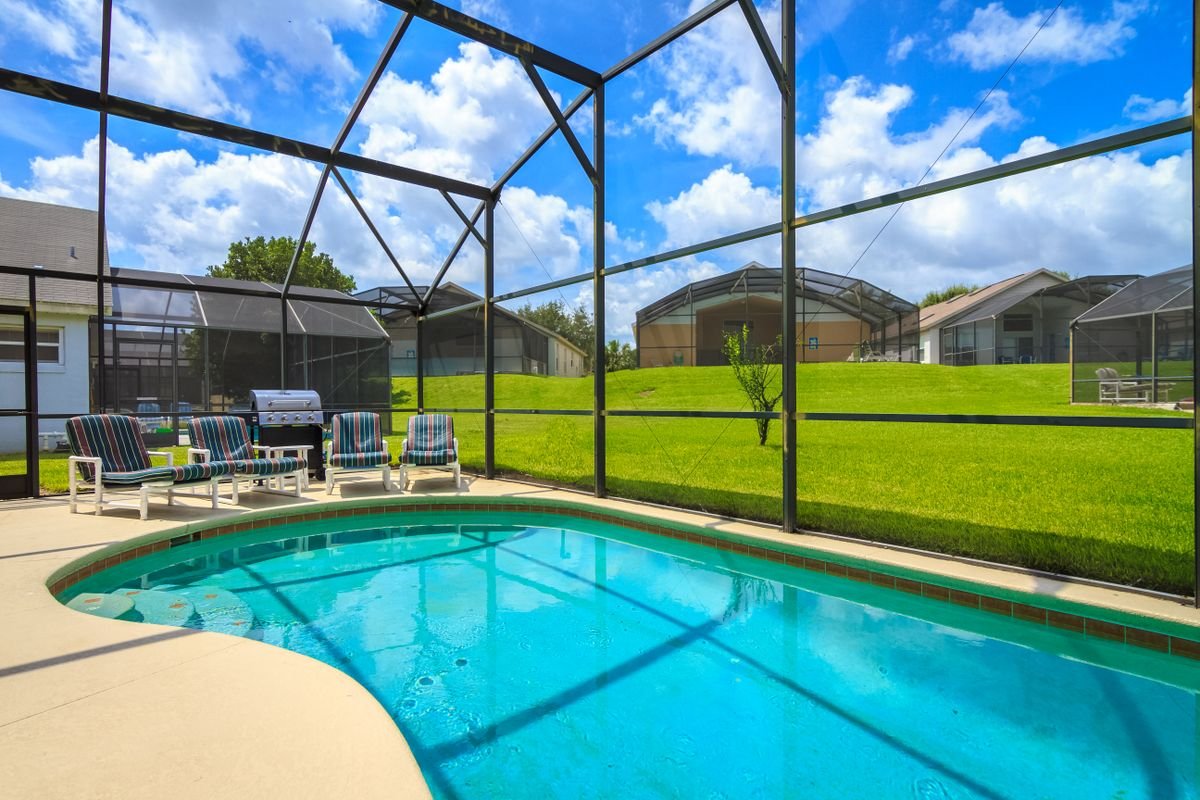
A screen cage and a glass enclosure can stand over the same 20-by-40-foot pool, and one can cost four times the other. HomeGuide’s pool enclosure cost guide puts most screen enclosures at $4,000 to $14,000 installed, polycarbonate at $8,000 to $30,000 and glass at $15,000 to $50,000, with retractable systems running from $15,000 into six figures. Across all types, Fixr pegs the national average at about $18,000.

The spread is not about quality tiers of the same product. Each type solves a different problem: a cage keeps out bugs, leaves and lizards; a polycarbonate or glass shell stretches the swim season; a retractable roof tries to do both. So the useful question is not “how much is a pool enclosure” but which problem you are paying to solve, and whether a cheaper fix solves it first.
Five ways to cover a 20-by-40 pool, priced side by side
The table uses HomeGuide’s size-based figures for a 20-by-40 pool where it publishes them, and its general ranges where it does not. Your deck size, not the water, sets the footprint, so measure the slab you want covered.
| Option | Main job | Typical installed price | Built to last |
|---|---|---|---|
| Inflatable dome (inground) | Debris and a little warmth | $2,500 to $7,500 | Portable types may last about five seasons |
| Aluminum screen cage | Bugs, leaves, shade | $4,000 to $12,000 | Screens last 10 to 20 years |
| Fixed polycarbonate, 6 ft high | Longer swim season | $15,000 to $32,000 | Panels rated for 100 to 150 mph winds |
| Glass | Year-round room | $25,000 to $50,000 | Permanent structure |
| Retractable (manual to motorized) | Open in summer, closed in winter | $3,000 to $25,000 for low manual units; $30,000 to $150,000 for tall automatic glass | Moving parts need service |
Source: HomeGuide pool enclosure cost data by type and size; retractable range from HomeGuide’s retractable section.
Two other national guides land in the same neighborhood. HomeAdvisor’s enclosure cost page reports a normal range of $7,051 to $18,900 and an average of $12,129, and Fixr’s middle band runs $10,000 to $30,000. The averages differ mainly because each site’s mix of cages and glass jobs differs.
The aluminum cage, and what $5 to $15 a square foot buys
A pool cage is an aluminum frame skinned in mesh, and it is the default across Florida for good reason. HomeGuide prices screen enclosures at $5 to $15 per square foot installed, with crews billing around $35 an hour. Size moves the bill more than anything else: a 15-by-30 cage runs $3,000 to $6,500, a 30-by-50 cage $7,500 to $20,000, and a two-story cage costs about 30% more than a single-story one.
What a cage handles well
- Mosquitoes, wasps and frogs
- Most leaves, pollen and palm debris
- Some shade and UV with tighter or privacy mesh
- A lower price per square foot than any rigid shell
What it does not touch
- Water temperature in winter
- Rain and wind-driven sand
- Fine dust and some pollen
- Snow load in northern states
Three options inflate a cage quote. HomeGuide lists a super gutter at $1,500 to $2,500, hip, gabled or other shaped roofs at 10% to 20% more than a basic design, and a roughly 10% premium in hurricane or heavy-snow zones, where hurricane-rated aluminum framing is built to handle winds up to 150 mph when properly anchored. Mesh is a smaller line than people expect: standard fiberglass runs $0.15 to $0.60 per square foot, while copper-bronze costs $1.40 to $2.20.
A cage will not end the pool service bill, but it does change what you pay someone to do. With far fewer leaves in the water, it is worth comparing what yearly pool maintenance costs with and without skimming on the visit list before you commit to a weekly plan.
Polycarbonate and glass: paying to swim in March
Rigid enclosures are a different purchase. HomeGuide puts polycarbonate at $15 to $45 per square foot and glass at $30 to $65, and glass installers bill closer to $50 an hour. For a 20-by-40 pool that means $15,000 to $32,000 for a 6-foot-high polycarbonate shell and $25,000 to $50,000 for glass. Low telescoping polycarbonate kits from 3 to 6 feet high cost $13 to $21 per square foot before shipping and assembly.
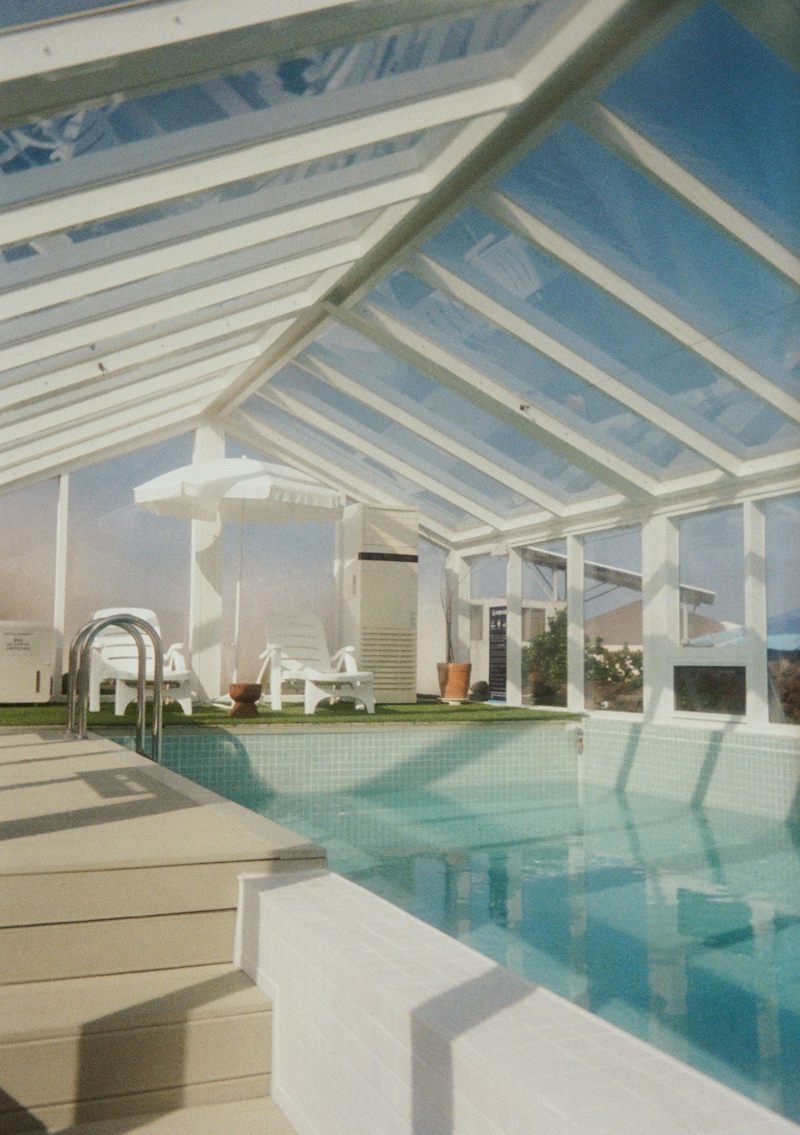
The shell is only the first invoice. Trapped humidity is the price of swimming under a roof, and HomeGuide lists HVAC at $300 to $5,000 and a dehumidifier at $1,000 to $3,000, plus $800 to $2,500 for lighting. A glass room that sweats will fog, drip and eventually stain the frame, so budget for air handling even in a mild climate.
If the real goal is a longer season rather than a room, run the numbers on a pool heater sized for your climate first. A heater plus a solar cover can add weeks on both ends of summer for a fraction of a glass enclosure, though it does nothing about leaves or wind.
At the top of the glass range, you are pricing a building. HomeGuide puts a four-season sunroom at $20,000 to $80,000, so homeowners who want a heated, furnished space next to the water should get a quote for a full sunroom addition alongside the enclosure bids.
Retractable roofs and the brands behind six-figure quotes
Retractable enclosures slide open on tracks, so the pool feels outdoors in July and stays covered in November. The range is enormous. HomeGuide lists low manual plastic units at $3,000 to $25,000 and tall automatic glass systems at $30,000 to $150,000. Fixr’s enclosure pricing shows what the named manufacturers charge per square foot: Libart and DynaDome at $75 to $200, and Roll-a-Cover at $80 to $120.
HomeAdvisor’s 700-square-foot example shows how fast that adds up: a typical retractable job near $70,000, and a high-end motorized one around $140,000. Motors and tracks also need attention; Fixr estimates around $100 per service visit for a motorized system. Ask any bidder how many units of that exact model they have installed within a day’s drive, because a sliding roof is only as good as the crew that can adjust it.
The cage’s second bill comes due in year 12 or so
Of the permanent options, screen cages have the lowest entry price and the most predictable upkeep. HomeGuide’s rescreening guide puts a full rescreen at $1,200 to $3,500, or $0.75 to $1.50 per square foot of screen, and single panels at $25 to $65 depending on whether they sit low on the wall or up on the roof. Angi’s repair data quotes rescreening at $7 to $9 per square foot of enclosure, with Florida averages of $775 in Orlando, $875 in Tampa, $1,325 in Miami and $1,550 in Jacksonville.
- Screen life: fiberglass 10 to 15 years, aluminum 15 to 20, polyester 20 to 30 (Angi)
- Repainting the frame: $1.50 to $2.50 per square foot, every five to 10 years
- Fastener replacement: about $1,400 when done during a rescreen, versus $2,400 on its own (HomeGuide)
- Small repairs: $200 to $600, with minimum call-outs of $100 to $200
That fastener line is the one to plan around. If the rusted screws are going to be replaced anyway, doing it at the same visit as the new screen saves roughly $1,000, so ask for both prices whenever a rescreen quote arrives.
The case for leaving the pool open
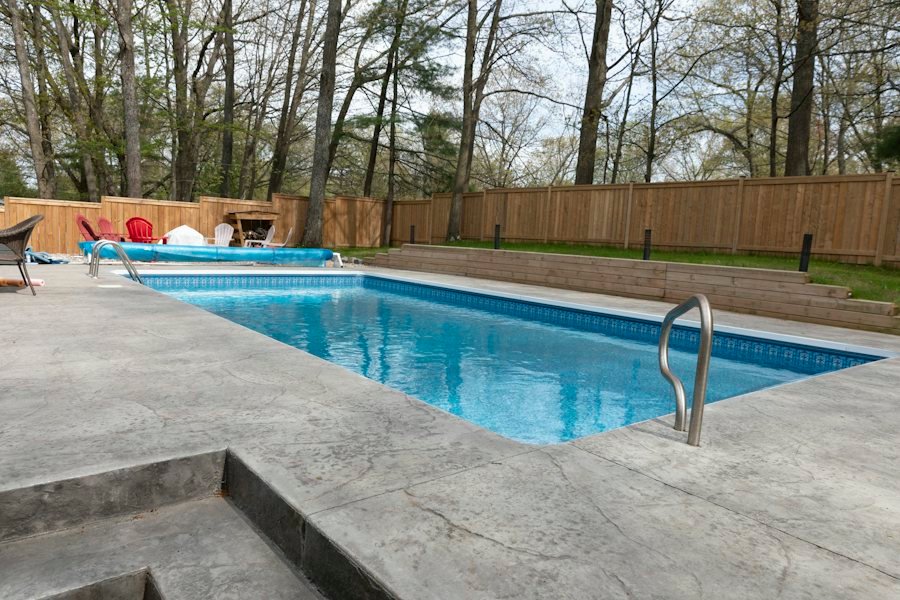
Plenty of owners outside the Gulf states never need a structure at all. A good cover handles debris and heat loss for the off-season: HomeAdvisor reports a typical pool cover around $1,500, within a $100 to $3,800 span. Families who want a barrier between toddlers and water usually need a fence more than a roof, and Bob Vila’s enclosure guide puts a pool fence at about $6,500 on average.
Seasonal inflatable domes sit between the two. HomeGuide prices them at $750 to $1,500 for above-ground pools and $2,500 to $7,500 for inground pools, but warns that portable types may only last about five seasons, which makes them a rental in all but name. And if what you really want is a bug-free place to sit rather than to swim, screening in a porch or patio may cost far less than caging the whole deck.
Permits, wind ratings and the insurance question
Enclosures are structures, so expect a permit. HomeGuide puts permits at $30 to $325 on average, and cities in hurricane country treat cages seriously: the City of Tampa’s screen enclosure page routes them through an application guide, plan review and inspections. A reputable installer pulls the permit and builds to your county’s wind requirements, which is part of why hurricane-zone cages carry that 10% premium.
Call your insurer before the contract is final. HomeGuide notes that some homeowners policies offer a screen enclosure rider of up to $50,000 in coverage, sold in $10,000 increments, and Fixr notes that an enclosure may reduce premiums in some cases. Coverage terms vary widely by state and carrier, so get the answer in writing.
For 2027, none of the national cost guides cited here has published new enclosure prices as of November 2026, so treat these figures as current prices for planning and ask each installer how long a quote is honored.
Match the enclosure to the problem
| If your main complaint is… | Buy this first | Rough budget for a 20×40 pool |
|---|---|---|
| Bugs, leaves and lizards in a warm state | Aluminum screen cage | $4,000 to $12,000 |
| A swim season that ends in September | Heater and cover; polycarbonate if that is not enough | Cover about $1,500; shell $15,000 to $32,000 |
| Wanting to swim in January in a cold state | Glass with dehumidification | $25,000 to $50,000, plus $1,000 to $3,000 for a dehumidifier |
| Child safety | Pool fence and alarms | About $6,500 for the fence |
Retractable systems make sense only when you need both summer air and winter cover and can absorb a $30,000-plus quote. Everyone else should buy the cheapest structure that fixes the specific complaint, then get three bids on it.
Pool enclosure questions installers get asked
Can I install a pool enclosure kit myself?
Kits exist at many price points. HomeGuide puts pool enclosure kits at $2,500 to $15,000 and HomeAdvisor’s kit average at $3,900, while Fixr notes a basic Florida Glass kit around $600 with no installation. Large aluminum cages need anchoring to wind standards and usually a permit, so most owners hire a pro for anything bigger than a small kit.
How long does it take to install a pool screen enclosure?
HomeAdvisor says installation can take up to two weeks. Permitting and plan review can add more time before work starts, so ask the installer for a realistic start date.
How much does a pool enclosure for an above-ground pool cost?
Far less than an inground job. Fixr lists above-ground enclosures at $400 to $1,200, and HomeGuide prices inflatable above-ground domes at $750 to $1,500.
What do pool cage doors and alarms cost?
HomeGuide lists screen doors at $100 to $350, storm doors at $270 to $1,000 and pool door alarms at $20 to $100. A self-closing, self-latching door is worth the small upgrade if children visit.
Does a pool cage cost more in Florida?
Not per square foot. HomeGuide puts screen enclosures in Miami, Orlando, Jacksonville and Tampa at the same $5 to $15 per square foot as the national range, and a typical Florida job at $6,000 to $12,000. Hurricane-rated framing can add about 10%.
Sources for these prices
- How much does a pool enclosure cost?, HomeGuide
- How much does it cost to rescreen or repair a pool enclosure?, HomeGuide
- Pool Enclosure Cost, Fixr (updated January 31, 2025)
- How Much Do Pool Enclosures Cost in 2025?, HomeAdvisor
- Pool Screen Enclosure Repair Cost [2025 Data], Angi
- Building a Pool Screen Enclosure: Costs and Key Considerations, Bob Vila (updated May 2024)
- Residential Screen Enclosures, City of Tampa (updated May 2025)
Other pool and backyard costs to price
- Home improvement costs in 2027: the complete guide
- Pool liner replacement: six ways the bill runs over
- Above ground pool cost, line by line
- Plunge pool cost, installed
- Pergola installation cost
- What a 20×20 paver patio costs
- Pool heater cost by climate and fuel
Pricing method: prices were researched in November 2026 for 2027 planning and may change. Figures come from national cost guides and a city permitting office; local quotes depend on size, wind zone and materials. See our disclaimer.