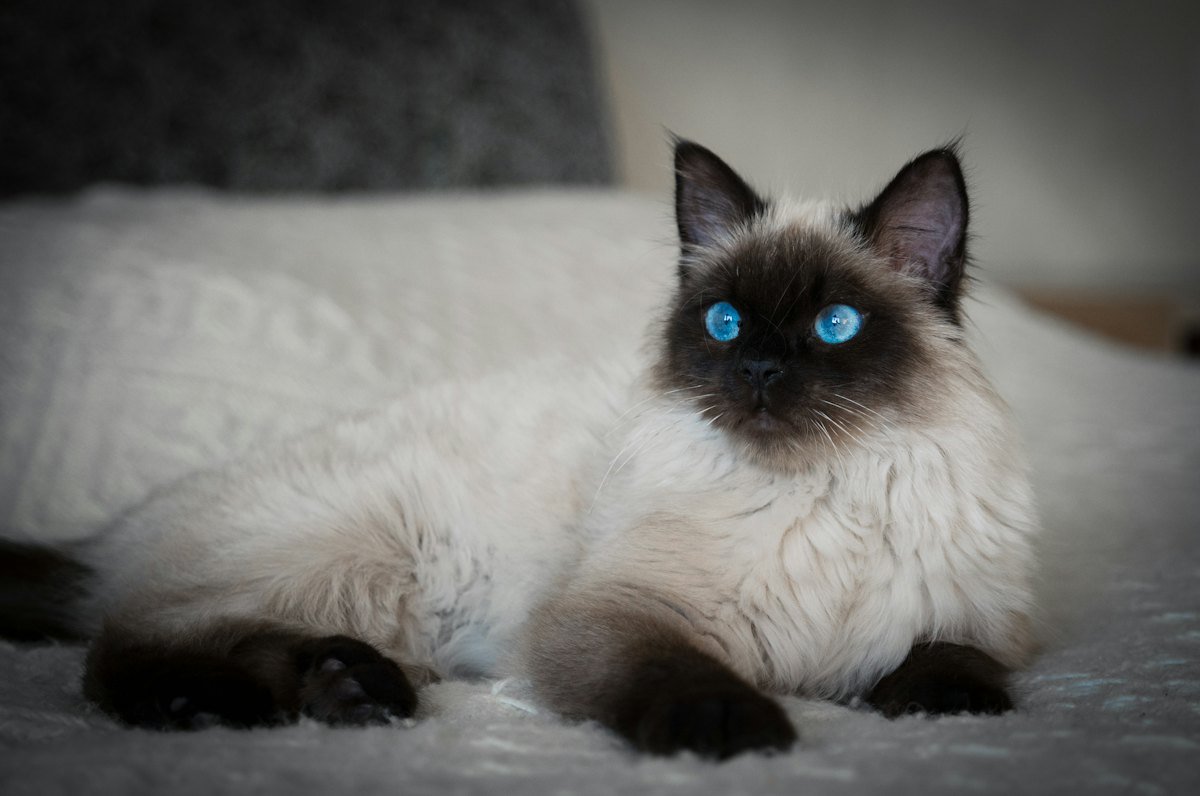
Why would anyone pay used-car-down-payment money for a cat famous mainly for going limp in your arms? With Ragdolls, the answer depends on what you are buying. A pet-quality Ragdoll kitten from an established breeder costs about $1,000 to $2,800, according to Petful’s 2026 Ragdoll price guide. Floppycats, a long-running Ragdoll owners’ site, puts altered pet kittens a bit higher, at $1,500 to $3,000, while a kitten sold with breeding rights starts around $3,000 and can pass $5,000.

Nothing official changes for 2027. Breed registries do not set prices and no rule caps them, so every cattery writes its own price list. Treat the figures here as current prices for 2027 planning. The questions below run in the order buyers tend to ask them, from the sticker price to the bills that follow it.
What does a Ragdoll cost from each kind of seller?
Where you buy matters more than which cat you pick. Two of the most detailed 2026 price surveys agree on the shape of the market, even if their ranges differ at the edges.
| Where the cat comes from | Petful (June 2026) | Floppycats (May 2026) |
|---|---|---|
| Rescue or rehoming | $75 to $600 | $200 to $500 |
| Retired breeder, already altered | $400 to $900 | $350 to $1,500 |
| Pet-quality kitten | $1,000 to $2,800 | $1,500 to $3,000 |
| Show-quality kitten | $3,000 to $5,000+ | $3,000 to $5,500+ |
| Kitten with breeding rights | $3,000 to $5,000+ | $3,500 to $7,500+ |
Catster’s guide, updated in October 2026, lands in the same neighborhood, with breeder kittens at $1,500 to $2,500 and up. It also offers the most useful single sentence in the whole genre: if a breeder asks only a few hundred dollars for a purebred Ragdoll kitten, look elsewhere.
Prices have climbed steadily. Floppycats’ founder paid $350 for a Ragdoll in 1989, $600 apiece in 2004 and $800 apiece in 2009. A pet kitten today typically costs two to four times that last figure.
Why can two kittens from one litter be priced $3,000 apart?
Mostly paperwork. A pet-quality kitten is sold to be spayed or neutered, either before it leaves the cattery or under a contract that requires it. A breeding-rights kitten comes with registration that lets its offspring be registered too, and the breeder is selling you a share of a bloodline, not just a companion. If you want a lap cat, breeding rights are money spent on something you will never use.
Pet, show and breeder quality in plain terms
- Pet quality: healthy and typical of the breed, but with a minor cosmetic flaw by show standards, such as a mark in the wrong place or less-than-ideal eye color. It makes no difference at home.
- Show quality: conforms closely to the breed standard and can be shown, usually still sold altered unless rights are negotiated.
- Breeder quality: sold intact, with breeding rights and full registration, and often to buyers the breeder has vetted.
Pattern and color move prices at the margin. Some catteries charge more for in-demand colors or for crisp mitted and bicolor markings, and others price an entire litter the same. Ask whether the price list changes by pattern, and if it does, ask why. There is a practical wrinkle: Ragdolls are born nearly white and their points darken over the first weeks, so a pattern promised in a very young kitten is partly a forecast.

Does living in California cost more than living in Ohio?
Usually, yes. Petful’s regional breakdown for pet-quality kittens shows a spread of several hundred dollars between the coasts and the middle of the country.
| Region | Pet-quality Ragdoll kitten |
|---|---|
| California and West Coast | $1,800 to $2,800 |
| Northeast | $1,800 to $2,800 |
| Pacific Northwest | $1,500 to $2,600 |
| Texas and the South | $1,400 to $2,500 |
| Midwest | $1,000 to $2,200 |
Buying across the country can erase the saving. Petful lists ground transport at $200 to $600, and flying a kitten home in the cabin with you adds roughly $100 to $200 in airline pet fees. A road trip to a Midwest cattery makes sense if you would drive there anyway; paying a stranger to deliver a kitten you have never seen in person is where the risk starts.
Is there an honest way to get a Ragdoll for a few hundred dollars?
Two, and both involve adult cats. Breed-specific rescues and shelters rehome Ragdolls and Ragdoll mixes, typically for $75 to $600. Catster reports adoption fees as high as $400 to $1,000 at some groups, which usually covers vaccines, a microchip and deworming already done. The second route is a retired breeding cat: already altered, often calm and house-trained, and priced by Floppycats at $350 to $1,500, with older retirees often at the low end.
The third route, a perfect kitten on a classified site for $500, is the one to avoid. The FTC’s June 2026 pet scam alert says anyone insisting on payment by gift card, payment app, cryptocurrency or wire transfer is a scammer, and it recommends running a reverse image search on pet photos. Losses add up: BBB Scam Tracker data reported by Alaska Business put the average pet scam loss at $850 in 2022, up 60% since 2017.
- The seller will not do a live video call showing the kitten with its mother.
- The price sits far below the ranges above, often with a story about relocation or a sick owner.
- A deposit goes by Zelle, Cash App, gift card or crypto, with no written contract.
- A second invoice appears for a crate, shipping insurance or a vaccine certificate after you have paid.
- The same kitten photos turn up on other sites under different names.
What should a $2,000 kitten come with?
Proof of health first. Ragdolls carry a known gene mutation linked to hypertrophic cardiomyopathy, the thickened-heart disease that is the most common heart condition in cats. The UC Davis Veterinary Genetics Laboratory describes it as a single change in the MYBPC3 gene, inherited as a dominant trait with incomplete penetrance: a carrier passes it to about half its kittens, and cats with two copies are at high risk. A careful breeder tests the parents and will show you the results without being asked twice.
A pet-quality price from a reputable cattery should normally include:
- Spay or neuter surgery, or a contract that spells out when and who pays.
- Age-appropriate vaccines, deworming and a vet exam, with records.
- A microchip.
- Both parents’ HCM DNA results.
- A written contract with a health guarantee and a clause that the breeder takes the cat back if you ever cannot keep it.
- Registration papers for a pet, if the cattery registers its litters.
If several of those are missing, the low price is not a bargain. You will pay for them separately, and some, like the parents’ test results, you cannot buy later at any price.
How much does the first year add on top of the kitten?
More than first-time owners expect. Petful estimates first-year setup and care for a Ragdoll at roughly $1,500 to $2,400, covering food, a cat tree and scratching posts, early vet visits, vaccines and a microchip. Catster’s supply list alone runs $870 to $1,685. For a sense of scale beyond this one breed, the ASPCA’s own cat budget is a useful benchmark.
$1,904 for a cat’s first year, including $455 in one-time setup costs.
ASPCA pet care cost table (2021 update)
That ASPCA cost table has not been refreshed since 2021, so read it as a floor. Adding Petful’s first-year range to the purchase prices above gives a rough total for year one.
| Route | Cat | First-year care | Year-one total (our estimate) |
|---|---|---|---|
| Adult from a rescue | $75 to $600 | $1,500 to $2,400 | $1,575 to $3,000 |
| Pet-quality kitten | $1,000 to $2,800 | $1,500 to $2,400 | $2,500 to $5,200 |
| Breeding-rights kitten | $3,000 to $5,000 | $1,500 to $2,400 | $4,500 to $7,400 |

And what does a Ragdoll cost every year after that?
For cats in general, Insurify’s May 2026 cost breakdown puts ownership at $60 to $240 a month, with ongoing costs averaging about $1,906 a year. Ragdolls sit in the upper half of that range because they are large, slow-maturing cats with big appetites; Floppycats budgets $80 to $150 or more a month for premium wet or raw food alone.
Insurance is the line worth deciding early. Insurify found an average cat policy costs about $23 a month, while Petful’s Ragdoll-specific estimate runs $20 to $50. Given the breed’s heart risk, enrolling a kitten before any murmur shows up on a chart keeps that condition from being excluded as pre-existing. Grooming is cheaper than the coat suggests: Ragdoll fur mats less than a Persian’s, and weekly brushing at home handles most of it, although Catster prices professional grooming at $30 to $50 a month for owners who prefer it.
Three conversations to have before you send a deposit
- The breeder, on live video. See the kitten with its mother, ask for both parents’ HCM results and read the contract before money changes hands.
- A previous buyer. Ask the cattery for one or two references from the last year and ask them how the kitten’s health and paperwork turned out.
- Your own vet. Get a price for the first-year visits and ask which insurers handle heart claims well. That call alone tells you whether the year-one numbers above fit your budget.
If any of the three conversations goes badly, walk away. Another litter is always coming, and a cat you will live with for the next decade or more deserves to start with a clean contract.
Ragdoll buyer questions
Are Ragdoll cats hypoallergenic?
No. No cat breed is truly hypoallergenic, and Ragdolls have a long, plush coat. People with mild allergies should spend time around adult Ragdolls before paying a deposit, since a returned kitten rarely comes with a full refund.
Is a Ragdoll kitten deposit refundable?
It depends on the contract. Many catteries keep deposits if the buyer changes their mind but refund them if the breeder cannot deliver a kitten. Get the terms in writing and pay with a method that offers buyer protection.
Does pet insurance cover HCM in a Ragdoll?
Many accident and illness policies cover heart disease, but not if it was noted before enrollment or during a waiting period. Read the policy wording on hereditary conditions and pre-existing conditions before you choose a plan.
How much is a Ragdoll cat compared with a mixed-breed cat?
Much more up front, similar afterward. Shelters charge modest adoption fees for mixed-breed cats, while a pet-quality Ragdoll kitten typically costs $1,000 to $3,000. Food, litter and vet care cost about the same for any healthy cat, though larger cats eat more.
Should I buy a Ragdoll from a pet store?
Be cautious. Reputable Ragdoll breeders generally sell directly to buyers they have screened, not through stores. Ask any seller for the parents’ health records and the cattery name, and confirm them directly with the breeder.
Price sources
- Ragdoll Cat Price in 2026: Full Cost Guide, Petful (June 5, 2026)
- How Much Does a Ragdoll Cat Cost? (2026 Price Guide), Floppycats (updated May 23, 2026)
- How Much Does It Cost to Own a Ragdoll Cat?, Catster (updated October 11, 2026)
- How Much It Costs to Own a Cat in 2026, Insurify (updated May 31, 2026)
- Cutting Pet Care Costs, ASPCA (cost table, 2021 update)
- Hypertrophic Cardiomyopathy (HCM) in Ragdolls, UC Davis Veterinary Genetics Laboratory
- Animal lovers: learn to spot and avoid this breed of pet scams, Federal Trade Commission (June 24, 2026)
- Better Business Bureau: Puppy Scams Fall, but Individual Losses Rise, Alaska Business Magazine (December 26, 2022)
More cat and pet costs worth knowing
- Family costs in 2027: the complete guide, from pets to senior care
- Maine Coon cat price, and how to tell a real kitten from a fake listing
- Bengal cat price and the paperwork behind it
- What pet insurance for a cat costs
- Spay and neuter costs at clinics, shelters and hospitals
- Vet visit costs by clinic type and problem
More related guides: Siamese cat price myths, tested
Pricing method: prices were researched in November 2026 for 2027 planning and may change. Breeders set their own prices, so confirm current costs and health terms directly with the cattery and your veterinarian. See our disclaimer.