Most people shopping for barber school compare tuition between two schools across town. The number that matters more was set by your state legislature: how many clock hours you must log before you can sit for the license exam. In the published 2026 cost sheets we checked, a full barber program ran from $14,870 at Paul Mitchell The School Orlando’s 900-hour course to $26,202 at the same chain’s 1,500-hour Chicago program, while a Colorado public technical college listed $10,829. In New York, a licensed apprenticeship can stand in for school, and the tuition line can drop close to zero.

None of the schools we checked had posted 2027-28 rates yet, so treat these as current prices for 2027 planning. The map below starts with the state rule, then adds everything that lands on top of tuition.
The clock-hour rule behind every barber school bill
Every state licenses barbers, but they disagree sharply about how much training it takes. A 50-state comparison published by the Pennsylvania Department of State sorted states into bands running from 800 to 1,000 hours at the low end to 1,800 to 2,100 hours at the top, with a median of 1,500 hours. Schools sell training by the hour, so a state that demands 1,500 hours is asking you to buy about two-thirds more school than one that settles for 900.
The price sheets bear that out. Divide each program’s total published cost by its hours and the all-in rate barely moves: roughly $16.50 to $17.80 per clock hour across three states. The school’s brand explains some of the spread between two quotes. Your state’s hour count explains most of it.
One school chain, three states, three very different bills
Comparing campuses of a single chain strips out most curriculum and branding differences, which leaves geography doing the work. Texas requires a 1,000-hour Class A barber course, according to the Texas Department of Licensing and Regulation; Orlando’s catalog lists 900 hours and Chicago’s lists 1,500.
| Campus | Program hours | Tuition | Kit, books and fees | Total published cost | All-in per hour (our math) |
|---|---|---|---|---|---|
| Orlando, Florida | 900 | $11,250 | $3,620 | $14,870 | $16.52 |
| Austin, Texas | 1,000 (state course) | $15,000 | $2,787.52 | $17,787.52 | $17.79 |
| Chicago, Illinois | 1,500 | $22,500 | $3,702.35 | $26,202.35 | $17.47 |
Source: Paul Mitchell The School cost sheets. Orlando figures are the schedule effective June 1, 2026. Austin: Class A Barber cost of tuition and supplies. Chicago: Barbering cost of tuition and supplies. Per-hour figures divide each total by program hours and are our calculation.
The Orlando sheet also shows how prices drift. It lists an earlier total of $14,120 alongside the current $14,870, an increase of about 5% that took effect June 1, 2026. Expect similar step-ups as schools post their 2027 schedules, and ask any school you tour which price sheet your enrollment date falls under.
One caution on the Chicago number: a 1,500-hour program is a full year of school or more for most students, and every month in class is a month without barbering income. In a high-hour state, the time cost is as large a part of the decision as the tuition.
The kit, books and fees stacked on top of tuition
Tuition is the headline. The supply lines are where first-time students get surprised, because they can add $2,800 to $3,700 before you cut a single head of hair. Here is how the Austin and Chicago sheets break it down:
- Technical kit: $1,750.08 in Austin, $2,147.04 in Chicago
- Textbooks: $312.40 in Austin, $580 in Chicago
- Digital kit: $397.13 in Austin, $533 in Chicago
- Sales tax on supplies: $202.91 in Austin, $342.31 in Chicago
- Application and registration: $25 and $75 at both campuses, plus a $25 TDLR fee in Austin
Florida bundles kit, textbook and supplies into one $3,595 line on the Orlando sheet. Then the state charges you to become a barber. The Texas licensing agency lists a $50 application fee for the Class A license, and the Pennsylvania study found initial barber license fees ranging from $20 in Indiana and New York to $250 in South Carolina, with a median of $78. Those are small numbers next to tuition, but exam retakes and renewals add more over a career.
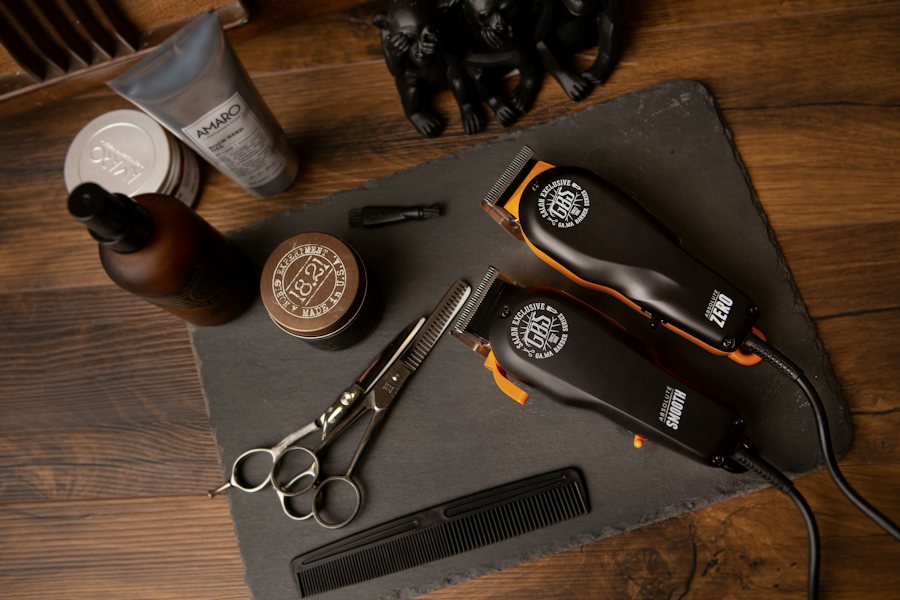
If you already own professional clippers and shears, ask before enrolling whether the school’s kit is mandatory. At these prices, a yes or no is worth $1,700 or more, and a school that insists on its own kit will bill you for it either way.
States where a shop apprenticeship replaces the classroom
A handful of states let you learn the trade behind a working chair instead of in a school. New York is the clearest example. The New York Department of State’s barber FAQ describes a two-year licensed barber apprenticeship, and the exam fee is $15, due when you schedule the test. You skip most or all of the tuition, but you need a licensed barber willing to sponsor you, and 24 months is a long runway next to a 900-hour Florida course that a full-time student can finish in well under a year.
Many states close that door. The same Pennsylvania comparison lists 20 states that require attendance at a barber school, including Arizona, Colorado, Illinois, Kansas, Michigan, Minnesota, North Carolina, Tennessee and Washington. If you live in one of them, the decision is not school versus shop; it is which school, and how cheaply you can get the hours.

Public technical colleges, the cheapest classroom seat
Where barber school is mandatory, a public program is usually the cheapest legitimate route. Pickens Technical College’s barber cost sheet, revised in March 2026, puts its four-semester barber certificate at $10,829 all in. That is about 39% below the Austin total, and the semester-by-semester layout shows where the money goes.
| Semester | Tuition and credit-hour charges | Program and campus charges | Semester total |
|---|---|---|---|
| 1 | $1,961 | $1,749 (includes the $817 barber kit and $387 in lab materials and texts) | $3,710 |
| 2 | $1,814 | $500 | $2,314 |
| 3 | $1,814 | $530 | $2,344 |
| 4 | $1,961 | $500 | $2,461 |
| Certificate total | $10,829 |
The kit alone tells the story: $817 at Pickens against $1,750 to $2,147 for the technical kits at the two private campuses above. The tradeoff is the calendar. A four-semester program has fixed start dates, so a student who misses one may wait months, while a private school’s hourly model can let a full-timer finish sooner. The Pickens sheet also notes that its book, kit and supply figures are estimates and that the certificate is eligible for financial aid.
Pell grants and the open question for 2027-28
Federal grants can take a large bite out of these bills. For the 2026-27 award year, the maximum Pell Grant is $7,395, according to Federal Student Aid, and the agency says the 2027-28 maximum will be announced in early 2027. A full award would cover about half of the Orlando total or roughly two-thirds of the Pickens certificate. Pell is need-based and only flows to eligible programs, so confirm both with the school’s financial aid office before you count on it.
Loans are a different matter. A grant that covers half the bill still leaves $7,000 or more at a private campus, and borrowing it against a trade where income builds over time deserves a hard look at the payment. A shorter, cheaper program in a low-hour state, or a public certificate, keeps that number small.
The bottom line for your state
Look up your state board’s hour requirement first, then multiply it by $16 to $18, the all-in hourly range from the three private campuses above, and you have a realistic ceiling for a private barber school in 2027: about $15,000 in a 900-hour state and $26,000 or more at 1,500 hours. Next, check for a public technical college program, which can come in thousands lower, and if your state accepts an apprenticeship, weigh two years in a shop against the tuition you would skip. Whichever route you choose, get the tuition, kit, textbook and fee lines in writing before enrolling, because those four lines are the whole bill.
Other questions about barber training costs
How long does barber school take?
It depends on your state’s hour requirement and your schedule. A 1,000-hour program at 35 hours a week takes roughly seven months; a 1,500-hour program at the same pace takes about 10 to 11 months. In Texas, students can sit for the written exam after 900 of the 1,000 hours.
Can I take barber classes online?
Not for the whole license. States require supervised hands-on hours at a licensed school, and Texas, for example, requires both a written and a practical exam. Some schools deliver theory material digitally, which is why digital kits appear on cost sheets.
Is the barber kit refundable if I drop out?
Often not. Paul Mitchell The School Orlando labels its kit, textbook and supplies charge nonrefundable, and Pickens Technical College marks its barber kit non-refundable. Read the refund policy in the enrollment agreement before paying.
Does a barber license transfer to another state?
Not automatically. Required training ranges from about 800 to 2,100 hours depending on the state, so moving from a low-hour state to a high-hour one can mean extra hours or exams. Check the new state’s barber board before you move.
Is barber school cheaper than cosmetology school?
It can be, mainly because barber programs in many states require fewer hours than full cosmetology programs, but it varies by state. Our cosmetology school cost guide prices that route by the clock hour for comparison.
Where these barber school prices come from
- Barbering Cost of Tuition and Supplies, Paul Mitchell The School Orlando (schedule effective June 1, 2026)
- Class A Barber Cost of Tuition and Supplies, Paul Mitchell The School Austin (2026 catalog)
- Barbering Cost of Tuition and Supplies, Paul Mitchell The School Chicago (2026 catalog)
- Barber Program Costs, Pickens Technical College (revised March 2026)
- Apply for a Class A Barber License, Texas Department of Licensing and Regulation
- Frequently Asked Questions – Barber, New York Department of State
- Occupational Licensing Study, 50 State Comparison: Barber, Pennsylvania Department of State (2020)
- Don’t Miss Out on Federal Pell Grants, Federal Student Aid (2026-27 award year)
More grooming and training cost guides
- The complete health, beauty and fitness cost guide
- Cosmetology school cost, priced by the clock hour
- What it costs to open a salon or rent a suite
- Supercuts haircut prices
- Great Clips haircut prices
- Hair extensions cost, month by month
Pricing method: prices were researched in November 2026 for 2027 planning and may change. Barber school tuition, kits and state fees vary by school, state and enrollment date; confirm current figures with the school and your state barber board. See our disclaimer.