Should you pay an interior designer by the hour, by the room, or by a cut of everything you buy? The billing model matters more than most clients expect. For one room, design fees alone run from $159 for an online package to $5,000 or more for a local full-service designer, and Angi’s cost data puts the national average for hiring a designer at $8,513, within a typical range of $2,061 to $15,171.

Those averages blur together four very different deals. Each one is cheapest for a certain kind of project and quietly expensive for the rest, so this guide compares them on the same terms and ends with a simple rule for choosing.
Four ways designers bill, side by side
| Billing model | Typical published range | Cheapest when | The catch |
|---|---|---|---|
| Hourly | $50 to $200 an hour for most designers, up to $450 to $500 for top names | The brief is narrow and you make decisions fast | No ceiling unless you negotiate one |
| Flat fee per room or project | About $1,000 to $10,000 a room, depending on the room | Scope is fixed and you want a known number | Vague deliverables lead to change orders |
| Cost-plus or percentage | Markups of 10% to 40% on products; 10% to 30% of project cost | The designer has deep trade discounts on what you are buying | The fee grows with every upgrade you approve |
| Online e-design | $159 to $499 a room at Havenly; $400 to $1,500 for online design generally | You can order, receive and return items yourself | No one manages delivery, damage or installation |
Many designers blend these. A common setup is a flat or hourly design fee plus a markup on furniture they order for you, so the question to ask at the first meeting is not “what do you charge” but “what are all the ways I will pay you.”
Cost-plus: why one word in the contract moves the price
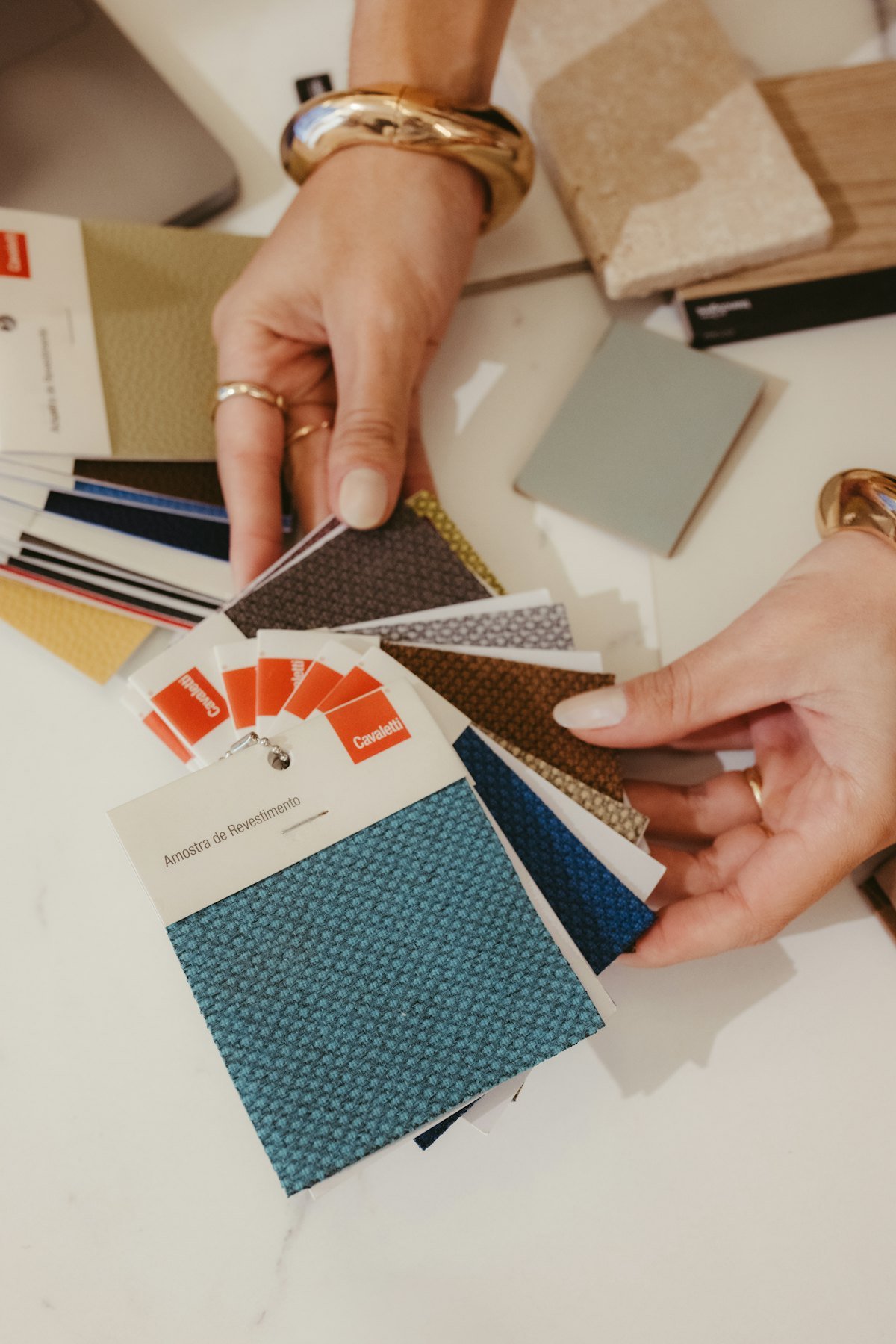
Under cost-plus, the designer buys furniture, lighting and fabric at trade prices and resells it to you with a markup. DesignFiles, which makes software for design firms, puts the industry average product markup at 35%, with most designers at 30% to 35% and some as high as 50% to 60%. Angi’s consumer guide cites a wider 10% to 40%, and Thumbtack’s 2026 figures show 15% to 35%.
The markup sounds like pure cost, but it rides on a discount you could not get yourself. New York designer Laurel Bern writes that trade-only showrooms give designers about 40% off, and that clients working with a designer should usually pay at least 20% to 30% less than full retail. That only holds if the markup is applied to the net price. Her own example makes the gap plain: on a sofa with a $15,000 retail price and a $9,000 trade price, “cost plus 30%” on retail adds $4,500 for a total of $13,500, while the same 30% on net adds $2,700 for a total of $11,700. Same words, $1,800 apart.
Percentage deals have a second weakness: the designer earns more when you spend more. That is not a reason to avoid them, but it is a reason to set the furniture budget in writing before sourcing starts. It matters more in 2027. A federal tariff increase on imported upholstered furniture (from 25% to 30%) and on kitchen cabinets and bathroom vanities (from 25% to 50%) was postponed to January 1, 2027. If those increases take effect as scheduled, any fee calculated as a share of product cost rises with them, even though the designer’s work does not change.
Five questions that expose how a markup really works
- Is the percentage applied to the net (trade) price or the retail price?
- Do freight, receiving, storage and delivery get billed separately, and at what rate?
- Will invoices show the net price, or only your price? Many states have disclosure rules for markups and commissions.
- Is there a design fee on top of the markup, or does the markup replace it?
- If I find the same item cheaper elsewhere, can I buy it myself, and what happens to your fee if I do?
Flat fees by the room, and what “done” has to mean
A flat fee trades flexibility for certainty, which is why it suits a defined job like one bedroom or a home office. Fixr’s per-room ranges show how much the room type matters, since a kitchen or bath involves cabinetry, tile and plumbing drawings that a bedroom never needs.
| Room | Typical flat design fee |
|---|---|
| Hallway or entry | $500 to $2,000 |
| Bedroom or kid’s room | $1,000 to $3,000 |
| Home office | $3,000 to $5,000 |
| Living or family room | $4,000 to $6,000 |
| Bathroom | $4,000 to $10,000 |
| Kitchen | $5,000 to $10,000 |
Prices climb in expensive metros. A Sacramento firm that publishes its own rates lists $6,000 to $18,000 for a single-room design package and $25,000 to $75,000 or more for comprehensive residential work. The same firm flags the most common flat-fee dispute: nobody defined what a complete package includes. Before signing, get the deliverables listed by name (floor plan, elevations, a shopping list with links, a set number of revision rounds) and ask what an extra round costs. If you are planning a kitchen, the design fee is a small slice of the total; our kitchen remodel cost breakdown shows where the rest of the budget goes.
Hourly billing: low rate, open meter
Fixr’s experience tiers explain most of the spread in hourly rates: about $50 to $100 an hour for a junior designer, $125 to $200 for mid-level, and $200 to $450 for senior designers. Angi puts the common range at $50 to $200, with top designers in high-end markets reaching $500. Thumbtack notes that some designers set a minimum, five hours in one example, and Fixr lists travel time at around $75 an hour where it is billed.
Hourly is the cheapest model for a client who knows what they want. It gets expensive through indecision: each layout swap, each fabric reconsidered and each extra showroom trip adds time. A lower hourly rate can still produce a bigger bill if the designer works slowly. Compare the expected hours and what they cover, not just the rate, and ask for a not-to-exceed cap with a check-in when 75% of it is used.

Online e-design: the $159 room and what it leaves out
Online services have pushed the entry price far below anything a local firm can match. Havenly’s help center lists its Full package at $159 per room, with added rooms at $119, and an In-Person package at $499, with added rooms at $199. One package covers a room of up to 400 square feet. Fixr puts online design more broadly at $400 to $1,500.
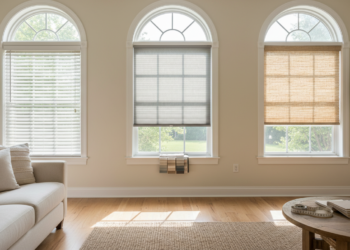
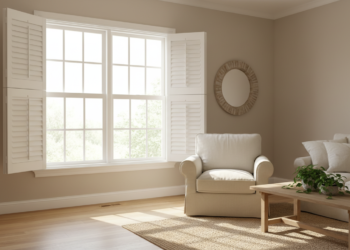
What you give up is everything after the drawing. You place the orders, wait for backorders, inspect deliveries, file damage claims and arrange returns, which is the procurement work full-service firms fold into their markup. E-design also stops short of renovation: Havenly does not price kitchens and bathrooms as standard services. For a living room, bedroom or office where you are replacing furniture rather than moving walls, it is hard to beat on price. Pairing it with a few targeted purchases, such as new blinds or reupholstering a sofa you already own, can stretch the budget further.
One living room, priced four ways
To see how the models compare, take a hypothetical living room with $15,000 of furniture and decor at retail prices. The design fees below come from the published ranges above; the 30 hours and the 40% trade discount are assumptions for the example, not quotes.
| Model (example only) | Design fee | Furniture you pay for | Total |
|---|---|---|---|
| Hourly, mid-level, 30 hours at $150 | $4,500 | $15,000 at retail | $19,500 |
| Flat fee for a living room | $5,000 | $15,000 at retail | $20,000 |
| Cost-plus only: 35% on a $9,000 net price | $3,150 built into prices | $12,150 | $12,150 |
| Design fee of $3,000 plus 35% on net | $3,000 plus $3,150 | $12,150 | $15,150 |
| Havenly Full package | $159 | $15,000 at retail | $15,159 |
The surprise is the cost-plus row. When a designer really does buy at 40% below retail and marks up from net, the client can pay less for the finished room than if they had hired the cheapest hourly designer and bought at full price. The result flips quickly, though. Mark up from retail instead of net, or source from stores that give designers only a small discount, and the same 35% pushes the total past the flat-fee option. Online design stays cheapest in fees, but you carry every delivery problem yourself.
What clients ask before hiring a designer
Is an interior decorator cheaper than an interior designer?
Usually, yes. Fixr puts decorators at about $50 to $200 an hour, up to $500 for luxury work, with a typical decorating project costing $3,500 to $5,000. Designers range from $50 to $450 an hour, and they also handle layouts, lighting plans and construction drawings that decorators generally do not.
How much does an interior designer cost per square foot?
Angi lists $5 to $15 per square foot and Fixr $5 to $17. On Angi’s figures, a 500-square-foot space runs about $2,500 to $7,500 in design fees and 1,000 square feet about $5,000 to $15,000.
Do interior designers ask for a retainer?
Many do. Fixr notes a retainer of about 10% is common, usually credited against later invoices. Get the retainer terms, including whether any of it is refundable if the project stops, in writing before paying.
How much does an interior designer cost for a whole house?
Fixr puts full-service whole-home design at about $20,000 to $30,000 in fees. Costs run much higher with large homes, high-end firms and expensive metros; one Sacramento firm lists $25,000 to $75,000 or more for comprehensive residential projects.
Can I hire a designer just for a consultation?
Yes. Angi puts a one-time consultation at $150 to $500, and Fixr lists an all-day consultation at about $600 to $900. It is a good fit if you want a layout and a color plan but will shop and manage the project yourself.
The decision rule, in four lines
- Choose hourly if you need a layout, a palette or a second opinion, can decide quickly, and can get a not-to-exceed cap in the contract.
- Choose a flat fee for one defined room with a written list of deliverables and revision rounds, especially if you tend to second-guess choices.
- Choose cost-plus for a large furnishing job where the designer buys from trade sources, shows net prices on invoices and marks up from net, not retail.
- Choose e-design for furniture-only rooms when you are willing to handle ordering, deliveries and returns yourself.
If a project mixes construction with furnishing, such as a kitchen plus the family room next to it, it usually makes sense to put the construction side on a flat fee and the furnishing side on cost-plus, rather than forcing one model onto both.
Pricing the pieces a designer will specify
- Home improvement costs in 2027: the complete guide
- Kitchen island cost and what to skip
- Plantation shutters, from vinyl to hardwood
- What blinds cost for a whole house
- Cost to reupholster a couch
- Cost to paint a house interior
- Kitchen remodel cost, dollar by dollar
More related guides: Wallpaper installation prices, from DIY to designer
Pricing method: prices were researched in November 2026 for 2027 planning and may change. Figures come from Angi, Fixr, Thumbtack, Havenly, DesignFiles, Laurel Bern Interiors and Designed | Curated; tariff dates come from federal trade notices. The living-room comparison is a hypothetical example, not a quote. Confirm fees and contract terms with any designer you hire. See our disclaimer.