The number people quote for a Swig franchise is usually the wrong one. The franchise fee is $39,500, a figure that looks like the price of a used pickup, but Franchise Times’ 2026 Top 400 listing for Swig puts the full investment for a single store at $559,300 to $1,981,000. And Swig does not sell single stores.

So this is a bill read twice. First we take one store’s opening budget apart, line by line, and mark what is fair and where the soft spots are. Then we multiply it by ten, because that is the smallest deal the Utah dirty-soda chain currently offers.
Fifteen lines between a signature and opening day
Swig’s Item 7, the estimated initial investment table every franchisor must publish, is reproduced by SharpSheets’ Swig franchise breakdown from the brand’s earlier disclosure document. Those lines total $504,900 to $1,118,000. The newer range above is higher at both ends, and we explain why after the table.
| Line item | Low | High | Our read |
|---|---|---|---|
| Initial franchise fee | $39,500 | $39,500 | Fixed and in line with drink chains |
| Initial training | $3,000 | $10,000 | Mostly your travel and wages |
| Additional trainees | $0 | $5,000 | Skip at your peril |
| Real estate improvements | $260,000 | $700,000 | The line that moves everything |
| Site development fee (optional) | $0 | $35,000 | Paying Swig to help find and plan the site |
| Rent: three months plus deposit | $6,400 | $33,000 | Depends on landlord allowances |
| Equipment, furniture, fixtures, décor, supplies | $78,500 | $115,000 | Fair for a fountain-and-ice operation |
| Uniforms and tumblers | $4,000 | $7,000 | Branded merchandise, partly resold |
| POS, hardware and software | $12,000 | $18,500 | Required system, little room to shop |
| Signs | $18,000 | $25,000 | Higher for a freestanding pylon |
| Miscellaneous opening costs | $5,000 | $25,000 | Permits, deposits, legal, insurance |
| Opening inventory | $8,500 | $15,000 | Syrups, cups, cookie dough |
| Grand opening assistance fee | $10,000 | $10,000 | Paid to the franchisor |
| Grand opening marketing | $30,000 | $35,000 | Spent locally on your launch |
| Additional funds (first months) | $30,000 | $45,000 | Thin for a new brand in a new market |
| Total | $504,900 | $1,118,000 |
Half the money buys a building about the size of a two-car garage
Real estate improvements run $260,000 to $700,000, which is 51% of the low total and 63% of the high one. Everything else on the list, from the soda fountain to the opening inventory, is a rounding error by comparison.
The stores are small. Swig’s franchising page lists 870 square feet as the ideal footprint and accepts sites as small as 800, and it builds two formats: an end-cap unit with a drive-thru at the corner of a strip center, or a freestanding building on its own pad. The end-cap version lives near the bottom of the range because the landlord already built the shell. The freestanding version means site work, a queuing lane, paving, utilities brought to the pad and a building from the slab up, which is how a store smaller than many living rooms reaches the high six figures.
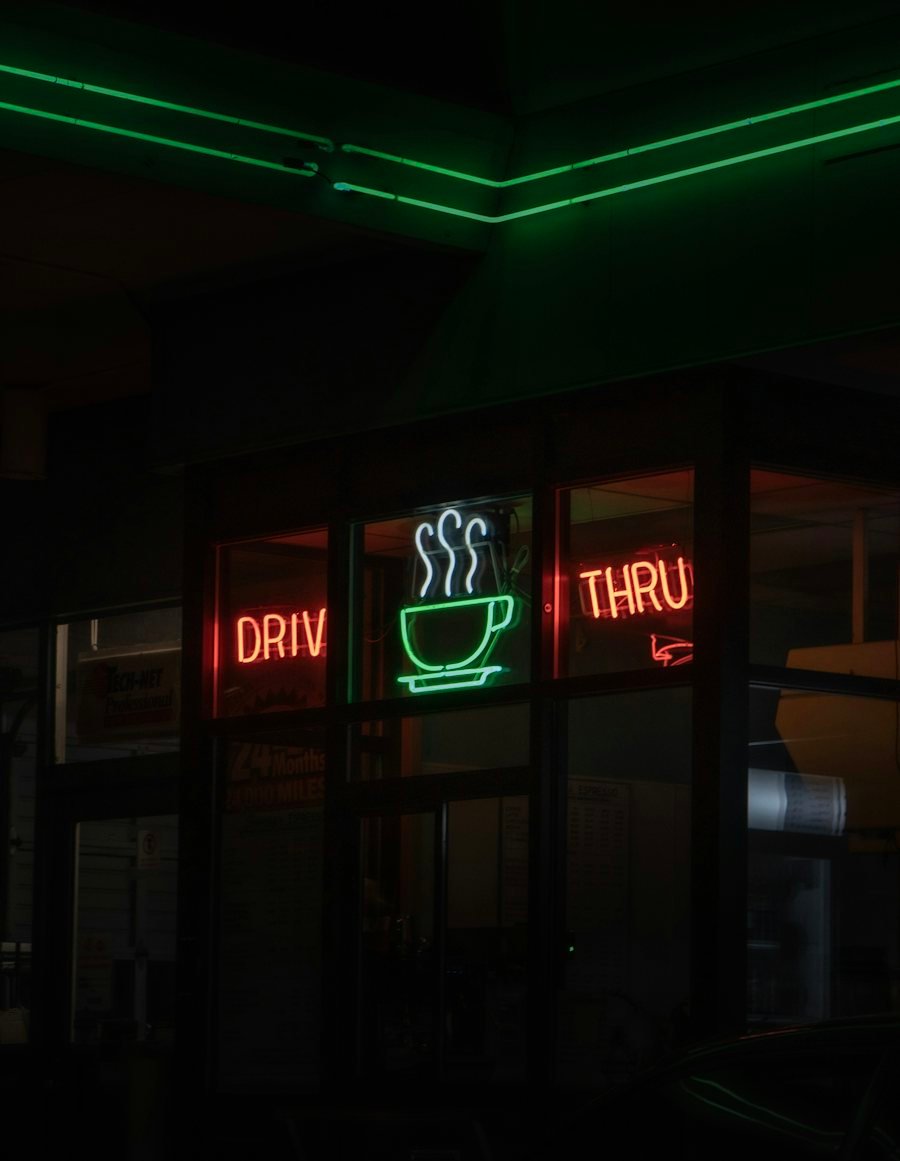
If you are comparing this with an independent drink shop, the gap is mostly that building. A walk-in shop in leased space skips the lane and the pad entirely, which is why a first boba shop’s line-by-line budget can land at a fraction of a single Swig, with no royalty attached and no system behind it either.
Which charges are fair, and which deserve a second look
Most of the table is honest arithmetic. Equipment at $78,500 to $115,000 buys fountains, ice machines, refrigeration and the cookie ovens, and it is hard to build a high-volume drink line for much less. The POS charge is a required system, so you are paying for consistency rather than shopping it.
Three lines are worth a harder look. The grand opening assistance fee is a flat $10,000 paid to Swig, on top of $30,000 to $35,000 you spend locally on the launch itself, so ask in writing what the $10,000 buys that the marketing budget does not. The optional site development fee of up to $35,000 can be money well spent for an operator new to a market, and wasted for a group with its own real estate team. And the $30,000 to $45,000 of additional funds is meant to carry a store through its first months. For a brand most customers in a new city have never heard of, that cushion is lean; our view is that a sensible operator holds more in reserve than the table shows.
Why the newest range tops out near $2 million
The 2026 range of $559,300 to $1,981,000 nearly doubles the old ceiling. The public listings we found give only the totals, not the revised lines, so we cannot say which ones moved. Our inference, based on the table above, is that the build-out line did most of the work: it is the only entry large enough to add almost $900,000 at the top, and Swig is now signing deals in costlier markets such as Chicago, Boston and Washington state. No 2027 disclosure has been published yet. Franchisors typically update theirs each spring, so ask for the newest Item 7 before you plan around any of these numbers.
The second reading: the same bill, ten times over
This is where most would-be owners stop reading. Swig’s franchise page sets out who it is selling to, and it is not a first-time buyer with a home equity line.
“$2,500,000 liquid for this investment,” plus 10 or more QSR or fast casual franchise restaurants already operating in the market, and the ability to build 2 to 3 new stores a year toward a 10-store minimum.
Swig’s published franchise requirements, 2026
Multiply the current single-store range by ten and the development commitment runs from about $5.6 million to $19.8 million, our arithmetic and before any financing costs. At two to three openings a year, a ten-store schedule takes four to five years to complete, so the money goes out in waves rather than all at once. The $2.5 million in liquid cash is the down payment on that plan; lenders and landlords typically fund the rest against the operator’s track record, which is why Swig asks for ten existing restaurants first.
Recent deals show the scale. Restaurant Dive reported in May 2026 on a 10-store agreement for Colorado Springs that came two weeks after a 25-unit deal for South Florida. Area development agreements usually set their own fee schedule, so ask whether the $39,500 is charged per store, discounted for later units or paid partly up front.

If you are short of the $2.5 million or the ten existing restaurants, Swig is not your franchise yet, and no amount of enthusiasm changes that. A smaller budget points toward what franchises under $150,000 actually buy, or toward running a few units of an established brand first to build the résumé Swig wants.
What leaves the register every month
The ongoing fees are standard for the category. Franchise Breakdown’s summary of Swig’s disclosure lists a 7% royalty on gross revenue, a 2% brand fund contribution and a technology fee currently set at $400 a month. Those numbers matter more over a decade than anything in the opening budget, the core idea behind comparing franchises by their ten-year fee load.
Some rough scale: Franchise Times reports $134 million in system sales across 142 units, which works out to about $944,000 per store by our division. That average includes stores open only part of the year and company stores, so treat it as a sketch, not an Item 19 figure. As an example, a store doing $1 million a year would send about $70,000 in royalties, $20,000 to the brand fund and $4,800 in technology fees, roughly $94,800 in all, before rent, labor or a single cup.
The smaller fees in the disclosure
Franchise Breakdown also lists a $20,000 franchise agreement transfer fee plus a $10,000 transferee training fee if you sell, a $35,000 relocation fee, $2,500 to train a new operating principal or manager, $300 for additional in-person training, $250 to $1,000 per person for conferences, a $50 fee for a bounced payment, and non-compliance fines of $250, $500 and $750. None of them appear in the opening budget, and most owners pay at least one.
A chain spending its growth money in a hurry
Swig began franchising in 2023 and is now growing fast enough that unit counts go stale within months. Franchise Times counted 142 stores, 43 of them franchised. Swig’s own site now claims more than 170 locations in 17 states, and the company’s November 2026 release reported 13 openings in eight states in the third quarter alone, plus new development deals for South Denver, Chicago, Washington and Boston. The Larry H. Miller Company has held a majority stake since 2022.
Speed cuts both ways for a buyer. A young system means open territory, but it also means less operating history per market. Restaurant Dive noted that 7 Brew already had a 600-store system by April 2026, and the best-known drive-thru rival is closed to buyers entirely; Dutch Bros stopped selling franchises in 2017. If you want a drink drive-thru in a hot suburb, you will be competing with both for the same corner lots.
Questions buyers ask after the first call
Can I buy an existing Swig store instead of building one?
Possibly, if a franchisee is selling and Swig approves you. Franchise Breakdown’s summary of the disclosure lists a $20,000 transfer fee and a $10,000 transferee training fee, and the buyer still has to meet Swig’s operator standards.
How much is the Swig franchise fee per store?
The listed initial franchise fee is $39,500. Under a multi-unit development agreement, ask how that fee is scheduled across stores and how much is due at signing, since development deals often set their own terms.
What does it cost to train a new manager at Swig?
Franchise Breakdown lists $2,500 to train a new operating principal or manager and $300 for additional in-person training. Owners should budget for this every time a key manager leaves.
Who owns Swig?
Franchise Times reports that the Larry H. Miller Company acquired a majority stake in 2022, after Savory Fund bought a stake in 2017. The chain was founded in St. George, Utah, in 2010 and is based in Lehi, Utah.
What happens if I need to move my Swig store?
The disclosure summary lists a $35,000 relocation fee, separate from the cost of building the new site. Make sure your lease term and your franchise term line up.
Who Swig is shopping for
Worth a discovery call
You already run ten or more quick-service or fast-casual restaurants in one market, you can show $2.5 million in liquid cash, you have a real estate pipeline for end-cap and pad sites, and you can fund two or three openings a year for four years or more.
Not this franchise, not yet
You are a first-time owner, you want one store, or your budget is the $559,300 low end rather than a multiple of it. The brand may relax its terms someday; today, the money is better spent building an operating record elsewhere.
Price sources
- 299. Swig, Top 400 2026, Franchise Times (September 30, 2026)
- Franchise Opportunities, Swig (2026)
- Swig Franchise FDD, Profits & Costs, SharpSheets (updated July 2026)
- How Much Does a Swig Franchise Cost?, Franchise Breakdown
- Swig is bringing dirty sodas to Colorado, Restaurant Dive (May 13, 2026)
- Swig Accelerates Growth with 13 New Openings and Four Development Announcements in Q3 2026, Franchising.com (November 17, 2026)
Other franchise bills, opened up
- Small business startup costs: the complete guide
- Smoothie King franchise cost, line by line
- What a Wingstop franchise costs to open
- Dunkin’ franchise cost, year by year
- Can you franchise a Starbucks?
- Business license costs by state and city
Pricing method: prices were researched in November 2026 for 2027 planning and may change. Figures come from the franchisor’s published requirements and the disclosure summaries cited above; ten-store totals and per-store sales are our own arithmetic. This is not financial or legal advice; review the current Franchise Disclosure Document with a franchise attorney and accountant. See our disclaimer.