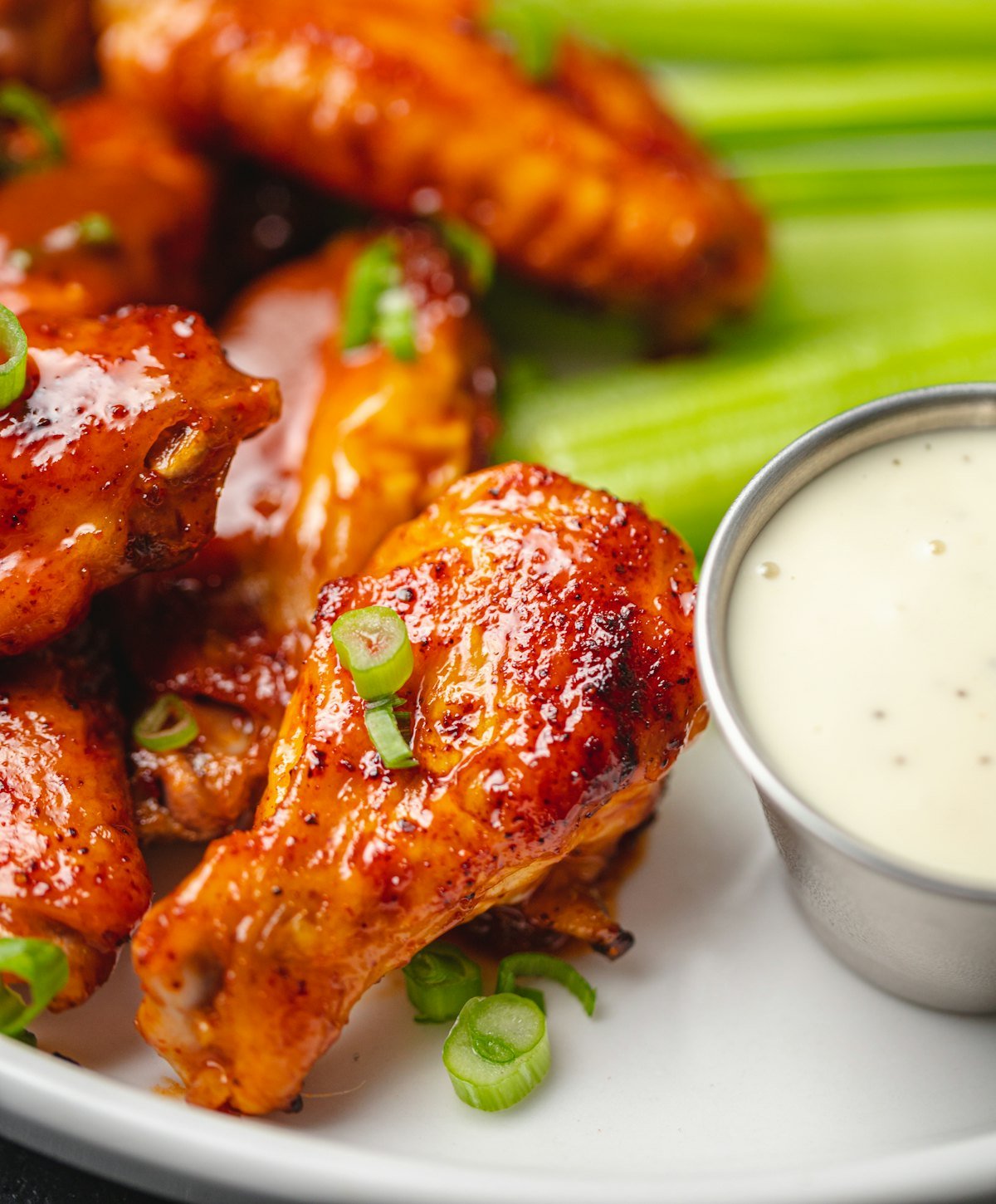
Wingstop has now reported six straight quarters of falling same-store sales, and it still expects to add 440 to 450 restaurants this year, according to Nation’s Restaurant News’ coverage of the October 2026 earnings report. Somebody is still writing checks. For a new domestic store, the franchisor’s 2026 disclosure document estimates the opening bill at $310,400 to $1,048,500, not counting rent or land, per the Item 7 table reproduced on Franchise Direct’s Wingstop FDD page. That is the figure to plan around for 2027 until a new disclosure document replaces it.

A range that wide tells you almost nothing on its own. So instead of averaging it, we took the table apart line by line: which costs are fixed by Wingstop, which ones you can bargain down, and which ones the total quietly leaves out.
The 14 lines on Wingstop’s 2026 disclosure
| Item 7 line | Low | High | Who controls it |
|---|---|---|---|
| Development fee | $25,000 | $25,000 | Wingstop (fixed) |
| Franchise fee | $25,000 | $25,000 | Wingstop (fixed) |
| Security deposits | $0 | $10,000 | Landlord and utilities |
| Architectural and engineering fees | $7,300 | $30,000 | You, within brand specs |
| Professional fees | $2,500 | $7,500 | You |
| Leasehold improvements | $103,000 | $581,000 | Site, landlord and contractor |
| Business and operating permits | $4,500 | $8,500 | Your city |
| Decor package | $11,300 | $39,400 | Mostly Wingstop |
| Furniture, fixtures, A/V, equipment and smallwares | $59,400 | $179,300 | Mostly Wingstop |
| POS, kitchen display, hardware and software | $28,000 | $40,000 | Wingstop |
| Signs | $4,400 | $31,800 | Site and local sign code |
| Opening inventory | $10,000 | $16,000 | Wingstop menu |
| Opening publicity and promotions | $5,000 | $15,000 | Shared |
| Additional funds, first 3 months | $25,000 | $40,000 | You |
| Total, excluding real estate | $310,400 | $1,048,500 |
Two things jump out. Only $50,000 of the total is truly fixed, and a single line, leasehold improvements, accounts for between a third and more than half of the bill. Nearly everything else scales with the size and condition of the space you lease.
Two $25,000 checks before you have a lease
The development fee is paid when you sign an area development agreement, and the franchise fee when you sign the franchise agreement for a specific restaurant. Both are $25,000 per restaurant in the 2025 and 2026 disclosures. That is a recent jump: the 2024 FDD, summarized by Franchise Chatter’s review of Wingstop’s 2024 disclosure, listed a $10,000 development fee and a $20,000 franchise fee, so the fixed entry cost rose from $30,000 to $50,000 a store in two years.
Oddly, Wingstop’s annual report for fiscal 2025, filed with the SEC in early 2026, still describes a $20,000 franchise fee and a $10,000 development fee. The FDD is the document your contract follows, so budget the higher figure and ask the franchise development team to confirm it in writing. Because Wingstop sells territories through area development agreements, the development fee is multiplied by every store you commit to, which is where the dollars stack up: a three-store deal means $75,000 in development fees before the first fryer arrives.
Leasehold improvements: the $478,000 swing
The build-out line runs from $103,000 to $581,000. The low end assumes a second-generation restaurant space, often an old sandwich or pizza shop in a strip center, where the hood, grease trap, plumbing and electrical service are already in place. The high end is a raw shell or a freestanding conversion where you pay for all of it, plus whatever the local health and fire codes add.

This is the only line where negotiation can move six figures. The lever is the lease, not the contractor. A landlord tenant improvement allowance, paid per square foot toward your build-out, comes straight off this line, and a space that already has a vented hood can save more than any bid-shopping will. Ahead of any letter of intent, have your contractor walk the site with the landlord’s mechanical drawings in hand. Architecture and engineering fees, $7,300 to $30,000, track the same variable: a clean second-generation space needs a lighter set of drawings.
Fryers, screens and signs: where the brand writes the spec
Furniture, fixtures, audio-visual gear, kitchen equipment and smallwares add $59,400 to $179,300. The decor package adds $11,300 to $39,400, and the point-of-sale and kitchen display systems another $28,000 to $40,000. You have less room here, because Wingstop specifies the equipment, the look and the technology stack. Your savings come from the size of the dining room. Wingstop does about three-quarters of its business through digital orders (73.7% of systemwide sales last quarter, per NRN), so a store built mostly for pickup and delivery needs fewer seats, less furniture and a smaller decor package.

The technology line is the one that has grown fastest. The 2024 disclosure put point-of-sale and back-office hardware and software at $11,100 to $23,900; the 2026 version, which now names kitchen display screens, lists $28,000 to $40,000. Signs swing from $4,400 to $31,800 almost entirely on local sign code and on whether the center allows a pylon or monument panel. Ask the landlord for the center’s sign rules before you price a sign package.
The soft costs that look small and are not
- Additional funds, $25,000 to $40,000. Wingstop’s estimate of the cash you need to cover the first three months. It is the line most worth padding. A slow-ramping store can burn through it quickly, and lenders will want to see reserves beyond it.
- Opening inventory, $10,000 to $16,000. Wings, fries, sauces and packaging. Fair as listed; the narrow menu keeps it tight.
- Opening publicity, $5,000 to $15,000. Grand-opening marketing on top of the national ad fund you will pay from day one.
- Permits, $4,500 to $8,500. Set by your city and county. Budget the high end in larger metros.
- Professional fees, $2,500 to $7,500. Your franchise attorney and accountant. The low end barely covers a lawyer’s read of the FDD and lease.
- Security deposits, $0 to $10,000. Landlord and utility deposits, depending on your credit and the lease.
What the $1,048,500 leaves out
The Item 7 total excludes rent and real estate. If you buy land or a pad site, that is a separate and much larger number. Wingstop’s own annual report frames the typical domestic store as a “low average initial investment of approximately $580,000,” again excluding real estate and pre-opening costs, which is a fair midpoint for a planning budget.
The bigger omission is the bar to entry. 1851 Franchise’s breakdown of the 2025 FDD lists eligibility at $2.1 million in liquid assets and $5 million in net worth. Those thresholds are far above the cost of one store, because Wingstop is looking for developers who can fund several restaurants. Then come the fees that never stop. The table below applies the 2026 royalty and ad fund rates to last quarter’s domestic average unit volume; the dollar figures are our arithmetic, not Wingstop’s.
| Ongoing fee | 2026 FDD rate | Yearly cost at $1.85 million in sales |
|---|---|---|
| Royalty | 6% of gross sales | $111,000 |
| National ad fund | 5.5% of gross sales | $101,750 |
| Website and intranet fees | Up to $50 a month each | Up to $1,200 |
| Total | About 11.6% of sales | About $213,950 |
The ad fund rate has risen twice recently, from 5.0% to 5.3% in 2024 and to 5.5% at the start of fiscal 2025, according to the annual report. No change for 2027 has been announced.
A rising bill against falling store sales
| Disclosure year | Estimated initial investment (excl. real estate) | Franchise plus development fee |
|---|---|---|
| 2024 FDD | $259,400 to $912,100 | $30,000 |
| 2025 FDD | $298,200 to $1,013,500 | $50,000 |
| 2026 FDD | $310,400 to $1,048,500 | $50,000 |
In two years the low end of the estimate climbed about 20% and the high end about 15%. Sales moved the other way. Wingstop’s third-quarter 2026 earnings release shows domestic same-store sales down 5.4%, with full-year guidance cut to a decline of 6.5% to 7%.
Domestic average unit volume fell to $1.848 million in the third quarter of 2026, from $2.061 million a year earlier.
Wingstop third-quarter 2026 earnings release
For context, Item 19 of the 2025 FDD reported a fiscal 2024 average of $2,138,111 across 1,804 restaurants open the full year, per 1851 Franchise. The company still targets year-two unlevered cash-on-cash returns of about 70% or more, and management cited roughly 60% on the October call. Those are company targets and statements, not a forecast for your store. A franchisee who opens in 2027 pays 2026-level build costs into a sales base that is, for now, smaller than the one those returns were built on.
Questions applicants ask after reading Item 7
Does Wingstop finance any part of the franchise cost?
No. The 2026 FDD, as summarized by Franchise Direct, says Wingstop offers no direct or indirect financing. Most franchisees combine their own capital with bank or SBA-backed loans, which is one reason the liquidity requirement is high.
How long does a Wingstop franchise agreement last, and what does renewal cost?
The initial term is 10 years, with two additional 10-year renewals available if you are in compliance. The 2026 FDD lists a $25,000 renewal fee.
How much does it cost to buy an existing Wingstop instead of building one?
The purchase price is negotiated with the seller, but the 2026 FDD lists a $15,000 transfer fee plus a $5,000 transfer marketing expenditure. Wingstop must approve the buyer, and resale listings are typically priced on the store’s cash flow rather than its build cost.
How long is Wingstop franchise training?
The 2026 FDD describes 22 consecutive days of training, including about 17 hours online, 23 hours in the classroom and roughly 134 hours on the job. Extra trainer support can cost up to $1,000 per trainer plus expenses.
Does Wingstop require local advertising on top of the ad fund?
Not currently. The 2026 FDD says Wingstop presently does not require a local advertising spend, though you still budget $5,000 to $15,000 for grand-opening promotion and pay the 5.5% national ad fund contribution.
The rule for a 2027 applicant
Budget the fixed $50,000, then let the lease decide everything else: if you can secure a second-generation restaurant space with a working hood and a real improvement allowance, plan near Wingstop’s own $580,000 midpoint; if the only sites in your territory are raw shells, plan on the high end of the range plus 10% in reserves, and model your returns on today’s $1.85 million unit volume rather than the $2 million-plus figures in older pitches. If the numbers only work at the old sales level, wait for the 2027 FDD and the next two quarters of results before committing to a development schedule. Prices vary by market, so have a franchise attorney and an accountant review the current FDD before you commit.
Price sources
- Wingstop Franchise Costs, Fees & FDD, Franchise Direct (2026 FDD)
- Wingstop Franchise Costs, Fees, Profit and Data for 2026, 1851 Franchise (January 9, 2026)
- Wingstop: $1.81M Average Sales vs. $259K-$912K Franchise Cost, Franchise Chatter (December 16, 2024)
- Wingstop Inc. Form 10-K for fiscal 2025, U.S. Securities and Exchange Commission (2026)
- Wingstop Inc. Reports Fiscal Third Quarter Financial Results, Wingstop via SEC filing (October 28, 2026)
- Wingstop cuts outlook again as same-store sales slump continues, Nation’s Restaurant News (October 28, 2026)
Compare other franchise buy-ins
- Small business startup costs in 2027: the complete guide
- What a franchise fee covers, and the 10-year bill behind it
- McDonald’s franchise cost: cash, loans and payback
- Chick-fil-A franchise cost and its profit split
- Subway franchise cost, priced for four budgets
- Low cost franchises from $2,000 to $150,000
- Food truck permit costs, from first filing to renewal
More related guides: Panda Express franchise cost
Pricing method: prices were researched in November 2026 for 2027 planning and may change. Figures come from Wingstop’s franchise disclosure documents as published by franchise data sites and from Wingstop’s SEC filings; ongoing-fee dollar amounts are our calculations. This is general information, not legal or financial advice. See our disclaimer.