First-time brewers tend to price the brewhouse and treat everything else as rounding. That habit sinks more plans than bad beer does. Toast’s brewery startup guide puts the average opening cost at $500,000 to $1.5 million, with even a small microbrewery needing at least $250,000. In the hypothetical 7-barrel taproom we itemize below, the brewing equipment is about a quarter of a roughly $500,000 bill; the building, the paperwork and six months of runway make up the rest.

So rather than another range, the rest of this article takes one budget apart line by line, with a note on each line about what a fair number looks like and where quotes and spreadsheets tend to get padded.
A sample $500,000 opening budget for a 7-barrel taproom
The example assumes a 3,000-square-foot leased space, a used 7-barrel system, a taproom with no kitchen and two paid employees besides the owner. It is a planning illustration, not a real quote. Where a line comes from a published figure, the basis column says so; the rest are our estimates built from those figures. The renovation, insurance, ingredient, marketing and utility lines sit inside the ranges in 7shifts’ brewery startup cost table.
| Line item | Example amount | Basis |
|---|---|---|
| Used 7-bbl brewhouse and cellar package | $120,000 | Turnkey listing on BrewBids |
| Freight, rigging and hookup | $15,000 | Our estimate |
| Build-out and taproom fit-out | $150,000 | 7shifts: $50,000 to $250,000 |
| Rent during build-out, plus deposit | $30,000 | Our estimate at $20 per sq ft a year |
| Kegs, draft system and glassware | $25,000 | Our estimate |
| State and local licenses, bond | $8,000 | 7shifts: $1,000 to $20,000 |
| Lawyer, accountant, architect | $25,000 | Toast: up to $50,000 |
| First-year insurance | $10,000 | 7shifts: $5,000 to $15,000 |
| Opening ingredients | $10,000 | 7shifts: about $10,000 |
| Launch marketing | $7,500 | 7shifts: $3,000 to $10,000 |
| Utility deposits and early bills | $10,000 | 7shifts: about $10,000 |
| Six months of operating runway | $90,000 | Our estimate |
| Total | About $500,500 |
Notice what the total does not include: buying the building, a canning line, a kitchen or a second location. Each of those pushes a brewery toward the top of Toast’s range, and larger operations can reach $2 million before the first pint is poured.
The $120,000 equipment line, and where it gets double-counted
Our equipment figure comes from a real listing: a 7-barrel turnkey system on BrewBids asking $120,000. The package includes a mash/lauter tun, a kettle with whirlpool, a 14-barrel hot liquor tank, four 7-barrel fermenters plus a 14-barrel fermenter, two brite tanks, a 10-horsepower glycol chiller, a cleaning cart and a semi-automated keg washer. The seller says it had been brewed on 21 times.
That list is the template for auditing any equipment quote. When a turnkey price already includes the chiller, CIP cart and keg washer, a separate spreadsheet line for each is padding, and it happens more than you would think when a business plan is assembled from several vendors’ brochures. For scale, 7shifts prices a brewhouse alone at $50,000 to $500,000 or more and brite tanks at about $5,000 to $40,000 each, so a used package with the cellar included is the cheapest serious route for a taproom of this size.

New imported systems undercut that, at least on paper. A ProBrewer classified from a Chinese fabricator lists a 5-barrel stainless system with three fermenters at $29,800, shipping from Jinan. The sticker leaves out ocean freight, customs, rigging and the electrical and plumbing work to connect it, which is why our example carries $15,000 for getting any system off a truck and making beer. Before buying any imported vessel, ask your local building and electrical inspectors what certifications they will want to see.
Build-out: $150,000 of drains, power and floor
The renovation line is where honest budgets swell and padded ones hide. Breweries need things an ordinary retail space never has: trench drains sloped to carry hot caustic water, floors that survive it, three-phase power, venting and a cold room. 7shifts puts renovation at $50,000 to $250,000; our $150,000 sits in the middle because the example space has never held a brewery.
The fair-versus-padded test here is specificity. A contractor’s bid that breaks out drains, slab work, electrical and plumbing by the linear foot or fixture is doing honest work. A bid with a large “brewery allowance” line is asking you to carry their uncertainty. Ask for the allowance to be itemized or capped, and keep your own 10% to 15% contingency instead of paying theirs.
Rent during construction is the quiet cost that follows. Toast cites space costs of $10 to $30 per square foot; at $20 a year for 3,000 square feet, six months of build-out rent plus a deposit lands near our $30,000. Owners who already run a bar should compare this whole section with what a bar costs to open without a brewhouse, since a contract-brewed house beer skips most of it.
Licensing: a free federal notice and a state bill that swings widely
The federal piece costs nothing to file. TTB’s Brewer’s Notice page states there is no federal fee to apply for or keep the approval, though brewers must have bond coverage before they start brewing, and surety companies charge premiums for it. Consultants who bill a large flat fee to “file your TTB application” are selling labor, not a government charge, so weigh that against doing it yourself in Permits Online.
State and local licensing is where the money goes, and 7shifts’ $1,000 to $20,000 range shows how much location matters. Our $8,000 assumes a mid-priced state plus city permits and the bond premium. How a state treats on-site pint sales, distribution and self-distribution drives the bill, and how liquor license prices vary by state is worth reading before committing to a lease in a city with a cap on retail licenses.
The professional-services line belongs here too. Toast says pre-opening help from lawyers, accountants and consultants can reach $50,000. Our $25,000 covers lease review, entity setup, an architect’s stamped drawings and a name search. That last item is not optional in craft beer, where label names collide constantly; budget for what it costs to trademark a brewery name before the logo goes on anything.
The $90,000 runway line, and the tax that comes with every barrel
Toast advises that startup capital cover the opening, at least six months of operating costs and an emergency fund. In our example, that runway is the largest line after equipment and build-out. 7shifts estimates staffing at $35,000 to $60,000 per employee per year, so two hires for half a year account for roughly $45,000; rent, utilities, ingredients for later batches and loan payments fill the rest.
Federal excise tax is the running cost most spreadsheets forget, though it is modest at this size. TTB’s tax rate table charges qualifying small brewers $3.50 a barrel on the first 60,000 barrels, $16 a barrel above that and $18 at the general rate. A taproom selling 700 barrels a year would owe about $2,450 in federal excise tax. We found no announced change to those federal rates for 2027; state beer taxes come on top and differ by state.
Padding in this line looks different: it shows up as a missing number rather than an inflated one. A plan that ends at opening day, with no runway, is the most expensive mistake on the page, because it forces a first-year owner to borrow at the worst moment.
Opening into a shakeout: why 2027 favors patient buyers
The industry numbers are sobering, and they cut both ways for a new owner. The Brewers Association’s 2025 data counted 9,578 operating U.S. craft breweries, a 2.9% net decline, with craft production down 4% and taproom volume down 3.9%.
In 2025, 481 U.S. craft breweries closed and only 300 opened.
Brewers Association, 2025 production data
Those closures leave behind tanks and buildings. Bisnow’s May 2026 report describes former brewery spaces that are proving hard to re-lease, with owners offering free-rent periods and owner financing to qualified buyers. For a buyer, a second-generation brewery space can erase much of the $150,000 build-out line, because the drains, floor and power are already in. Ask for free rent through construction rather than a lower headline rate; it is usually the easier concession for a landlord to grant.

The same shakeout is a warning about revenue. With taproom volume falling, a business plan that assumes a full bar seven nights a week deserves a second look, and a smaller first system that you outgrow is cheaper than a large one that sits half idle.
Five lines a taproom can cut or push to year two
| Line | Cheaper move | Why it works |
|---|---|---|
| Kitchen | Host food trucks | No hood, grease trap or cooks on payroll |
| Packaging line | Sell draft and crowlers first | Cans can wait until demand is proven |
| New brewhouse | Buy a closed brewery’s system | Closures have put used gear on the market |
| Raw space | Lease a former brewery | Drains, floor and power already in place |
| Custom can art | Start with tap handles and a logo | Label design grows with your packaged lineup |
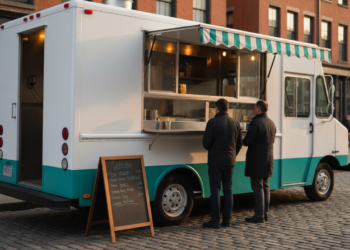
The kitchen swap is the biggest of the five. Many taprooms rotate local trucks instead of cooking, and if you are tempted to run your own, compare it with what a food truck costs in its first year before committing floor space to a kitchen. Some states also require food service at venues that pour on site, so check that rule first.
Our read on the number
For a 7-barrel taproom in leased space, plan on about $500,000 and treat anything much lower as a sign that a line is missing, most often runway or build-out. Get the equipment number from a real listing, make the contractor itemize the drains and power, file the federal notice yourself, and spend the time you save hunting for a landlord with an empty brewery and a reason to deal.
What brewery founders ask after the first budget
Can you start a nanobrewery for much less than $250,000?
Yes, at a very small scale. 7shifts says nano breweries, producing under 1,000 barrels a year, can start with investments as low as $10,000, usually by reusing space and brewing on a very small system. Microbreweries producing 1,000 to 15,000 barrels a year often need $250,000 to $500,000.
How much does a canning line cost for a brewery?
7shifts puts a canning line at $15,000 to $250,000, depending on speed and automation. Many taprooms delay this purchase and use a mobile canning service or crowlers until packaged demand is proven.
How much is a brewery license in California or Florida?
According to 7shifts, California application fees for brewery licenses can range from $1,105 to $19,315, and a Florida license runs about $280 to $2,000 a year. Confirm current amounts with the state alcohol agency before you budget.
What does a glycol chiller cost?
7shifts estimates glycol chillers at $10,000 to $50,000 and heat exchangers at $3,000 to $10,000. Used turnkey packages often include the chiller, so check before budgeting it separately.
How much does a regional production brewery cost to start?
7shifts says larger regional breweries producing up to 500,000 barrels a year may need $2 million to $10 million or more, mostly for larger brewhouses, packaging lines and owned buildings.
Where the brewery figures come from
- How Much Does it Cost to Open a Brewery?, Toast
- How Much Does It Cost to Start a Brewery?, 7shifts (2025)
- Tax Rates, Alcohol and Tobacco Tax and Trade Bureau
- Brewer’s Notice, Alcohol and Tobacco Tax and Trade Bureau (updated October 2025)
- A Year of Correction for Craft Beer, With Early Signals of Recovery, Brewers Association (April 2026)
- 481 U.S. Breweries Closed In 2025. The Empty Real Estate Is Proving Hard To Fill, Bisnow (May 2026)
- 7 BBL Turnkey Brew System listing, BrewBids
- 5BBL stainless steel beer brewing system, ProBrewer classifieds
More launch budgets for food and drink owners
- Cost to open a restaurant
- Cost to open a coffee shop
- Business license cost by state and city
- What a CPA costs a small business
- Logo design cost, from DIY to agency
- Liquor license prices by state
- The complete small business startup cost guide
Pricing method: prices were researched in November 2026 for 2027 planning and may change. The sample budget is a hypothetical illustration built from the published figures cited above, not a quote; licensing and tax rules vary by state, so confirm with your state alcohol agency, the TTB and a licensed attorney or accountant. See our disclaimer.