Last December, New York’s gaming board approved three casino licenses for New York City, and AGBrief’s report on the vote spells out the entry price: a $500 million license fee from each winner, plus a pledge of at least $500 million in construction. Two thousand miles west, the Nevada Gaming Control Board’s current fee schedule lets one owner apply for a small slot license with $2,500 in application fees and deposits. Both are casino licenses. Nearly everything between those two numbers is decided by the map.

That is the useful way to think about the cost to start a casino in 2027. Equipment and construction scale with size, but the state you pick determines if you can get in at all, what the license costs, how long the background check takes and how much of every dollar won goes back in taxes. Below, region by region, is what each route actually charges, using official fee schedules and published deals.
The license map: what each state charges before you build
License fees are only the cover charge, but they sort the country quickly. The table shows the gate price in the states with the clearest published numbers.
| Where | License route | Up-front state cost | Who can apply |
|---|---|---|---|
| Nevada | Restricted (up to 15 slots in a bar, store or restaurant) | $2,500 to $10,000 in application fees and investigative deposits | Anyone who passes the background check |
| Nevada | Nonrestricted (full casino) | $1,000 application, then investigation billed at cost: about $50,000 to well over $1 million | Anyone who passes; no cap on venues or machines |
| Pennsylvania | Category 4 “mini-casino” | $7.5 million minimum bid (300 to 750 slots), plus $2.5 million for table games | Existing Pennsylvania casino licensees only in the last round |
| Pennsylvania | Category 1 or 2 full casino | $50 million slot license, plus $24.75 million table games certificate | No new licenses currently offered |
| New York City area | Downstate commercial casino | $500 million license fee, plus at least $500 million in capital investment | All three licenses awarded in December 2025 |
| Mississippi Gulf Coast | Coastal casino resort | No set fee here; the price is the required resort (300-room hotel, 40,000 sq. ft. floor) | Developers with a commission-approved site |
| Tribal land | Class III gaming under a tribal-state compact | Negotiated case by case | Federally recognized tribes; outsiders can only build, finance or manage |
Source: Nevada Gaming Control Board fee schedule (Rev. 08/26); Lewis Roca’s Nevada licensing guide; Pennsylvania House Appropriations Committee; Pennsylvania Gaming Control Board; AGBrief; Mississippi Gaming Commission rule 2-1.5. The Nevada investigation range is a law firm’s estimate, not a state fee.
Nevada: the one state where a newcomer can simply apply
Nevada is the closest thing America has to an open market. The American Gaming Association’s Nevada regulatory factsheet notes there is no cap on the number of venues, machines or games. The catch is not scarcity; it is scrutiny.
The small route. A restricted license covers up to 15 slot machines where gaming is incidental to the main business, which is why you see them in taverns, convenience stores and grocery stores. The control board’s schedule asks $500 plus a $2,000 investigative deposit from an individual applicant, $4,000 for a company and one owner, and $10,000 for an ownership chain of three entities and three individuals. Quarterly state fees then run $81 per machine for the first five and $141 for each one after that, so a full 15-machine bank pays $1,815 a quarter, or $7,260 a year (our math from the AGA’s figures). Many tavern owners never buy machines at all; they host a licensed slot route operator and split the revenue.
The full casino. A nonrestricted application costs $1,000 to file, but the big bill is the background investigation, which the state charges at cost: agents’ hours, travel, food and lodging, with a deposit up front. Lewis Roca’s guide to nonrestricted licensing estimates $50,000 for a simple ownership structure and well over $1 million for applicants with many principals and complex holdings, with the process taking six months to more than a year. Budget the carrying cost of your building during that wait, too.
Running costs are where Nevada stays friendly. Gross gaming revenue is taxed at 3.5% on the first $50,000 a month, 4.5% up to $134,000 and 6.75% above that, with roughly 1% more in many local jurisdictions. Each nonrestricted slot carries a $250 annual excise tax, an $80 annual license fee and $20 a quarter, which comes to $410 per machine per year. Table games are licensed on a sliding scale: one game is $100 a year, five games $1,750 and a pit of 17 or more starts at $16,000.
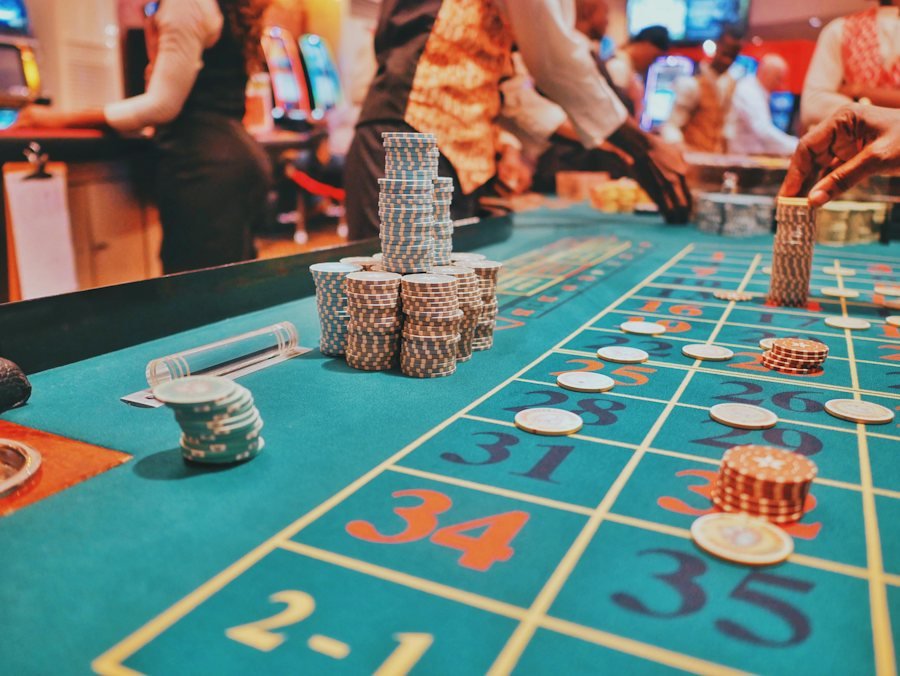
Nevada’s annual and quarterly fees for a 300-slot, 10-table casino (our estimate)
Using the per-machine and per-table figures in the AGA factsheet: 300 slots at $410 a year each is $123,000. Ten table games add a $6,000 annual fee and $750 a quarter, or $9,000 a year. That is about $132,000 in fixed state fees before a single dollar of gaming tax, which at 6.75% on the top bracket quickly becomes the larger number.
Pennsylvania and New York: auctions and nine-figure gate fees
The Northeast sells licenses as scarce assets, and prices them accordingly. Pennsylvania’s full casinos paid a $50 million slot license fee for up to 3,000 machines and, for certificates issued after June 1, 2010, another $24.75 million for table games, according to the Pennsylvania House Appropriations Committee’s gaming primer. Smaller resort licenses, Category 3, were $5 million for slots and $7.5 million for tables. Taxes are steep: the state’s share of slot revenue alone is 34%, before local shares and assessments.
The state’s newest door, the Category 4 “mini-casino,” shows what a small license fetches when it is auctioned. The Pennsylvania Gaming Control Board’s 2019 auction notice set a $7.5 million minimum bid for 300 to 750 slots and a $2.5 million table games fee, and listed the earlier winners: $8.1 million in Cumberland County, $21.2 million in Beaver County, $40.1 million in Westmoreland County and $50.1 million in York County. Five licenses brought $127 million. Only existing Pennsylvania casino licensees could bid, and Category 4 slot revenue is taxed at 50%.
New York’s downstate round reset the ceiling. The three winners, Bally’s Bronx, Hard Rock’s Metropolitan Park beside Citi Field and Resorts World New York City in Queens, each owe the $500 million fee, and Resorts World’s expansion alone carries an estimated price of about $5.5 billion. For anyone reading this with ordinary capital, the lesson is blunt: in these states the only realistic entry is buying or partnering with an existing licensee.
Mississippi’s Gulf Coast: the license is cheap, the resort is not
Mississippi does not auction licenses; it tells you what to build. The Mississippi Gaming Commission’s development rule for coastal sites requires a hotel of at least 300 rooms with a three-diamond rating, parking for 500 or more cars, a restaurant seating 200, a fine-dining room seating 75 and a casino floor of at least 40,000 square feet. The commission can reduce or swap those amenities, but the starting point is a full resort.
The clock matters as much as the checklist. After site approval, a developer has 120 days to close financing and begin construction or the approval is void, and the operator license application is due within 90 days. That means the capital has to be committed before the first shovel, not raised along the way. The rule sets no minimum dollar investment, so any figure you hear is an estimate built from that amenity list.
Tribal land and racetrack states: you can build it, but you cannot hold the license
Across much of the country, including big markets like California, Oklahoma and Florida, most casino gaming happens on tribal land under the federal Indian Gaming Regulatory Act. Only federally recognized tribes can own those operations. Outside investors take part as lenders, developers or contracted managers, under terms that federal and tribal regulators review.
Other states tie casinos to horse tracks. Nebraska’s 2020 ballot measures limited casinos to licensed racetracks, and the Omaha project shows what a mid-size build costs now. REJournals reported the WarHorse Omaha casino at $127.64 million for about 1,300 slots and 20 table games, including a remodel, a four-story garage of nearly 250,000 square feet and a two-story expansion. Divide the total by the slot count and you get roughly $98,000 per machine position, all-in. That is our rough benchmark, not a quote, but it is a sobering one for anyone who priced a casino by adding up cabinets.

Lines every casino budget carries, whatever the state
Once the license route is clear, the rest of the budget looks similar everywhere, and several lines surprise first-time applicants:
- Gaming counsel. Nevada’s investigation alone can pass $1 million for a complex owner group, and regulators dig into each owner’s finances and source of funds. Lawyers who prepare those filings are a cost from day one.
- Waiting money. Six months to more than a year of licensing means rent, interest and key staff salaries with no revenue.
- Opening cash. The cage has to cover payouts and chip redemptions from the first hour, and both lenders and regulators will ask how you plan to fund it.
- Per-device fees and taxes. In Nevada, $410 per slot per year in fixed state fees; in Pennsylvania’s mini-casinos, half of slot revenue.
- Construction risk. No state has announced 2027 changes to the license fees above as of November 2026, but building costs are not frozen, and projects quoted in 2026 should carry a contingency for price increases before they break ground.
Matching your capital to a route
Work backward from what you can raise and how long you can wait without revenue:
- Under about $500,000: a Nevada restricted license attached to a bar, restaurant or store you already run, or a revenue share with a slot route operator. This is the only true small-business door.
- Low millions to tens of millions: a Nevada nonrestricted property, often by buying an existing licensed casino rather than building, or a minority stake in a project elsewhere.
- Nine figures: a racetrack casino or a tribal development partnership, where you finance and build but do not hold the gaming license.
- Ten figures: the Northeast auction states and Gulf Coast resorts, which in practice means partnering with an existing operator.
Before spending on land or design, call the state gaming regulator and a licensed gaming attorney in that state. Rules change, and the cheapest mistake in this business is the one you catch before filing.
Other questions about opening a casino
How long does it take to get a casino license?
In Nevada, Lewis Roca’s licensing guide says a nonrestricted application can take six months to more than a year, and a smaller restricted license is quicker but still requires a full background check. Auction and resort states add their own bidding or site-approval steps, so ask the state regulator for current timelines.
What taxes does a casino pay in Nevada?
According to the American Gaming Association’s Nevada factsheet, the state taxes gross gaming revenue at 3.5% on the first $50,000 a month, 4.5% from $50,000 to $134,000 and 6.75% above that, with about 1% more in many localities. Slot machines and table games also carry annual and quarterly per-device fees.
Can a new company bid on a Pennsylvania mini-casino license?
Not in the most recent round. The Pennsylvania Gaming Control Board’s 2019 auction notice limited bidding to existing Category 1, 2 and 3 casino licensees, with a $7.5 million minimum bid for 300 to 750 slot machines.
How much does it cost to open a casino with only table games in Nevada?
State table fees are modest at small scale: the AGA factsheet lists $100 a year for one game, $1,750 for five and $6,000 for eight to ten, plus quarterly fees. The larger cost is the nonrestricted licensing investigation, which Lewis Roca estimates at $50,000 to well over $1 million depending on the ownership structure.
Can I put a few slot machines in my bar or store?
In Nevada, yes, through a restricted license for up to 15 machines where gaming is incidental to the business. The control board’s schedule starts at $2,500 in application fees and deposits for an individual. Many other states ban slot machines outside licensed casinos or allow them only through a separate video gaming terminal program, so check your state’s rules.
Where the license figures come from
- Application and Investigative Fee Schedule, Nevada Gaming Control Board (Rev. 08/26)
- Gaming Regulations and Statutory Requirements: Nevada, American Gaming Association (2026)
- Obtaining a Non-Restricted Gaming License in Nevada, Lewis Roca (2020)
- Gaming in Pennsylvania, Pennsylvania House Appropriations Committee
- Gaming Control Board to Hold Category 4 Satellite Casino Auction, Pennsylvania Gaming Control Board (July 10, 2019)
- New York approves all three downstate casino licenses, AGBrief (December 16, 2025)
- 13 Miss. Code R. 2-1.5, Approval to proceed with development, Mississippi Administrative Code via Cornell LII
- Kraus-Anderson wraps construction of $127.64 million casino in Omaha, REJournals (May 8, 2025)
More businesses that start with a license
- Small business startup costs in 2027: the complete guide
- Liquor license prices, from beer permit to full bar
- What it costs to open a bar, and when you pay it
- Business license cost by state, city and trade
- Cost to open a med spa by size, model and state
- Building versus buying a car wash
More related guides: Hotel startup cost: build, buy or convert
Pricing method: prices were researched in November 2026 for 2027 planning and may change. License fees come from state regulators’ published schedules and official releases; per-machine and per-position totals are our estimates from those figures. This is general information, not legal advice; confirm requirements with the state gaming regulator and a licensed gaming attorney. See our disclaimer.