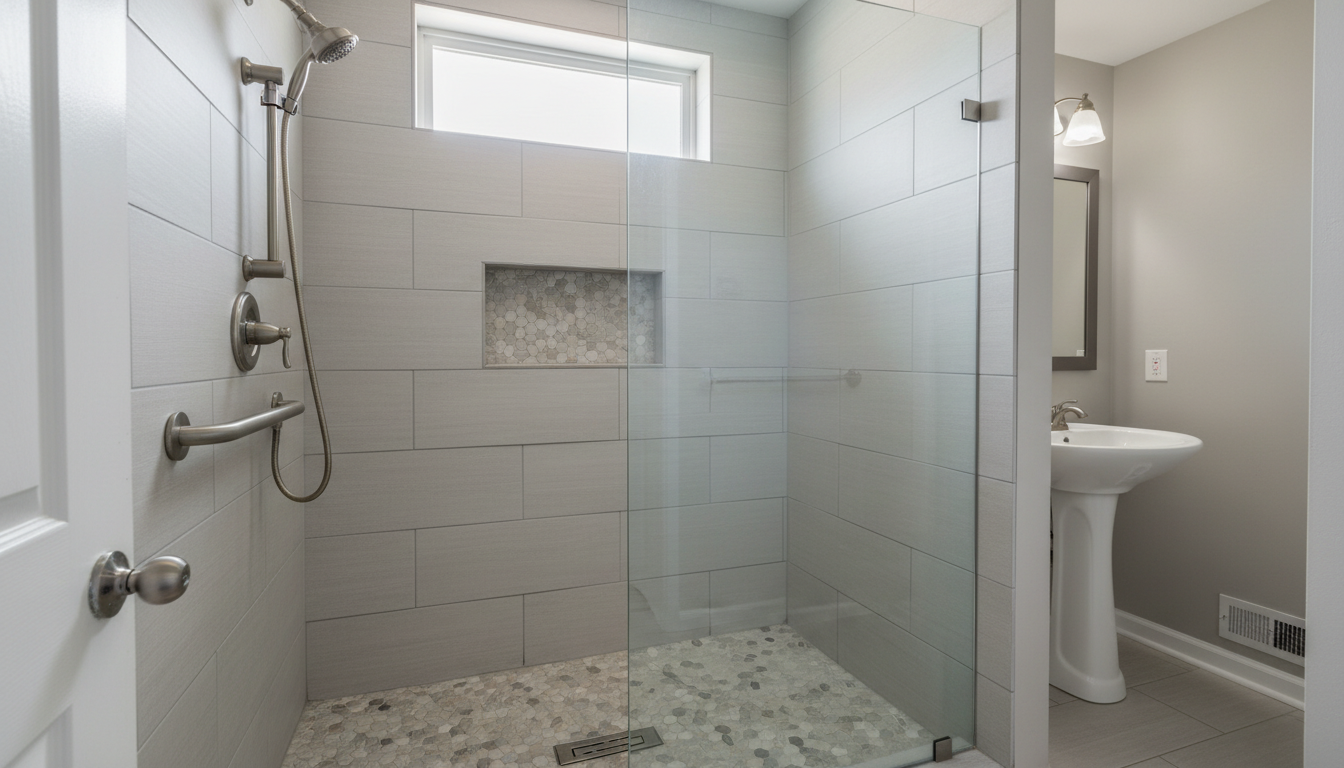
Most people price a walk-in shower by pricing the tile, and that is the first mistake. Tile is one of the smaller lines on a typical quote. Angi puts the national average for an installed walk-in shower at about $9,000, with most jobs between $6,000 and $12,000. A basic prefab conversion can come in near $2,000, while This Old House prices curbless tub-to-shower conversions at $8,000 to $15,000. What separates those numbers is mostly labor, plumbing and the floor, not the finish you pick in the showroom.

Below are seven beliefs homeowners bring to their first estimate, each checked against current published pricing for 2027 planning. Some hold up. Several cost people thousands.
| Type of walk-in shower | Typical installed price | Source |
|---|---|---|
| Prefab stall replacing a tub | $2,000 to $6,000 | This Old House, 2026 |
| Bath Fitter tub-to-shower conversion | $1,200 to $9,500 | HomeGuide |
| Tiled walk-in (tub conversion) | $3,500 to $15,000 | HomeGuide |
| Midrange tiled walk-in, new or existing space | $8,000 to $13,000 | This Old House, Oct. 2026 |
| Curbless conversion | $8,000 to $15,000 | This Old House, 2026 |
| High-end custom | $14,000 to $20,000+ | This Old House, Oct. 2026 |
Myth 1: Pulling out the old tub is the cheap, easy part
The demolition line itself is modest. This Old House lists tub removal and disposal at $300 to $1,200, and HomeGuide’s range for hauling the tub and debris starts as low as $70. The trouble is what the tub was hiding. In This Old House’s January 2026 survey of 1,000 homeowners who converted a tub, nearly 70% ran into at least one hidden cost once the walls were open.
| Surprise found after demolition | Share of converters who hit it | Typical price to fix |
|---|---|---|
| Structural or subfloor repair | 38% | Several hundred dollars; $1,000+ for major reinforcement |
| Water damage or rot | 32% | Varies with how far it spread |
| Unplanned plumbing work | 29% | $500 to $1,100 for typical plumbing changes (HomeGuide) |
One plumbing change is nearly built in. Tubs usually drain through a 1.5-inch line, and HomeGuide notes that a shower needs a 2-inch drain, so most conversions involve some pipe work under the floor whether you planned it or not. This Old House’s advice is to hold back a 10% to 20% contingency. On a $9,000 job that is $900 to $1,800, and given those survey numbers it is not padding.
Myth 2: A one-day acrylic system is always the budget pick
Acrylic is cheaper as a material. Angi prices an acrylic insert at $500 to $2,000, and HomeGuide finds prefab stall kits from $350 to $4,100 before installation, the kind of units Home Depot and Lowe’s stock. Install one yourself or through a handyman and the conversion can stay in four figures.
Branded one-day systems are a different product. HomeGuide puts a Bath Fitter tub-to-shower conversion at $1,200 to $9,500 on average, usually installed in a single day. The low end is excellent value. The high end overlaps a tiled shower by a local contractor, and the in-home sales visit is where the number tends to climb: wall color, trim, seat, door and accessory packages are all quoted on the spot. For big-box installation programs, Fixr’s estimate is that a Home Depot walk-in shower installation typically runs 5% to 15% below a custom local installer.
Reality: acrylic wins on price when you choose a stock size and few extras. Once a one-day quote passes about $8,000, get a tile bid to compare; at that point you may be paying for speed rather than savings.
Myth 3: The tile you choose drives the total
Fixr estimates that labor makes up 40% to 60% of a walk-in shower’s cost. Tile is a smaller slice than most shoppers expect, because shower walls are not that big.
Illustrative example: a standard 60-by-36-inch alcove tiled 8 feet high has roughly 88 square feet of wall (a 5-foot back wall plus two 3-foot sides). At This Old House’s installed rate for ceramic or porcelain, $12 to $30 a square foot, that is about $1,050 to $2,650 for the walls. Natural stone at $20 to $50 installed raises it to roughly $1,750 to $4,400. The gap between cheap and fancy tile on this shower is a few thousand dollars at most. A custom tile pan ($1,200 to $3,000), backer board and waterproofing ($800 to $1,500) and a new valve and trim ($500 to $1,200) come with any tiled shower, whatever tile goes on the wall.
Tile prices are not likely to fall for 2027. About 70% of the tile sold in the US is imported, according to Dal-Tile as quoted by Floor Daily in 2026, and US anti-dumping and countervailing duties have cut off much of the low-cost supply from China and India. No specific 2027 price change has been announced, but the industry describes rising raw material, energy and labor costs, so budget at today’s prices or a bit above.
Myth 4: Going curbless only adds a few hundred dollars
Sometimes true, often not. Angi says a curbless design adds $500 to $700 or more to a curbed walk-in, and Fixr says it “doesn’t usually add much.” This Old House, pricing tub conversions specifically, puts curbless at $8,000 to $15,000 against $5,000 to $12,000 for a standard walk-in. All three can be right, because the price depends on your floor.
Why the same curbless shower costs $700 more in one house and $5,000 more in another
A shower with no curb still needs the floor to slope toward the drain, and the water has to stop before it reaches the rest of the bathroom. On a concrete slab, the installer can often cut a shallow recess. Over wood joists, the floor may need to be lowered between the joists or rebuilt, and Angi notes that the whole room may need waterproofing in the manner of a wet room. Ask any contractor quoting curbless how they will create the slope and how far the waterproofing will extend. A vague answer usually means the price will change once the floor is open.
Reality: if you want curbless for aging in place, a low curb of an inch or two can deliver most of the benefit for less. If you want a true zero-threshold entry, get it priced after someone has looked under the floor.
Myth 5: Frameless glass is a minor upgrade
It is one of the biggest single upgrades on the quote. This Old House lists a framed glass door at $400 to $1,200 installed and frameless at $1,200 to $3,000, with fully custom enclosures starting around $3,000. Inch Calculator’s national average for an installed glass door is $1,700. Frameless glass is thick tempered glass, cut to measure after the tile is done, which is why it costs more and why it usually arrives a week or two after the rest of the shower is finished.
A middle path is a single fixed panel instead of a hinged door, which works well in a walk-in deep enough to keep spray inside. A curtain rod costs almost nothing and makes the shower easier to use with a seat or a caregiver.
Myth 6: Removing a tub will tank your home’s value
This one depends on how many tubs you have. If another bathroom keeps a tub, a walk-in shower in the primary bath is a common upgrade and few buyers will mind. The concern is the last tub in the house. The National Association of Home Builders’ 2021 buyer-preference study, reported by the National Association of Realtors, found that first-time buyers ranked a shower-tub combination highest among 18 bathroom features. Sacramento appraiser Ryan Lundquist wrote in 2024 that removing every tub “can limit the pool” of buyers, especially families with young children, while noting that a price penalty is hard to prove statistically. His advice is to keep at least one.
As for payback, nobody tracks a tub-to-shower swap on its own. The closest measures are in the 2025 Cost vs. Value report from the Journal of Light Construction: a midrange bathroom remodel ($26,138) recouped about 80% at resale, and a universal-design bathroom ($42,183) recouped 61.2%. A shower conversion is a smaller job, but the pattern holds: accessibility work is mostly for the people living in the house now.
Myth 7: Grab bars and a seat will blow the budget
They are among the cheapest lines on the job, if they are planned before the walls close. This Old House’s installed prices:
- Handheld shower: $100 to $300
- Grab bar: $150 to $500 each
- Fold-down seat: $300 to $800
- Rain head: $100 to $400
- Digital controls: $500 to $2,000
The cheap way to do this is to have the installer put wood blocking in the stud bays during framing, even if you add the bars later. Retrofitting a bar into finished tile without blocking means special anchors or opening the wall. A shower valve with a pressure-balancing or thermostatic cartridge also protects against sudden temperature swings, which matters more than a rain head for an older user.
Quick answers on permits, timing and coverage
What does Home Depot charge for walk-in shower installation?
Home Depot quotes installation after an in-home consultation, and it does not publish a national price list. Fixr estimates big-box walk-in shower installation typically runs 5% to 15% below a custom local installer. Compare the written quote line by line against a local contractor’s bid, including demolition, plumbing and the door.
How long does it take to convert a tub to a walk-in shower?
This Old House says most conversions take three to seven days. One-day acrylic systems, such as Bath Fitter, are usually installed in a single day. Frameless glass is often measured after the tile is finished, which can add a week or two before the shower is fully done.
Do I need a permit for a walk-in shower?
Often, yes, when plumbing is moved or a drain is changed. Angi puts a typical permit at about $250, up to $500, and Fixr gives a $100 to $500 range. Rules are set locally, so check with your city or county building department.
What is the smallest walk-in shower allowed?
Plumbing codes generally require a shower of at least 30 by 30 inches, HomeGuide notes. Fixr prices a 36-by-36-inch prefab shower at about $2,700 installed, against about $5,000 for 48 by 48 inches. Your local code and the space your tub leaves usually decide the size.
Will Medicare pay for a walk-in shower?
Original Medicare generally does not cover home modifications such as a walk-in shower or grab bars. Some Medicare Advantage plans, Medicaid waiver programs, veterans’ benefits and local aging agencies offer help with bathroom safety changes. Ask your plan or local Area Agency on Aging what applies to you.
Three bids to collect, in this order
- A licensed plumber or general contractor who looks under the floor first. Ask what the drain change, valve and any floor work will cost before any finish is chosen. This bid tells you whether curbless is a $700 add or a $5,000 one.
- A tile installer quoting the same footprint. Ask for the pan, waterproofing, backer board and tile listed separately, so you can see how little the tile itself moves the total.
- One one-day or big-box acrylic quote. Bring the first two bids with you. If it lands under them with the extras you need, take it; if it lands above $8,000, you are paying for speed.
Other bathroom and plumbing prices to check
- Full bathroom remodel cost, same layout or moved plumbing
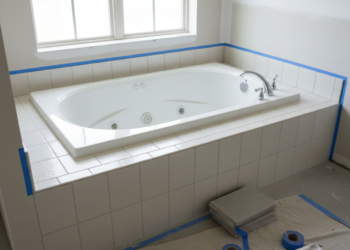
- Jacuzzi bath remodel: fix, replace or tear out
- Walk-in tub cost, if you would rather keep a tub
- Drywall cost for the walls around the new shower
- Water heater replacement cost
Every home project in one place: Home Improvement Costs in 2027: The Complete Guide
Pricing method: prices were researched in November 2026 for 2027 planning and may change. Installed ranges come from Angi, This Old House (including its 2026 homeowner survey), HomeGuide, Fixr and Inch Calculator; resale figures come from the Journal of Light Construction’s 2025 Cost vs. Value report. Local labor rates and the condition of your floor and walls will move your price. Confirm permits with your local building department. See our disclaimer.