The most common sunroom budgeting mistake is pricing the room by its size, when the bigger variable is how many months a year you plan to sit in it. Angi’s sunroom cost guide puts most additions between $22,000 and $72,600, with an average of $47,000, or roughly $150 to $300 per square foot. A screened-in summer room can cost a tenth of that. A heated, glass-roofed room you use in January can cost twice as much.

So think of sunrooms as a ladder with five rungs, each buying a little more comfort for a lot more money. Below, we price every rung with current figures for 2027 planning and flag the point where extra spending stops paying you back. To rough out a full addition with foundation and framing, try our house and barndominium cost calculator.
Five kinds of sunroom, side by side
The per-square-foot figures come from HomeGuide’s porch enclosure price guide, which separates screens, three-season and four-season work more cleanly than most sources. Project totals are national ranges, so your quote can land outside them.
| Rung | What you get | Typical cost | Per sq ft | Heated and cooled? |
|---|---|---|---|---|
| 1. Kit enclosure | Resin or aluminum frame, plastic panels, on an existing patio | $3,288 to $4,500 for a DIY kit; $5,500 to $30,000 for an installed prefab room | $50 to $75 (prefab) | No |
| 2. Screen room | Roof and screens over a porch or deck | $2,000 to $5,000 to screen an existing 200 sq ft porch | $10 to $25 | No |
| 3. Three-season room | Windows instead of screens, light or no insulation | $10,000 to $40,000 | $80 to $230 | No |
| 4. Four-season room | Insulated walls and roof, thermal glass, its own HVAC | $25,000 to $80,000 | $200 to $400 | Yes |
| 5. Solarium or conservatory | Glass walls and glass roof | $30,000 to $75,000, sometimes $100,000+ | Varies widely | Usually |
Sources: kit prices from Tractor Supply product listings (November 2026); prefab, three-season, four-season and solarium totals from Angi; per-square-foot ranges from HomeGuide; prefab per-square-foot and the upper solarium figure from Fixr.
Rung one: a $3,300 box on the patio you already have
The bottom rung is not really an addition. It is a kit you bolt onto a slab or deck. Tractor Supply lists the Canopia by Palram Sun Room 2 in an 8-by-14-foot size at $3,287.99, and the 8-by-20 version runs $4,499.99. You get a white resin frame, a twin-wall polycarbonate roof, acrylic side panels, a hinged door and a roof vent. The store’s answers to shoppers rate the larger kit for about 56 mph winds and a 15.4-pound-per-square-foot snow load.
That spec sheet tells you what this rung is for: a bright, bug-free place for plants and morning coffee from April to October in a mild climate. It is marketed as a sunroom or greenhouse, and it behaves more like the second. Expect heat buildup in summer, no insulation, and a structure your homeowners policy and your appraiser will treat as patio furniture rather than square footage. For under $5,000, that can be a fair trade. Just do not expect it to feel like part of the house.
Rung two: screens, a roof and long summer evenings
If you already have a covered porch, screening it is the cheapest way to get a usable outdoor room. HomeGuide prices screen enclosures at $10 to $25 per square foot, or $2,000 to $5,000 for a typical 200-square-foot porch. Building a new screened porch from scratch, with a foundation and roof, is a different project: Fixr’s sunroom cost data puts that at $15,000 to $35,000.
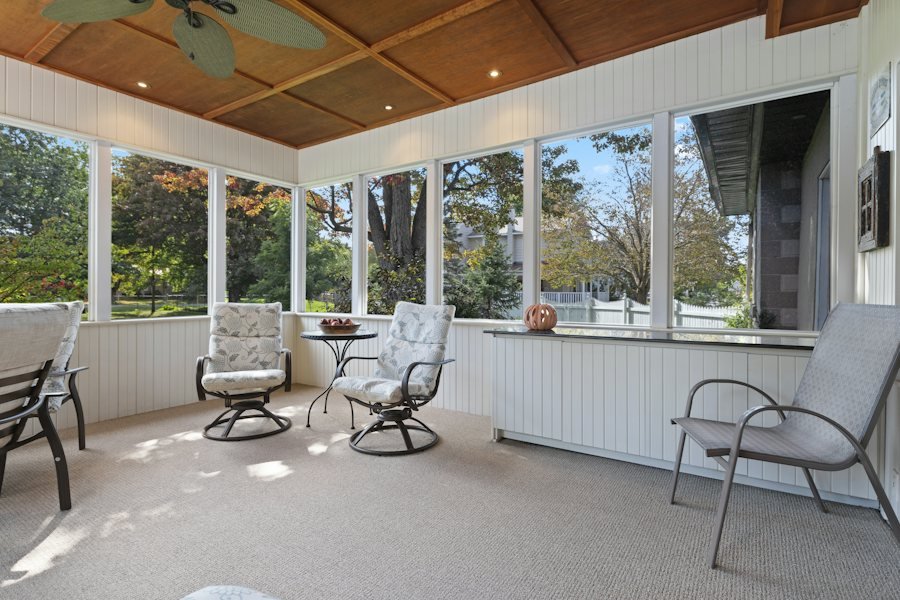
Screens do one job well, keeping out insects while letting the breeze through, and they do nothing about rain, pollen or cold. They also do the least for resale. Angi’s estimate of the return on a screen room is about 20%, the lowest of any rung. Buy this tier for how you will live in it, not for the listing.
Rung three: glass walls without a heating bill
Swap the screens for windows and you have a three-season room, which Angi prices at $10,000 to $40,000. HomeGuide’s range, $80 to $230 per square foot, shows how wide this tier is. At the low end you are enclosing an existing porch with single-pane or vinyl panels. At the high end you are building a new framed room on a new foundation, with real windows and a finished floor.
What a three-season room lacks is the expensive part: insulation rated for winter, thermal glass and a permanent heat source. That keeps the price down, but it caps how much you use the room. In northern states, that usually means spring through fall, with a space heater on cool evenings. In the South, the hard months are July and August, when an unconditioned glass room can get uncomfortably hot.
For many households this is the sweet spot. It gives you most of the light and the extra room for well under the national average, and if you build it with a proper foundation and framing, you can upgrade it later. Fixr puts a three-to-four-season conversion at $5,000 to $20,000.
Rung four: the room an appraiser may actually count
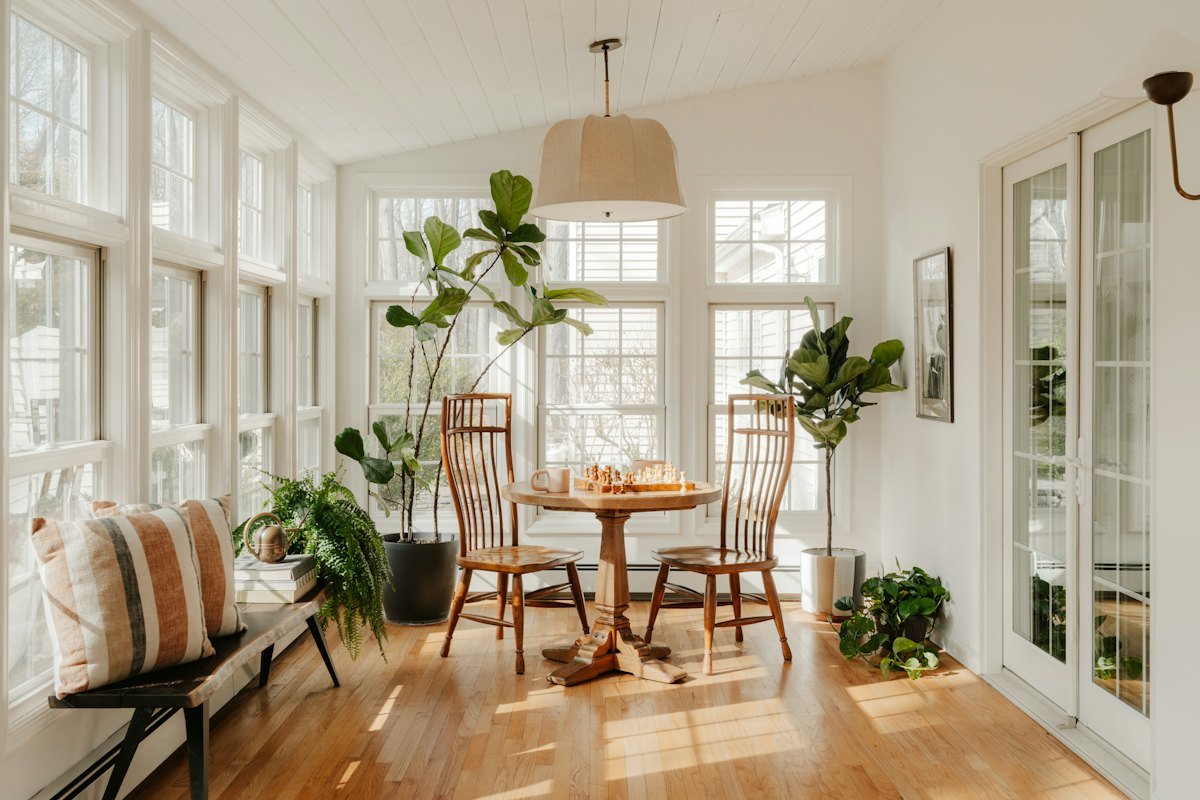
A four-season room is a true addition that happens to have a lot of windows. Angi prices one at $25,000 to $80,000, and HomeGuide puts the per-square-foot cost at $200 to $400, roughly double rung three. The jump comes from a handful of line items a three-season room can skip:
- Heating and cooling: $2,300 to $20,500 to extend or add HVAC, per Angi. Bob Vila’s sunroom cost breakdown puts a ductless mini-split at $2,000 to $14,500.
- Foundation: $1,000 to $6,000 for a poured foundation.
- Insulation: $500 to $1,500 for a single room.
- A real door into the house: $1,300 to $11,000 for a patio door, unit and labor.
- Permits: $400 to $1,500, more than most rung-one and rung-two projects need.
The payoff is a room built to the same standard as the rest of the house. Because it is heated, insulated and permanent, a four-season room has the best chance of being treated as living space when you sell, though that call belongs to your local appraiser and assessor, not the contractor. Ask both before you design the room, since rules on ceiling height, heat source and access through the house vary.
Return on a sunroom ranges from about 20% for a screen room to 50% for a three- or four-season room.
Angi, Does a Sunroom Add Value to Your Home?
Read that number carefully. Even at the top of the range, a $47,000 room adds something like $23,500 in resale value. Nobody should build a sunroom as an investment. Build one because you will use it, then pick the rung that matches how often.
Rung five: a glass roof, and where the extra money stops working
Solariums and conservatories put glass overhead as well as on the walls. Angi prices a solarium at $30,000 to $75,000, and Fixr’s ranges run to $100,000 for a curved-eave solarium or a large orangery. Much of the premium is the roof. Fixr puts glass roofing at roughly $15 to $60 per square foot against $3 to $11 for a solid roof, and Bob Vila prices a glass-and-steel sunroom roof at about $8,500 versus roughly $3,600 for asphalt shingles.
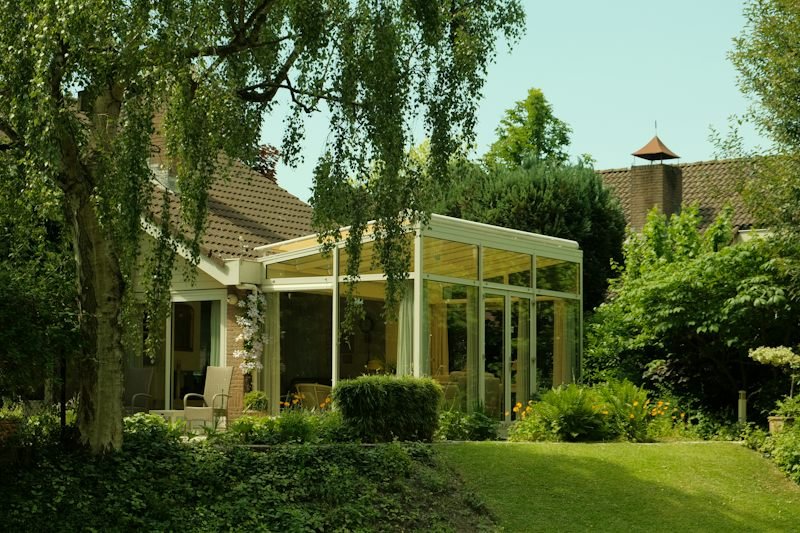
That roof buys a view of the sky and a room that gains heat fast in summer and loses it fast in winter, so it needs bigger HVAC capacity and often shades or tinted glass to stay comfortable. Angi’s resale estimates top out at 50% for enclosed sunrooms, and nothing in the data suggests glass overhead earns more. This is the rung where the value curve flattens: you pay for architecture and sky, not for a more usable room. If that is what you want, it is a fine purchase. If you are chasing comfort or resale, a solid-roofed four-season room with skylights gets you most of the light for less.
Aluminum tariffs and an expired tax credit for 2027 builds
Two policy changes affect sunroom budgets for next year. First, most sunroom frames, windows and doors use aluminum, and imported aluminum has carried a 50% Section 232 tariff since June 4, 2025, extended that August to hundreds of steel- and aluminum-based products. Door and Window Market Magazine reported that producer prices for metal windows were up 3.8% year over year in July 2025, and metal doors and frames were up 5%. Ask your contractor how long a quote is held and whether it includes a materials escalation clause.
Second, the federal energy credit that once offset part of the cost of efficient windows and doors no longer applies. The IRS Energy Efficient Home Improvement Credit page says the credit covers improvements made through December 31, 2025. It was worth up to $600 for qualifying windows and $500 for doors. A sunroom finished in 2027 gets none of it, so leave it out of your budget unless your state or utility runs its own rebate.
The bottom line on which rung to buy
Count the months first and the square feet second. If you want a pleasant room for the warm half of the year, a well-built three-season room on a real foundation gives you the most for your money, often for half the national average, and it leaves the door open to a four-season upgrade. If you need the room in January or want an appraiser to count it, go straight to rung four and spend on insulation and HVAC rather than a glass roof. The kit and the screens make sense when the budget is under $5,000 and the climate is mild. The solarium is for people who want the sky overhead and accept that resale will not pay for it.
Sunroom questions to settle before you get quotes
How much does a 12×12 sunroom cost?
Angi puts a 12×12 sunroom at $21,600 to $43,200. HomeGuide’s porch-enclosure figures for the same size run $11,520 to $33,120 for a three-season room and $28,800 to $57,600 for a four-season room, so the type of room matters more than the footprint.
Is a sunroom cheaper than a regular home addition?
Not always. Angi’s guide compares a 12×12 home addition at $11,520 to $28,800 with a 12×12 sunroom at $22,000 to $43,000, because the walls of glass cost more than framed, sided walls. A sunroom wins on light, not on price.
Can I turn an existing porch into a sunroom?
Yes, and it often saves money because the foundation and roof are already there. Fixr puts porch-to-sunroom conversions at $80 to $200 per square foot, against $130 to $300 for a new addition. Have a contractor confirm the existing slab and roof can carry windows and, for a four-season room, insulation.
Do I need a permit for a sunroom?
Usually, for anything with a foundation, a roof tied into the house, or electrical work. Angi puts sunroom permits at $400 to $1,500, and Fixr says approval typically takes four to eight weeks. Check with your local building department and any HOA before you order materials.
How long does it take to build a sunroom?
HomeGuide says porch enclosures take from one week to more than eight weeks of construction, depending on size and type. Where HOA approval is needed, the permitting stage alone can take three to six months, so plan a spring room in the fall.
Price sources for this sunroom guide
- How Much Does a Sunroom Cost?, Angi
- Does a Sunroom Add Value to Your Home?, Angi
- How much does it cost to enclose a porch?, HomeGuide
- How much does it cost to build a sunroom?, Fixr (updated November 2022)
- Building a Sunroom: Costs and Key Considerations for Today, Bob Vila (updated May 2024)
- Canopia by Palram 8 x 14ft. Sun Room 2 Kit, Tractor Supply Co. (price checked November 2026)
- US Broadens Tariffs for Aluminum and Steel-Based Goods, Door and Window Market Magazine (August 28, 2025)
- Energy Efficient Home Improvement Credit, Internal Revenue Service (reviewed April 2026)
Pricing the rest of the project
- Home improvement costs in 2027: the complete price guide
- Home addition costs, from first sketch to final bill
- Patio door replacement cost by door type
- Concrete slab cost, priced by what sits on it
- What a pergola costs to install
- Blown-in insulation prices
- House and barndominium cost calculator
- Concrete slab cost calculator
Pricing method: prices were researched in November 2026 for 2027 planning and may change. Kit prices are retailer list prices at the time of research; other figures are national ranges from the sources cited, and your local quotes may differ. See our disclaimer.