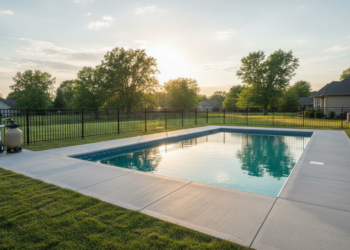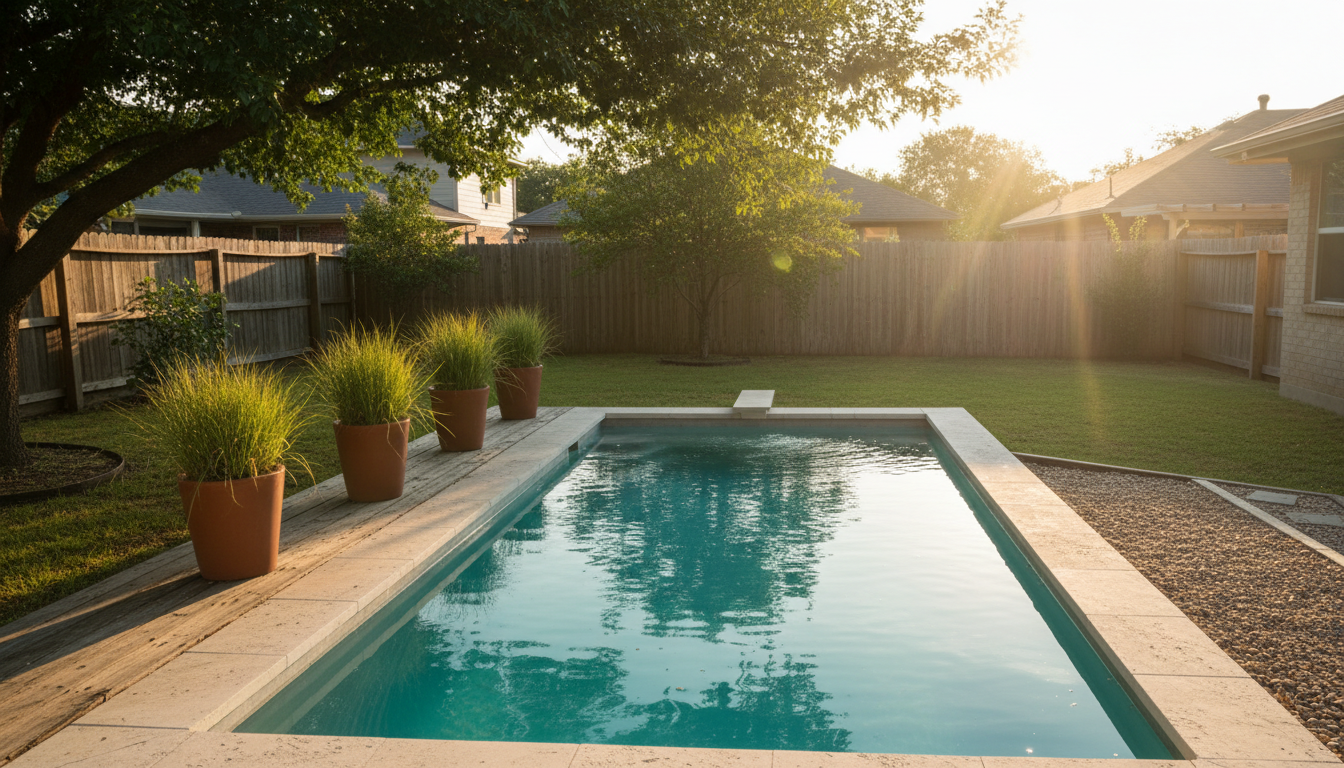
A plunge pool holds a fraction of the water of a standard backyard pool, so most people expect a fraction of the price. The bids do not cooperate. HomeGuide puts the typical installed plunge pool at $15,000 to $40,000, with a national average of $27,500, and the Angi figure cited by This Old House is about $28,000, with outliers from $3,000 to $75,000. That is a smaller check than a full-size inground pool, but not nearly as small as the pool itself.

Short answer for 2027 planning: budget $15,000 to $40,000 for an installed inground plunge pool with basic equipment, and $35,000 to $65,000 for a steel shipping container pool. A heater, safety fence, patio and cover can add $10,000 or more to either. The shell is usually less than half of the final bill.
The reason is simple once you see a quote laid out. Cranes, excavators, electricians and permit offices do not charge by the gallon. Below, we take one sample bid apart line by line, flag which charges are fixed, which are negotiable and which you can skip, then show how the total moves when you change the shell. If you plan a paved surround, our concrete slab cost calculator will price that part separately.
A sample $40,840 plunge pool bid, opened up
This is a hypothetical quote, not a real contractor’s invoice. We built it for a roughly 8-by-16-foot inground fiberglass plunge pool in a flat, accessible yard, pricing every line inside the published ranges from HomeGuide, HomeAdvisor and Homes & Gardens. The shell line matches what one homeowner told Apartment Therapy she paid for an off-the-shelf fiberglass pool: $18,000. Her final total, after everything around it, came to about $38,000, which is close to where our sample lands.
| Line on the bid | Published range | Sample bid | Our read |
|---|---|---|---|
| Fiberglass shell, delivered | Varies by model | $18,000 | Compare models, not just dealers |
| Crane and delivery | $500 to $2,000 for the crane | $1,500 | Fixed; rises with tight access |
| Excavation | $1,500 to $5,000 | $3,500 | Fair; ask if haul-off is included |
| Building permit | $400 to $2,000 | $900 | Set by your city; ask for the receipt |
| Pump and filtration | $1,000 to $2,000 | $1,600 | Fair |
| Electrical work | $500 to $2,000 | $1,500 | Fixed; more if the panel is full |
| Pool heater | $1,600 to $5,200 | $3,800 | Negotiable; check the sizing |
| Fence, 80 linear feet | $20 to $60 per linear foot | $2,800 | Often required by code |
| Patio surround, 200 sq ft | $5 to $35 per sq ft | $4,000 | Scalable; material drives it |
| Manual safety cover | $100 to $2,400 | $1,800 | Fair |
| One LED light | $300 to $700 installed | $500 | Optional |
| Lawn and planting repair, 150 sq ft | $4 to $12 per sq ft | $900 | Can be DIY |
| First fill by hose | $4 to $10 per 1,000 gallons | $40 | Trucked water runs $200 to $600 |
| Total | $40,840 |
Why a smaller pool barely shrinks the bill
Add up the lines in our sample that would cost about the same for a pool twice the size: crane, permit, pump, electrical, heater and fence. They total $12,100, or almost 30% of the bid. HomeGuide estimates labor alone at 25% to 50% of a plunge pool’s total, and much of that labor is a crew showing up for a day regardless of the hole’s dimensions.
The lines that do scale with size are the shell, the excavation and the patio, and even those flatten out. A small fiberglass shell still needs a crane to set it, and River Pools, a fiberglass manufacturer, tells buyers that its small inground models typically land between $45,000 and $100,000 installed, with most basic projects at $45,000 to $75,000. Those are larger than most plunge pools, but they show how little the price falls when the footprint does.
Site conditions can flip the math the other way. HomeGuide lists geotechnical soil testing at $1,000 to $5,000 and a land survey at $200 to $1,200, both lines that appear on bids for sloped lots, soft soil or yards near a property line. Neither is on our sample, and either can wipe out the savings of choosing a smaller shell.
Five lines to push back on
Most plunge pool quotes are honest. The money leaks out through lines that are vague, oversized or missing entirely. Open each one while the quote is still a draft.
A heater sized for a pool you are not building
A plunge pool holds roughly 1,000 to 4,000 gallons, according to HomeGuide, while a full-size pool holds many times that. Heaters run $1,600 to $5,200 installed, and the top of that range buys capacity a small pool will rarely use. Ask what output the installer specified and why. If you mostly swim in summer, skipping the heater entirely is a legitimate choice.
An automatic cover on a pool you can cover by hand
HomeGuide prices an electric pool cover at $9,500 to $11,000 and a manual safety cover at $4,500 to $7,000, while HomeAdvisor’s plunge pool data starts manual covers as low as $100 and tops out at $2,400. On a pool that is 8 feet wide, a manual cover is a two-minute job. The motorized version can cost a quarter of the whole project.
Jets, benches and windows added at the design meeting
The upgrade menu is where small pools grow expensive fast. HomeGuide lists swim jets at $2,000 to $3,000 or more, a built-in bench at $2,800 to $9,500 and an acrylic wall window at $4,500 to $9,000. Choose one feature that changes how you will use the pool, and price the rest after a season of swimming.
An excavation line that says nothing about the dirt
Digging a hole and hauling the soil away are two jobs. Some bids include both; some leave you with a mound in the side yard. None of the cost guides we reviewed publish a separate haul-off price, which is exactly why you should get it in writing, along with what happens if the crew hits rock or groundwater.
The fence, patio and electrician nobody quoted
The Apartment Therapy homeowner whose $18,000 fiberglass pool became a roughly $38,000 project traced the gap to work she had not budgeted: the excavator, plumber, electrician and stonemason, plus a shaded patio and a privacy fence. Ask your installer which of those trades are inside the contract and which you will be hiring yourself.
Change the shell, change the total
Our sample uses fiberglass because it is the most common small inground option. Swap the shell, and the rest of the bid shifts with it: concrete takes longer and needs more labor, while precast and container pools arrive mostly finished but need a larger crane.
| Shell type | Typical installed price | What you are paying for |
|---|---|---|
| Vinyl liner | $10,000 to $25,000 | Lowest entry price; liners need periodic replacement |
| Fiberglass | $20,000 to $50,000 | One-piece shell set by crane; fast install |
| Poured or sprayed concrete | $25,000 to $70,000 | Any shape or depth; custom builds can take months |
| Steel shipping container, 8 by 12 ft | $27,000 to $46,000 | Factory-built pool with liner, delivered whole |
| Steel shipping container, 8 by 20 ft | About $50,000 total | The size most container buyers choose |
| Above-ground or semi-inground | $3,000 to $30,000+ | Less digging; looks and lifespan vary widely |
Branded units show where the premium end sits. HomeGuide lists the Endless Pools WaterWell, a compact plunge and swim-jet pool, at $13,000 to $40,000 or more for the unit alone. Soake Pools, a New Hampshire maker of precast concrete plunge pools, told Homes & Gardens that its hand-tiled concrete cold plunge tub runs about $27,000 for the product before installation.
No plunge pool price change has been announced for 2027, but equipment has been creeping up. Hayward, one of the largest pool equipment makers, told investors in spring 2026 that it expected its prices to average about 4% higher for the year and had added a surcharge of roughly 2.5%, which its finance chief said could be withdrawn. Pump, filter and heater lines on 2027 bids will reflect whatever those companies charge dealers by then, so ask that equipment prices be locked when you sign.
After the crane leaves: the monthly lines
A small pool costs less to run than a big one, but it is not free. These are the recurring numbers experts gave Apartment Therapy for a homeowner-maintained pool, plus HomeGuide’s figure for paying a service:
- Chemicals: about $45 to $80 a month during the season.
- Topping off evaporated water: around $10 to $30 a month.
- Running a heater: $100 to $500 a month, depending on fuel, climate and how warm you keep it.
- Electricity for the pump: one expert described a $750 seasonal jump on the power bill.
- Small repairs: $100 to $300 a year, with a heater failure costing up to $2,000.
- Professional service: $80 to $150 a month, and HomeGuide says plunge pools usually fall at the low end.
Property taxes are the line people forget. A real estate agent quoted by Apartment Therapy gave an example of a $20,000 pool raising a home’s assessed value by $15,000, adding about $300 a year in tax; your assessor’s method will differ. To see how a pump and heater would show up on your own utility bill, our breakdown of average monthly electricity costs explains how rates and usage combine.
Plunge pool questions a bid will not answer
Is a cold plunge tub cheaper than a plunge pool?
Usually. HomeGuide prices standalone cold plunge units at about $2,800 to $9,500 or more, with no excavation or crane. They are built for short cold soaks, not for floating or cooling off with family, so compare them only if cold therapy is the main goal.
How long does it take to install a plunge pool?
This Old House estimates four to six weeks for a typical project. Fiberglass and container pools go in faster once the site is ready, while poured concrete needs weeks to cure and custom builds can stretch for months.
Can you swim laps in a plunge pool?
Not in the usual sense, since most are no more than 16 to 20 feet long. Swim jets, which HomeGuide prices at $2,000 to $3,000 or more, create a current you swim against in place. Ask to try one before you pay for it.
How much does it cost to make a plunge pool saltwater?
HomeAdvisor puts a saltwater conversion at $500 to $2,500. Salt systems lower day-to-day chlorine handling, but the salt cell is a wear part that needs replacing, and some dealers reported higher salt cell prices in 2026.
Do I need a fence around a plunge pool?
In many places, yes. Barrier rules are set by state and local codes and often apply to any pool deep enough to swim in, whatever its size. Check with your local building department before you budget, since fencing runs about $20 to $60 per linear foot installed.
Pricing the rest of the backyard
- Home improvement costs in 2027: the complete guide
- What a full-size inground pool costs, shell to finished yard
- Hot tub prices from plug-and-play to premium
- Chain link fence cost, by height and gauge
- Land survey cost, and which survey a project needs
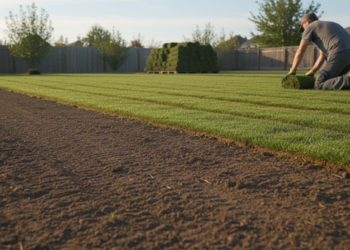
- Sod cost for repairing the lawn afterward
- Concrete slab cost calculator
Three calls to make before you request a bid
- Your building department. Ask what the permit costs, what fence or barrier the code requires and how far the pool must sit from property lines. Those three answers fix several lines of the bid before any contractor sees your yard.
- An electrician. Have one look at your panel. If it has room for the pump, light and heater circuits, the electrical line stays near the low end; if it needs an upgrade, you want to know that before the pool contractor prices it for you.
- Two installers who build different shell types. Get a fiberglass bid and a concrete or container bid for the same spot, each itemized like the table above. If one leaves out haul-off, the fence or the patio, ask them to add it so you are comparing whole projects, not shells.
Pricing method: prices were researched in November 2026 for 2027 planning and may change. Installed ranges and line items come from HomeGuide, HomeAdvisor, Homes & Gardens, This Old House and Apartment Therapy; manufacturer figures come from River Pools, Soake Pools and Hayward’s public statements. The sample bid is a hypothetical example, not a real quote. Get written estimates from licensed local contractors before you commit. See our disclaimer.