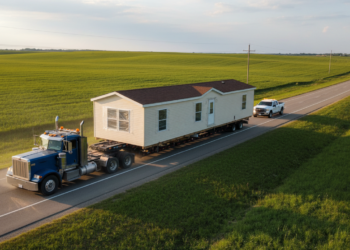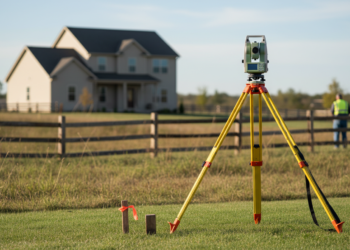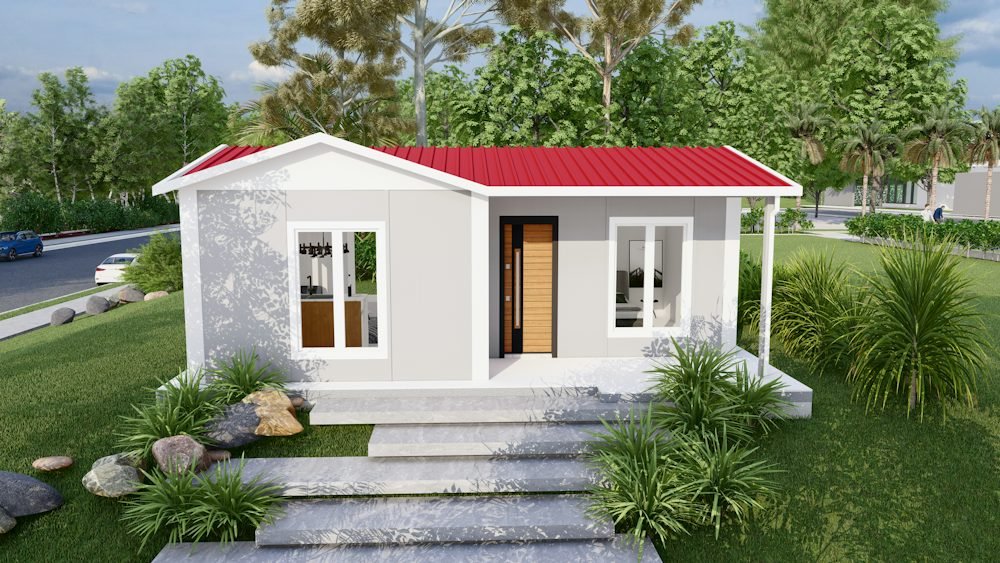
The most expensive mistake in modular home shopping happens in the first phone call. A dealer quotes $50 to $100 a square foot, the buyer multiplies by the floor plan, and that number becomes the budget. It is the price of the box. HomeGuide’s modular home cost guide puts a finished, installed home at $80 to $160 a square foot, which means a 2,000-square-foot modular home costs about $160,000 to $300,000 before you buy a single acre of land.

The gap between those two numbers does not arrive as one bill. It shows up in pieces, spread across a loan closing, a factory order, weeks of site work, one very loud day with a crane and a long tail of hookups. What follows tracks the money in the order it leaves your account, so you can see which costs are fixed early and which ones stay loose until the end. For a quick total on your own plan, run the numbers through our house and barndominium cost calculator first.
The payment calendar for a 1,500-square-foot modular home
HomeGuide publishes a line-item estimate for a 1,500-square-foot home, and it maps neatly onto the order in which a buyer actually pays. We have rearranged its figures by stage. Land is not included anywhere below.
| Stage | What you pay for | Typical cost |
|---|---|---|
| 1. Before any loan | Survey, plans, permits and fees | $850 to $5,000 |
| 2. Loan closing | Down payment and closing costs | Set by your loan (see below) |
| 3. Factory order | The modular unit itself | $75,000 to $150,000 |
| 4. Site work | Land prep and foundation | $10,000 to $31,000 |
| 5. Set day | Delivery, crane and installation | $13,000 to $62,000 |
| 6. Button-up | Utility construction | $2,500 to $25,000 |
| 7. Extras | Garage, deck and other additions | $5,000 to $50,000 |
| HomeGuide estimate total | Excludes sales tax and delivery, often inside the unit price | $103,000 to $310,000 |
Read the table from the bottom up and the pattern is plain. The factory unit is the biggest single line, but stages 4 through 7 together can match or beat it. That is where the per-square-foot quote and the finished price part ways.
Before the lender: small checks that lock in big numbers
The first money you spend is the cheapest and the most consequential. HomeGuide lists a land survey at $350 to $1,000 and permits and fees at $500 to $4,000. Angi’s modular home cost report puts the average permit bill at about $1,000, and its combined range for buying land and preparing it is enormous: $10,000 to $200,000.
That range is why the lot comes before the floor plan. A sloped, wooded parcel with no sewer line can add more to the bill than upgrading from a three-bedroom to a four-bedroom model. Get the survey and a utility check done while every other number is still a pencil estimate.
Construction loan closing: the money moment buyers misplace
Most buyers think of the loan as something that pays for the house. On a modular build, it also decides when you pay. Rocket Mortgage’s modular financing guide notes that construction loans may require 20% to 25% down, and Quicken Loans’ financing comparison lists a typical construction loan at a 620 minimum credit score, 20% down and a 45% maximum debt-to-income ratio. On a $250,000 project, 20% is $50,000 in cash before the factory cuts a board.
Closing costs come on top. Impresa Modular’s walk-through of construction financing says they typically run 4% to 6% of the loan amount. After closing, you make interest-only payments on whatever has been drawn so far, so your monthly bill grows as the project moves forward.
The order matters for your protection. In Impresa’s sequence, deposits owed to the manufacturer and builder are paid after the construction loan closes, not before. HomeGuide’s advice runs the same way: avoid large upfront payments, never pay in full or in cash, and tie each payment to completed work. A dealer asking for a big check before your financing exists is asking you to carry their risk.
The factory order: where the base price finally becomes real
Once the deposit goes in, the plan is effectively frozen. HomeGuide prices the unit alone at $50 to $100 a square foot, or $75,000 to $150,000 for 1,500 square feet, and says customizations can add anywhere from $10 to $150 or more per square foot. Angi’s view is similar: custom features add 20% to 100% to the base cost.
- 1,000 sq ft: $50,000 to $100,000 for the unit; $80,000 to $160,000 finished
- 1,500 sq ft: $75,000 to $150,000 unit; $120,000 to $240,000 finished
- 2,000 sq ft: $100,000 to $180,000 unit; $160,000 to $300,000 finished
- 2,500 sq ft: $125,000 to $215,000 unit; $200,000 to $365,000 finished
Those HomeGuide ranges show the true job of the base price: it is roughly 60% of the finished figure in every size band. Ask whether the quote includes sales tax, which HomeGuide pegs at $5,000 to $15,000, and delivery. Either can be baked in or left out, and two quotes are only comparable once you know.
Site work runs while the house is built, and it’s where budgets slip
While the modules are on the factory floor, your site crew is clearing and digging. HomeGuide breaks the prep down as clearing at $1,350 to $3,900, excavation at $1,600 to $4,400 or more and grading at $600 to $2,000, for a total of about $3,900 to $11,300 with the survey.
The foundation is the bigger swing. HomeGuide’s range is $6,000 to $20,000 overall, and the type you choose sets where you land. Angi’s per-square-foot rates make the comparison easy to scale to your own footprint:
| Foundation type | Angi, per sq ft | HomeGuide, total |
|---|---|---|
| Pier and beam | $6 to $12 | $3,000 to $8,000 |
| Slab | $5 to $16 | Not listed separately |
| Crawl space | $6 to $18 | $6,300 to $16,300 |
| Full basement | $20 to $37 | $20,000 to $29,000 |
Slippage here is rarely about the concrete price. It comes from rock in the excavation, a soil report that calls for deeper footings, or a driveway long enough for a delivery truck that the original plan never counted. Hold back a contingency for this stage specifically; it is the one you see last before the crane arrives.
Set day: a crane, a crew and a date you can’t move
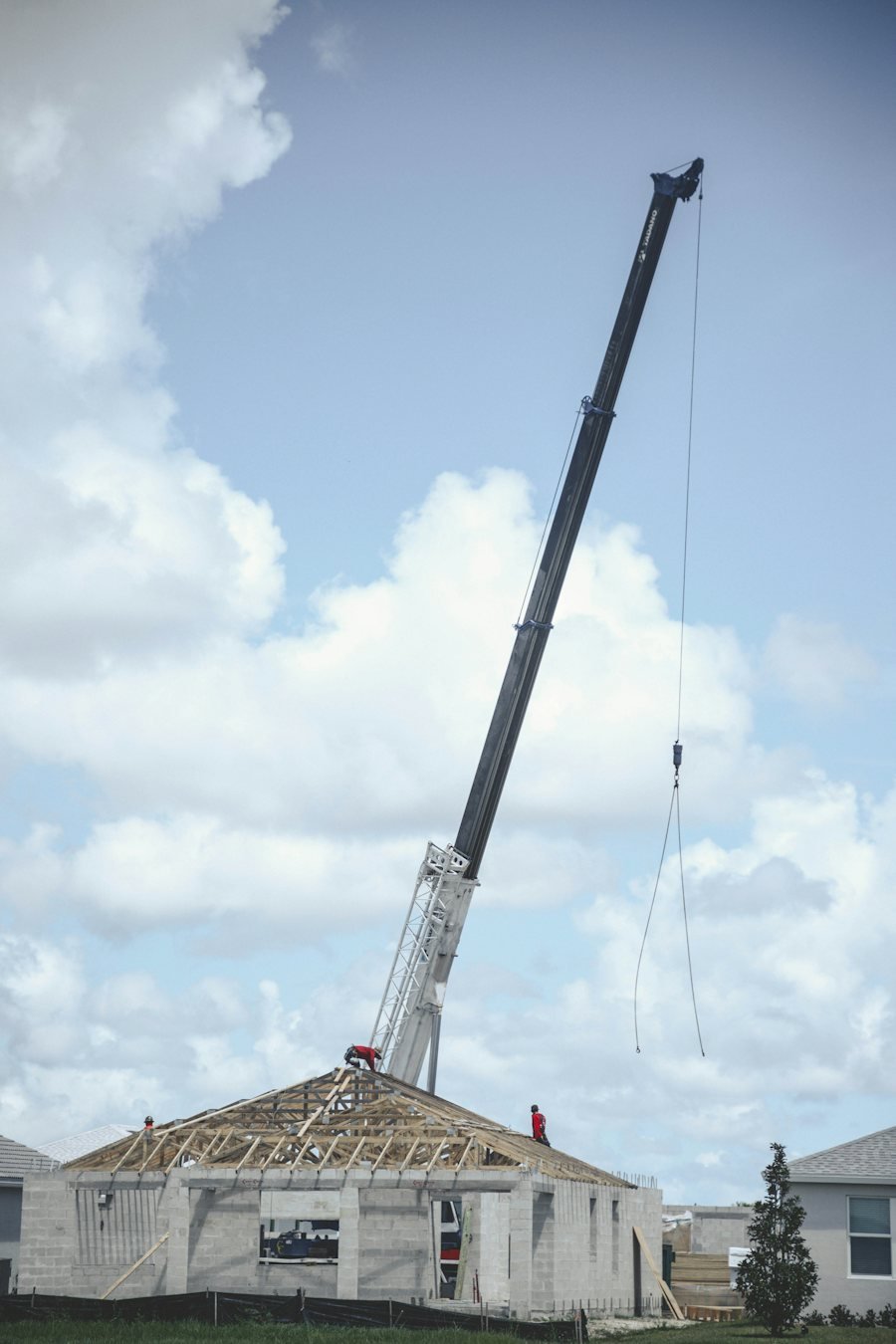
Delivery and setting are two separate charges that land within days of each other. HomeGuide prices delivery at $5 to $10 a square foot, or $3,000 to $12,000 and up; Angi stretches the top of that range to $20,000 for longer hauls. Setup and installation, which includes the crane and the crew that joins the modules, runs $5 to $35 a square foot, or $10,000 to $50,000.
Your lender treats this stage differently from the rest. Impresa notes that most construction draws require an inspection first, with two exceptions: the initial deposits and the delivery of the modular unit. In practice, a large share of the loan can go out on a single day, so confirm in writing what has to be on site and approved before the trucks roll.
Button-up and hookups: the long tail after the crane leaves
A set house is not a livable house. HomeGuide notes the factory finishes 80% to 90% of the work; the rest is stitching the modules together, finishing seams and connecting the home to the outside world. Utility costs depend almost entirely on what your lot already has. Angi’s figures:
- Electric connection: $800 to $1,200
- Municipal water: $1,000 to $6,000, or a private well at $5,000 to $10,000
- Sewer: $1,500 to $5,700, or a septic system at $3,600 to $12,400
- Gas line: $500 to $2,000
A rural lot that needs a well and septic can spend five figures here; a city lot with taps at the curb may spend a few thousand. Then come the things most buyers assume are in the house price and are not: HomeGuide lists a garage at $19,600 to $28,200, a deck at $4,000 to $10,000 and a driveway at $1,700 to $6,900. If you hire a general contractor to run all of this, Angi says to expect 20% to 40% of the total project, about $48,000 to $96,000 on an average home.
Loan conversion and what 2027 changes
The last payment event is paperwork. Impresa advises contacting the bank about 10 days before completion; a final inspection follows, and the construction loan converts to a permanent mortgage, with modification fees. From that point you are paying a normal mortgage on a house that, on a permanent foundation, lenders generally treat like any site-built home.
No national change in modular home pricing has been announced for 2027, and the factory-built share of new homes has been flat. NAHB’s October 2026 analysis of Census data counted about 14,000 modular single-family homes completed in 2025, out of 975,000 total, with non-site-built homes holding at 3% for a third straight year. The Northeast leans hardest on the method at 8% of completions. A niche product means fewer dealers in many markets, which is one more reason to collect two quotes before committing.
Budget the finished house, not the box
If you remember one number from this calendar, make it the gap: the factory unit is often only about 60% of what you will pay, and the rest arrives after you are committed. Our working rule, based on the ranges above, is to set your budget at the finished per-square-foot figure, then add land, a well or septic if the lot needs one, and a separate contingency for site work. If that total still clears your lender’s down payment and debt limits with room to spare, the modular route is worth pricing in earnest.
Other modular home price questions
How much is a three-bedroom modular home?
HomeGuide prices a 3-bedroom, 2-bath modular home of 1,200 to 1,800 square feet at $60,000 to $180,000 for the unit and $95,000 to $290,000 installed. Angi’s range for three bedrooms is $80,000 to $208,000.
What does a 3,000-square-foot modular home cost?
HomeGuide puts a 3,000-square-foot unit at $150,000 to $260,000 and a finished home at $240,000 to $430,000. Angi notes that a heavily customized 3,000-square-foot modular home can reach about $900,000.
Can I buy a modular home with an FHA, VA or USDA loan?
Often, yes, once the home is on a permanent foundation. Quicken Loans lists FHA minimum down payments of 3.5% with a 580 score or 10% with a 500 score, 0% down for VA and USDA, and a 3% minimum on some conventional loans. Confirm eligibility with your lender.
Does a modular home appraise like a site-built house?
Rocket Mortgage says lenders appraise modular homes the same way they do on-site builds, and conventional loan standards treat a modular home on a permanent foundation as site-built.
How much does it cost to add solar to a modular home?
Angi lists solar panels for a modular home at $18,400 to $36,400. Adding them during the build can be simpler than retrofitting later, so ask the manufacturer about roof framing and conduit.
Price and data sources
- How much does it cost to build a modular home?, HomeGuide
- How Much Does a Modular Home Cost?, Angi
- Market Share for Modular and Other Non-Site Built Housing in 2025, NAHB Eye On Housing (October 21, 2026)
- Everything you should know about financing a modular home, Rocket Mortgage (updated April 12, 2026)
- Modular Homes: How Can I Finance One?, Quicken Loans
- The Seven Steps of Modular Home Construction Financing, Impresa Modular
Other ways to price a home of your own
- Insurance, legal and real estate costs in 2027: the complete guide
- Mobile home prices by size, lot and loan type
- What a tiny house costs, path by path
- The cost to build a house, from bare lot to move-in
- What a 2,000-square-foot foundation costs
- Land survey cost and which survey you need
- Appraisal cost by state, loan type and property
- House and barndominium cost calculator
Pricing method: prices were researched in November 2026 for 2027 planning and may change. Figures are national ranges from the sources listed; your quotes will depend on your lot, region, manufacturer and loan. Our working rule in the final section is an estimate based on those ranges, not a quote. Confirm loan terms with a licensed lender. See our disclaimer.