



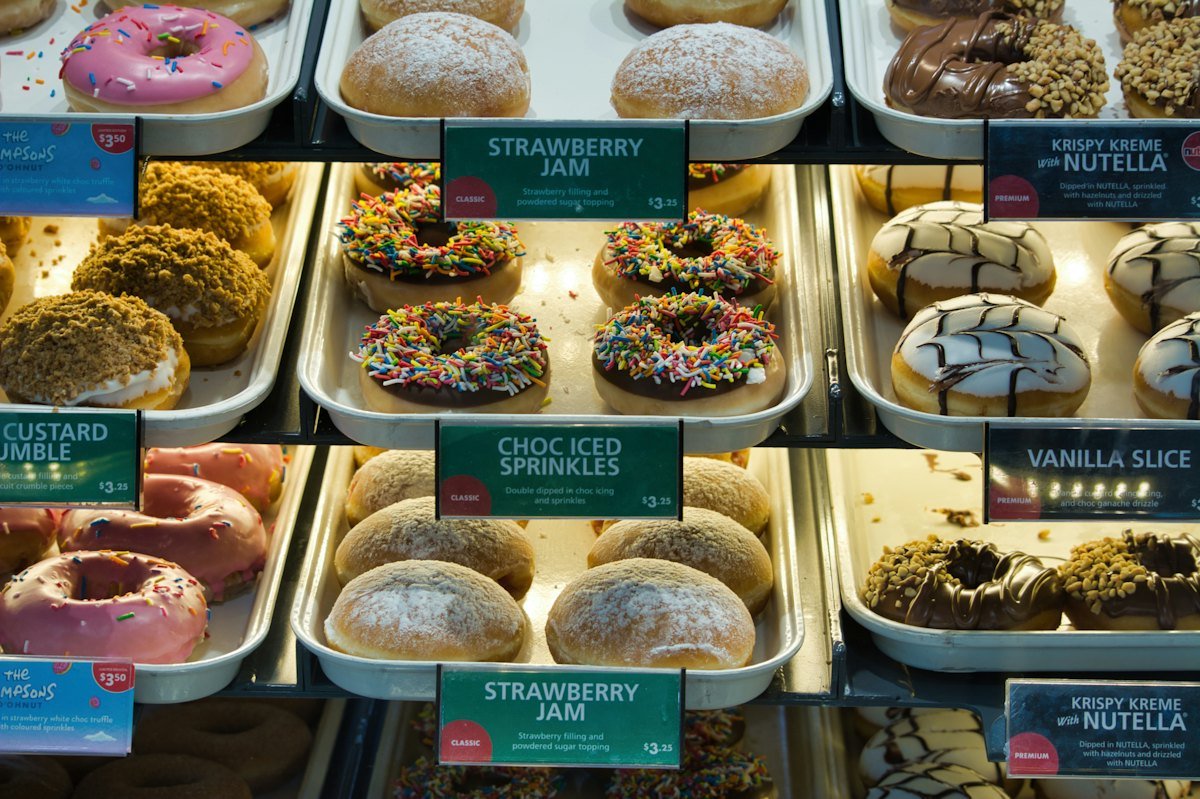
Dunkin’ rewrote its franchise disclosure document on March 26, 2026, and the headline number barely moved. Building a new store still takes $443,000 to $1,832,500 in total startup spending, according to Inspire Brands’ franchising site, and the franchise fee inside that total runs $40,000 to $90,000 depending on the market. After opening, 10.9% of every dollar the register takes in goes back to the brand.

Those figures arrive at very different moments, though, and the order matters more than the total. Most of the money leaves in the first year. The fees never stop. Below, we follow one store from the application form to the remodel years later, with the price of each stage as Dunkin’ and franchise data trackers report it.
The short version for 2027 planning: $250,000 in liquid cash and a $500,000 net worth to qualify, a $40,000 to $90,000 fee at signing, $443,000 to $1.83 million all-in to open, then a 5.9% royalty plus a 5% advertising fee on gross sales for the life of a 20-year agreement.
Month zero: proving you have $250,000 on hand
The first cost is not a fee. It is the bank statement. Inspire Brands lists $250,000 in liquid assets and a $500,000 net worth as the financial floor for Dunkin’ candidates, and those are minimums for one store, not a guarantee of approval. A home’s equity counts toward net worth; it does not count as liquid.
Dunkin’ has grown mostly through operators who open several stores in a territory. FranchiseInvestorData, which tracks the 2026 FDD, flags the system as multi-unit, and Inspire’s own news archive includes deals such as a 2021 development agreement for 26 new restaurants in Texas. Ask the development team early if your market is open to a single-store operator, because the answer can change how much capital you need to show.
Federal rules give you a built-in pause here. The FTC’s Franchise Rule requires a franchisor to hand over its disclosure document at least 14 calendar days ahead of any signature or payment. Use those two weeks to have a franchise attorney and an accountant read Items 5 through 7, 19 and 20. Their bills are the cheapest line in this entire timeline.
Day one: a $40,000 to $90,000 fee and a 20-year promise
The initial franchise fee is the only number on Dunkin’ paperwork that moves with geography in an obvious way. The 2024 FDD, as summarized by Franchise Chatter, gave a range of $40,000 to $90,000, and FranchiseInvestorData reports the same span in the 2026 document, set by the market and the type of development area. The top of the range applies in the most built-out markets, where a new site is harder to find and presumably worth more. Inspire’s recruiting page quotes the $40,000 floor.
That fee buys a license for a set term, reported at 20 years. It is a long commitment for a quick-service brand: a buyer who signs at 45 is still bound by the agreement at 65.
Months one through twelve: building the store, where most of the money goes
Construction swallows the bulk of the budget. These are the line items for a freestanding drive-thru store in the 2024 FDD’s Item 7, per Franchise Chatter’s summary; SharpSheets, updated in June 2026, reports the same construction and equipment ranges.
| When it is paid | Line item | Low | High |
|---|---|---|---|
| At signing | Initial franchise fee | $40,000 | $90,000 |
| Site work | Site development | $13,000 | $350,000 |
| Construction | Building costs | $180,000 | $600,000 |
| Construction | Additional development costs | $12,000 | $90,000 |
| Fit-out | Equipment, fixtures and signs | $189,000 | $300,000 |
| Fit-out | Restaurant technology system | $65,000 | $118,000 |
| Permitting | Licenses, permits, fees and deposits | $3,500 | $7,500 |
| Any time | Real estate | Not estimated; varies by lease or purchase | |
Two lines deserve a hard look. Site development runs from $13,000 to $350,000 because a pad site with utilities at the curb and a former bank branch that needs a new drive-thru lane are different projects. And the technology package, at $65,000 to $118,000, is larger than many independent coffee shops spend on their whole kitchen. Point-of-sale terminals, drive-thru timers, kitchen screens and the digital menu boards all come from the approved list.
Real estate is the wild card. Dunkin’ does not estimate it, because some franchisees lease a storefront and others buy the dirt. Whatever your landlord or lender charges sits on top of every figure in this article.
Opening month: training, inventory and a cash cushion
The last stretch before the doors open is cheaper per line but easy to underfund. From the same Item 7 table:
- Training-related expenses: $2,000 to $50,000, mostly travel and wages for you and your managers while you learn the system.
- Opening inventory: $8,000 to $20,000 for coffee, dairy, baked goods and paper.
- Insurance: $4,500 to $16,000 (SharpSheets lists a $10,000 floor).
- Uniforms: $400 to $3,000.
- Marketing start-up fee: $0 to $10,000.
- Miscellaneous opening costs: $9,500 to $70,000.
- Additional funds for the first three months: $0 to $108,000.
That last line is the one lenders read closely. A $0 low end assumes the store covers payroll from week one. New restaurants rarely do, and a franchisee who opens with nothing left in reserve is one slow winter away from a cash call.
Which store you build moves the total by $1 million
The format decision comes before the timeline starts, and it reshapes every stage after it. Inspire describes freestanding and endcap stores at about 1,800 square feet, inline storefronts at 1,043 and a small-format drive-thru at 1,200. The investment ranges by format, from the 2024 FDD:
| Store format | Total initial investment | Average 2023 sales, with drive-thru | Without drive-thru |
|---|---|---|---|
| Freestanding | $526,900 to $1,832,500 | $1,546,413 | $1,221,203 |
| Shopping center or storefront | $435,500 to $1,333,500 | $1,362,476 | $999,529 |
| Gas station or convenience store | $210,900 to $1,065,500 | $1,209,473 | $749,368 |
The pattern is plain: a drive-thru adds roughly $300,000 to $460,000 a year in average sales across all three formats. A gas-station Dunkin’ is the cheapest way in, but without a lane it averaged about half what a freestanding drive-thru did. SharpSheets also lists a non-traditional format, such as a counter inside a larger venue, at $142,000 to $862,500.
Every month after opening: 10.9% off the top
5.9% royalty plus a 5% advertising fee, charged on gross sales, not profit.
Dunkin’ franchise terms, Inspire Brands
Because both fees come off gross sales, they are due in a month when the espresso machine breaks and a month when payroll runs over. On a shopping-center drive-thru doing the 2023 average of $1,362,476, that comes to about $80,386 in royalties and $68,124 in advertising, or roughly $148,510 a year. Hold sales flat for five years and the brand collects about $742,550, more than the low end of what the store cost to build.
The FDD also reports where the rest of a typical dollar goes. Across 7,090 single-brand restaurants in 2023, cost of goods averaged 27.8% of sales and labor 25.4%. Here is how one hypothetical store’s year shakes out on those averages. It is an example built from published system figures, not a real operator’s books.
| Example: shopping-center drive-thru, one year | Amount |
|---|---|
| Gross sales (2023 system average for this format) | $1,362,476 |
| Royalty and advertising (10.9%) | -$148,510 |
| Food, beverage and paper (27.8%) | -$378,768 |
| Labor (25.4%) | -$346,069 |
| Left before rent, utilities, insurance, repairs and loan payments | $489,129 |
Rent, utilities, maintenance and debt service still come out of that $489,129, and Dunkin’ does not publish profit figures. VettedBiz, a franchise research site, estimates owner earnings of $176,316 to $220,395 a store and a payback of 6.4 to 8.4 years; treat those as one analyst’s model, not a promise.
For 2027 there is no announced change to Dunkin’s royalty or advertising rates. The variable to watch is coffee. Arabica futures fell to about 288 cents a pound in February 2026, roughly 36% below the October 2025 peak, according to StoneX, after the U.S. dropped its extra tariffs on Brazilian coffee in late 2025. ING expected a strong Brazilian crop in 2026/27 to keep pushing prices lower. Cheaper beans would help that 27.8% food-cost line, though how much reaches a franchisee depends on Dunkin’s supply contracts.
Years five to twenty: remodels, resale and the exit
Franchise agreements for big restaurant brands typically require periodic remodels to current design standards, and this is the cost most first-time buyers forget to model. None of the summaries we reviewed puts a dollar figure or schedule on Dunkin’s requirement, so ask for it in writing and read the remodel and refurbishment terms in the agreement itself. Budget as if a meaningful refresh will land inside the first decade.
Selling the store later is allowed with approval, and the buyer must qualify just as you did. FranchiseInvestorData lists a $5,000 transfer fee and a $1,000 renewal fee; neither appears in Dunkin’s own materials we saw, so confirm both in Item 6 before relying on them.
Questions candidates ask the Dunkin’ development team
How much does a Dunkin’ franchise owner make?
Dunkin’ discloses sales, not profit. Its FDD reports average gross sales by format, about $1.36 million for a shopping-center drive-thru in 2023. VettedBiz estimates owner earnings of $176,316 to $220,395 per store, but rent, debt and local wages swing that figure widely.
Is the Dunkin’ franchise cost lower at a gas station?
Yes, at the start. The 2024 FDD put a gas station or convenience store Dunkin’ at $210,900 to $1,065,500, against $526,900 to $1,832,500 for a freestanding store. Sales were lower too: $1,209,473 on average with a drive-thru and $749,368 without one.
Can I buy an existing Dunkin’ instead of building one?
Often, through a resale arranged with franchisor approval. The price is negotiated with the seller, usually on the store’s cash flow, and you still need to meet Dunkin’s financial requirements and complete training. A third-party data site lists a $5,000 transfer fee; confirm it in the current FDD.
How many Dunkin’ stores are in the U.S.?
FranchiseInvestorData, reading the 2026 FDD, counts 8,780 standalone U.S. Dunkin’ restaurants at the end of 2025, nearly all franchised, plus about 1,219 Dunkin’ and Baskin-Robbins combination stores. Inspire Brands cites more than 14,000 Dunkin’ restaurants worldwide.
Do Dunkin’ and Baskin-Robbins combo stores sell more?
In the 2024 FDD, freestanding combination stores with a drive-thru averaged $1,636,118 in 2023 sales, compared with $1,546,413 for a freestanding Dunkin’ drive-thru alone. The build-out for a combo store adds a second brand’s equipment, so ask for that format’s Item 7 range.
A three-part test before you apply
Dunkin’ is a mature system with published sales data, which is more than most franchises offer. It still only makes sense if all three of these hold:
- Your cash survives the build. After paying the full Item 7 range for your format, you still hold several months of operating reserve, not $0.
- Your site supports a drive-thru. Without one, average sales in every format fell by $300,000 or more, while the 10.9% fees stayed the same.
- You can live with the term. Twenty years of fees on gross sales, plus a remodel you have not priced yet, fits your age, health and other plans.
Fail any one and a cheaper franchise, or a resale with a track record, is the better first move.
Price other franchise brands against Dunkin’
- Small business startup costs in 2027: the complete guide
- Starbucks franchise cost, by path and store type
- 7 Brew franchise cost
- McDonald’s franchise cost: cash, loan and payback
- What a franchise fee covers, and the 10-year bill
- Low cost franchises from $2,000 to $150,000
- Business license cost by state and city
More related guides: Dutch Bros franchise cost · Subway franchise cost in 2027, four ways in
Pricing method: prices were researched in November 2026 for 2027 planning and may change. Figures come from Inspire Brands’ Dunkin’ franchising site (citing the FDD issued March 26, 2026), Franchise Chatter’s review of the 2024 Dunkin’ FDD, SharpSheets (June 2026), FranchiseInvestorData, VettedBiz (August 2026), StoneX (February 2026) and ING (December 2025). Item 19 sales are historical averages, not a forecast for any store. This is general information, not financial or legal advice; review the current FDD with a franchise attorney and accountant. GetCostPrice has no affiliation with Dunkin’ or Inspire Brands. See our disclaimer.












