The most common mistake people make when pricing a freeze dryer is stopping at the machine. On Harvest Right’s own store this November, the home lineup runs from $1,295 for the Countertop 360 to $4,495 for the X-Large on sale, and most buyers land on the $1,995 Medium or the $2,995 Large. Those prices are real, and they are also the smallest part of the decision for anyone who plans to use the thing.

A freeze dryer is closer to a second refrigerator than a kitchen gadget. It runs for a day or more per batch, eats Mylar bags and oxygen absorbers, wants its own circuit and makes noise in whatever room you give it. Spread over five years, the per-batch cost swings from about $23 to more than $60 depending on one thing: how often you actually fill it. That is the number this article is built around.
The sticker: what each Harvest Right size sells for this fall
Harvest Right dominates the home market, so its price list is the baseline. These are the sale prices shown on the company’s Home Pro product page in early November 2026, with the fresh-food capacity it publishes for each size. The company runs near-constant promotions; its banner advertised up to $900 off sitewide, and the Small’s listed regular price is $2,495.
| Model | Sale price (Nov. 2026) | Trays | Fresh food per batch | Weight | Power |
|---|---|---|---|---|---|
| Countertop 360 | $1,295 (black) | 4 | 5 to 9 lb | Not listed | 110V outlet |
| Small | $1,795 (black), $2,395 (stainless) | 4 | 6 to 10 lb | 91 lb | 110V, dedicated 15A circuit |
| Medium | $1,995 (black or white), $2,795 (stainless) | 5 | 10 to 15 lb | 119 lb | 110V, dedicated 15A circuit |
| Large | $2,995 (black or white), $3,395 (stainless) | 6 | 18 to 27 lb | 143 lb | 110V, dedicated 15A circuit |
| X-Large | $4,495 to $4,995 (stainless) | 7 | 40 to 50 lb | 258 lb | 110V NEMA 5-20, dedicated 20A circuit |
Every home Pro unit ships with Harvest Right’s Premier oil pump, 50 Mylar bags, 50 oxygen absorbers, pump oil and a filter. The one upgrade worth pricing now is the oil-free pump, which adds $1,495 at checkout and removes oil changes from your life. We come back to whether that is worth it in the five-year math.
The competition starts higher. Batch & Tray’s October and November 2026 price checks found Blue Alpine’s Medium Select at $2,995 to $3,095 and its Large Select at $3,995 to $4,095. Stay Fresh is the exception at the small end, with its Small Premier on sale at $1,750 and a 5-shelf Premier at $2,699. Prep4Life’s Cube Select listed at $2,995 to $3,295 on sale, though it showed as sold out in early November. A higher sticker can make sense if a rival’s warranty or pump suits you better, but none of them changes the running costs much.
A meter that spins for a day and a half per batch
Freeze-drying is slow. Harvest Right says most batches take 13 to 35 hours, and Utah State University Extension, which studied home units, cites 20 to 40 hours as typical, with fresh pineapple taking 48 to 52. Dense or sugary foods and a warm room stretch every cycle.
How much that costs depends on whose math you trust, and the two common estimates disagree by more than double:
The maker’s estimate
Harvest Right’s June 2026 cost guide puts a batch at about $1.25 to $2.80 for the Small and Medium, $2.00 to $3.00 for the Large and about $4.00 for the X-Large. The pump and refrigeration cycle on and off, so average draw sits below the peak.
The wattage math
Take the average draw Harvest Right itself lists, about 990 to 1,210 watts for the Small and Medium and about 1,500 for the Large, and run it for 24 hours at the 18.34-cent national average rate the EIA reported for June 2026. That gives $4.36 to $5.33 a batch for the smaller units and $6.60 for the Large.
The truth for your house is somewhere in between and is easy to find: plug-in energy monitors cost little, and Harvest Right’s own blog recommends measuring one full batch. We use the higher wattage figures below, because a planning number that turns out too high is the cheaper kind of mistake. If you pay New England rates, which the EIA put near 27.6 cents, add about half again. For a deeper look at your rate, see our guide to the average cost of electricity per month.
Mylar, oxygen absorbers and pump oil: the toll on every batch
Freeze-dried food only keeps if it is sealed away from air and moisture, which means a fresh Mylar bag and a fresh oxygen absorber for nearly every package. Absorbers are single use. The 50 of each in the box go faster than new owners expect, since a full Large batch of 18 to 27 pounds of fresh food fills a stack of bags.
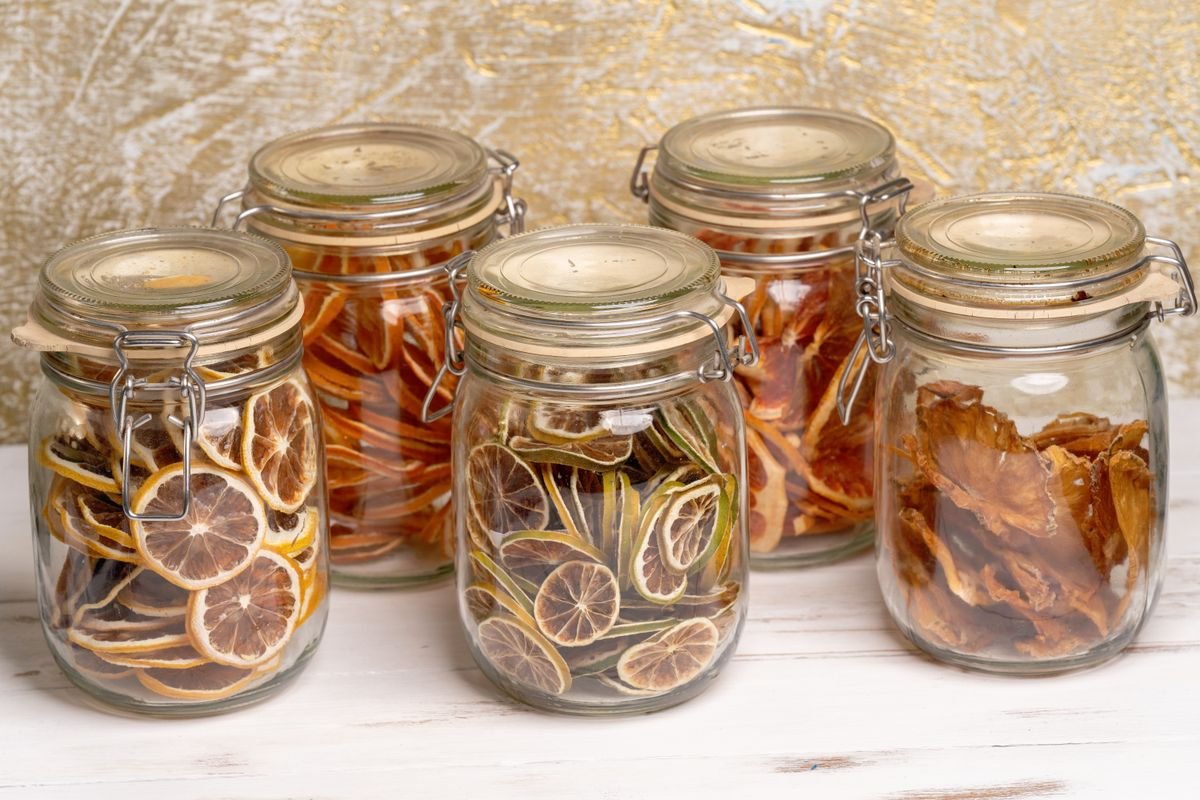
Trimleaf, a Harvest Right dealer, budgets $4 a batch for bags, absorbers and oil in its payback model, and we use that figure too. It is an assumption, not a price list, and small batches of candy or herbs will come in under it. The Premier pump needs an oil change every 20 to 30 batches, which Harvest Right says takes about two minutes, and the oil can be filtered and reused. Glass jars with lids cut bag costs for food you will eat within months, but Utah State’s researchers note that metal-layered Mylar is what long storage estimates are based on.
Four households, five years, one cost per batch
Here is how purchase price, power and supplies add up over five years for four example owners. These are hypothetical households built from the figures above: sale price, the wattage-math electricity cost and $4 a batch in supplies. Raw food is left out because it is food you would have bought anyway, and so are repairs, which we cover next.
| Example owner | Batches in 5 years | Machine | Electricity | Supplies | 5-year total | Cost per batch |
|---|---|---|---|---|---|---|
| Small, one batch a month | 60 | $1,795 | $320 | $240 | $2,355 | $39.25 |
| Medium, two batches a month | 120 | $1,995 | $640 | $480 | $3,115 | $25.95 |
| Large, one batch a month | 60 | $2,995 | $396 | $240 | $3,631 | $60.52 |
| Large, four batches a month | 240 | $2,995 | $1,584 | $960 | $5,539 | $23.08 |
Two things jump out. First, the Large run once a month is the worst deal on the table, even though it is the size many buyers pick to be safe. Owning more capacity than you use is the expensive choice. Second, running costs pass the purchase price for heavy users: the four-a-month Large owner spends $2,544 on power and supplies, close to the machine’s own price.
The oil-free pump fits into the same math. At four batches a month, its $1,495 adds about $6.23 to every batch over five years, lifting that owner to roughly $29. It is a convenience purchase. Buy it if oil changes are the chore that would keep the machine idle, not because it saves money.
The jar on your shelf against the can at the store
The alternative to owning a machine is buying the food already dried. Mountain House, the best-known brand, lists its #10 cans at $64.99 to $94.99 on its own site, with up to 10 servings each, which puts a serving at $6.50 or more. Utah State’s extension team found home freeze-dried food costs substantially less than commercial versions, which can carry markups of up to 85%.
That gives a quick test. If a full batch from your machine replaces at least one $65 can of something you would otherwise buy, the weekly Large owner covers the $23 ownership cost with room left for about $40 of raw food. The once-a-month Large owner, at $60 a batch before groceries, is paying close to can prices for the privilege of doing the work. Trimleaf’s own model, using its assumption of $120 in store value per Large batch, gets to payback in about 10 months at four batches a month and about 42 months at one.
The comparison tilts further toward the machine when the food would otherwise be wasted: a garden glut, a hunting season, a sale on berries, leftovers from a large family. It tilts toward cans when you mainly want an emergency shelf you will rarely open.
Costs that never show up on a receipt
- A circuit of its own. Harvest Right requires a dedicated 15-amp circuit for the Large and a dedicated 20-amp NEMA 5-20 circuit for the X-Large, and running any unit on an extension cord voids the warranty. If the room you have in mind does not have a free circuit, an electrician visit belongs in your budget before the machine does.
- A room that stays between 45 and 80 degrees. Utah State recommends that range for good performance, and Harvest Right’s warranty terms ask owners to keep the room between 35 and 95 degrees. A hot garage in July means longer cycles and higher bills.
- Noise and heat. The vacuum pump runs at 62 to 67 decibels, close to a vacuum cleaner, for a day or more at a time, and it puts out heat. Most owners do not want it in the kitchen.
- A sturdy, raised spot. The unit cannot sit on the floor, because the drain line needs to run downhill, and the Large weighs 143 pounds. A cart or a reinforced shelf is a common extra purchase.
- Repairs after year one. Harvest Right’s U.S. warranty gives one year of full coverage. In years two and three it covers only the compressor, condenser, evaporator and tubing, and the owner pays diagnostic charges and transport. After that, everything is on you.
For 2027, we found no announced list-price changes from Harvest Right, Blue Alpine, Stay Fresh or Prep4Life. The more useful pattern is that Harvest Right’s sale prices sit hundreds below its listed regular prices for long stretches, so there is rarely a reason to pay full price.
Questions owners ask after the box arrives
How much does a freeze dryer cost for a beginner?
The cheapest Harvest Right is the Countertop 360 at $1,295 on sale in November 2026, followed by the Small at $1,795. Stay Fresh’s Small Premier was on sale at $1,750 in late October. For most first-time owners, the Medium at $1,995 is the better value per pound of capacity.
Is it worth buying a used freeze dryer?
It can save money, but it carries more risk than most used appliances. Harvest Right’s warranty covers the original owner only, so a second-hand unit typically has no factory coverage. Ask for the batch count, recent oil changes and a test run before paying.
Can you freeze-dry raw meat at home?
You can freeze-dry it, but freeze-drying does not kill bacteria. Utah State University Extension says raw meat, raw seafood and raw eggs must still be cooked before eating, and food must be dried until it is crisp or breakable before it is sealed.
How long does home freeze-dried food last?
Nobody knows for certain. Utah State cites 8 to 10 years as a conservative food-safety estimate for commercial freeze-dried food in metal Mylar pouches, but notes there is no real data on home-dried food because home units only went on sale in 2013.
Is a freeze dryer the same as a dehydrator?
No. A dehydrator blows warm air over food and leaves more moisture behind, which shortens shelf life and changes texture. A freeze dryer freezes food and pulls the ice out under vacuum, so the food keeps its shape and rehydrates closer to fresh. It also costs many times more to buy and run.
The two-batch rule
If you can name what goes into the machine at least twice a month, every month, a freeze dryer earns its place, and the Medium is usually the right size until you outgrow it. If you cannot, the five-year math says you are paying $40 to $60 a batch for a hobby, and a few cases of #10 cans will fill the emergency shelf for less. Buy for the batches you will run, not the harvest you hope to have.
Other appliances, priced over their lifetimes
- Home improvement costs in 2027: the complete price guide
- What a new fridge costs over 10 years
- Refrigerator repair costs by symptom
- Washer and dryer prices, and where to spend
- Microwave prices for four kinds of kitchens
- Average cost of electricity per month
Pricing method: prices were researched in November 2026 for 2027 planning and may change. Machine prices come from Harvest Right’s website and from Batch & Tray and Trimleaf price checks in October and November 2026; electricity figures use Harvest Right’s published wattage and EIA’s June 2026 national average rate; supply costs use Trimleaf’s stated per-batch assumption; food safety guidance comes from Utah State University Extension. The five-year table is a hypothetical example. See our disclaimer.