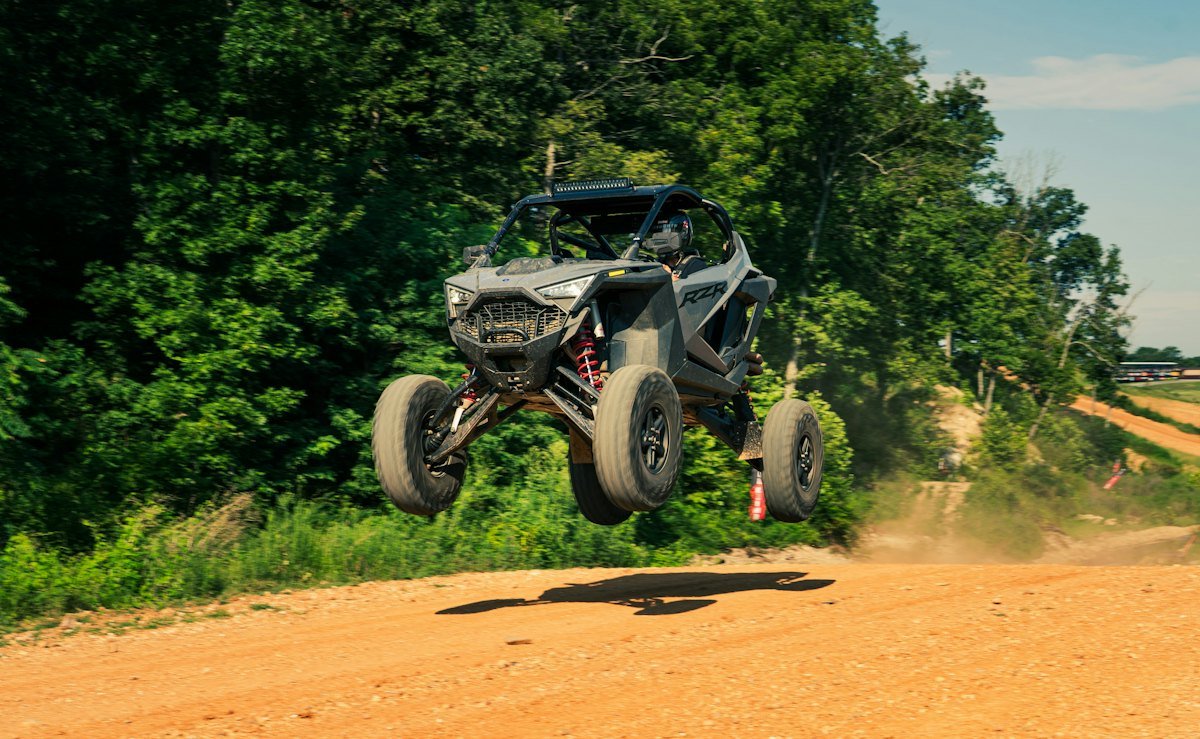
Honda charges $885 just to deliver its smallest side-by-side to the dealer, and that is before a single accessory, tax bill or registration sticker. The machine itself, a 2026 Pioneer 520, lists at $10,999 on Honda’s Pioneer 520 spec page, so the cheapest two-seater from a major brand starts at $11,884 before tax. Across the market, Polaris’s local price guide puts ordinary side-by-sides at $8,000 to $15,000 and cab-equipped models at $20,000 to $40,000 or more.

Those stickers answer an easier question than the one most buyers face. The harder number is what a machine costs to keep for five years, once insurance, service, the dealer’s fee lines and resale are counted. We priced three current machines that way: a compact utility model, a full-size work machine and a sport model. The result surprised us a little. The full-size Ranger lists for more than the sport Maverick X3, yet under our assumptions it is the cheaper one to own.
What the brochures list for the 2027 season
Can-Am has already posted model-year 2027 pricing. Honda and Polaris pages still show 2026 models as of November 2026, and those are the machines dealers are selling now. Every figure below is a manufacturer starting price for the base trim; premium trims, cabs and special editions climb from there.
| Model | What it is | Starting MSRP | Delivery charge |
|---|---|---|---|
| Honda Pioneer 520 (2026) | Compact two-seat rec-utility | $10,999 | $885 |
| Can-Am Defender HD7 to HD10 (2027) | Mid-size utility | $12,999 | Extra, amount not listed |
| Can-Am Commander (2027) | Sport-utility crossover | $14,199 | Extra, amount not listed |
| Can-Am Maverick Trail (2027) | Narrow trail sport | $15,499 | Extra, amount not listed |
| Can-Am Defender HD10/HD11 (2027) | Full-size utility | $19,799 | Extra, amount not listed |
| Can-Am Maverick X3 (2027) | Sport | $19,999 | Extra, amount not listed |
| Polaris Ranger XP 1000 (2026) | Full-size utility | $21,499 | $1,095 |
| Can-Am Maverick R (2027) | Flagship sport | $39,699 | Extra, amount not listed |
Source: Can-Am’s 2027 side-by-side lineup, Honda’s Pioneer 520 page and Polaris’s Ranger XP 1000 page, all checked in November 2026.
Notice how tightly the mid-range bunches. A buyer with about $20,000 can choose a full-size work machine or a 2027 Maverick X3 for nearly the same money, which is exactly why the five-year math below matters more than the sticker.
The line items between the sticker and the keys
Honda and Polaris print their delivery charges: $885 on the Pioneer 520 and $1,095 on the Ranger XP 1000. Can-Am prints a sentence instead, under every price on its lineup page.
Transport and preparation not included.
Fine print under each starting price on Can-Am’s 2027 side-by-side page
That leaves the number to the dealer, and Polaris says as much in its own guide: the final price is set locally and moves with taxes, fees and added accessories. Ask every dealer for an out-the-door figure in writing, with freight, setup, any documentation fee and sales tax broken out, before you talk about trade-ins or financing. For our sport example we assume about $1,100 for transport and prep, in line with the delivery charges Honda and Polaris publish.
Accessories are the other quiet multiplier. A roof, windshield and doors are what move a machine from Polaris’s $8,000-to-$15,000 bracket toward the $20,000-and-up cab bracket, and dealers often bundle them into the first quote. Sales tax lands on all of it. We use 7% in our example as a round planning rate; your state’s figure may be lower or higher. Shopping far from home can save real money, but ask the distant dealer for a delivered price, or compare the gap with what open-trailer vehicle shipping costs by distance before you book a road trip.
Insurance and registration: small checks with big exceptions
Off-road coverage is cheap next to car insurance. ValuePenguin’s June 2026 quote study found liability-only coverage averaging about $88 a year and full coverage about $327, with full-coverage quotes ranging from $165 at Dairyland to $510 at Allstate. Those quotes were for a used ATV in Wisconsin. A $20,000 side-by-side costs more to replace, so expect your full-coverage quote toward the top of that range, and higher if you are young, carry passengers or keep the machine outside. For a closer look at how age, location and garaging move the number, see what four different riders pay for ATV coverage.
Registration is cheaper still, at least in snow country. The Minnesota DNR’s off-highway vehicle fee page charges $60 plus an $8.50 issuing fee for a three-year ATV registration, the category most side-by-sides fall into there, and $60 plus $6 to renew. Over five years that is about $135. Other states charge differently, and some add trail passes for riding on public land, so check your own agency before you budget.
Service: where sand and mud write the bigger checks
A dealer full service is the predictable part. American Power Equipment, an Alabama dealer, lists its side-by-side full service at $369.99 in labor, with parts extra. That covers a 22-point list: oil and filter, air and fuel filters, a coolant flush, drive belt and brake inspection, gearcase fluid checks and greasing every fitting. Most owners need one a year, or sooner if the hour meter runs fast.
The unpredictable part depends on where you ride. A utility machine hauling feed at 15 miles an hour asks little of its clutch and tires. A sport machine on dunes or rocky trails asks a lot: the CVT drive belt is a wear item, tires scrub away faster, and suspension bushings and bearings take a beating. Follow the service intervals in your owner’s manual, and on a sport model, carry a spare belt.
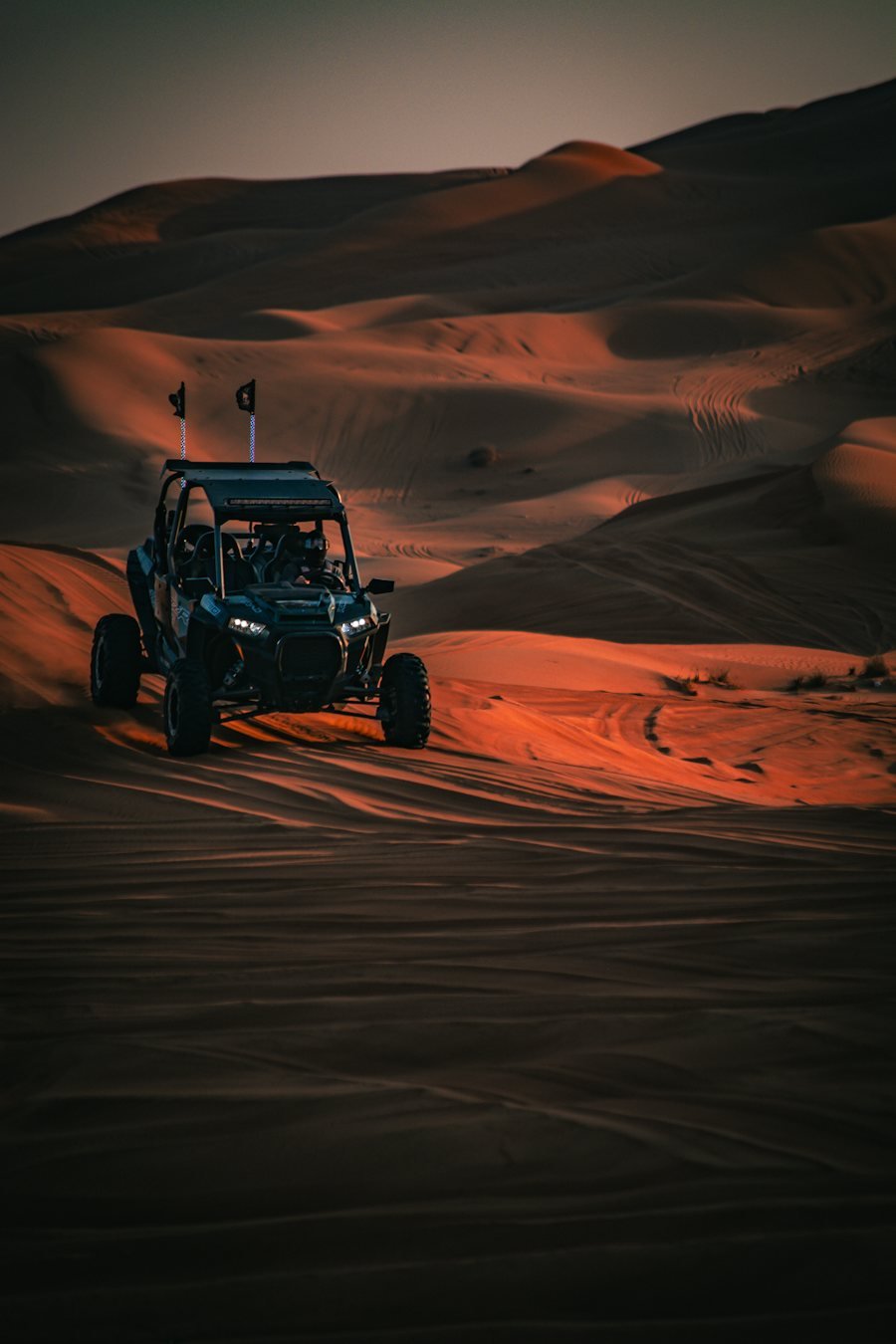
For the model below, we use five-year service allowances of $2,000 for the Pioneer 520, $2,500 for the Ranger and $3,500 for the Maverick X3. These are our planning figures, built from a dealer service of roughly $370 plus parts each year, with extra room on the sport machine for the wear parts aggressive riding eats. They are not quotes.
Resale decides which machine was cheap
Depreciation is the biggest single cost of owning a side-by-side, and it is the one nobody invoices. Outdoor Troop’s depreciation study found most UTVs had lost about 35% of their value within three years, with utility machines holding up better than sport models. In its model-by-model figures, a Can-Am Defender had lost 27% at three years, while a Maverick X3 had lost 32% and a Polaris General 1000 33%. The data comes from resale listings several years old, so treat it as a direction rather than a forecast.
Extending that curve, we assume a utility machine is worth about 60% of its delivered price after five years and a sport machine about 50%. Sport models are bought for hard riding, and used buyers price in the abuse they suspect.
Five years, three machines, added up
Here is the whole model in one place. It is a worked example built from the published prices and sources above plus the assumptions we have flagged, not a quote for any buyer.
| Five-year cost | Honda Pioneer 520 | Polaris Ranger XP 1000 | Can-Am Maverick X3 |
|---|---|---|---|
| Price with delivery | $11,884 | $22,594 | $21,099* |
| Sales tax at 7% (example) | $832 | $1,582 | $1,477 |
| Registration (Minnesota, five years) | $135 | $135 | $135 |
| Full-coverage insurance | $1,650 ($330 a year) | $2,550 ($510 a year) | $2,550 ($510 a year) |
| Service and wear parts (our allowance) | $2,000 | $2,500 | $3,500 |
| Cash out over five years | $16,501 | $29,361 | $28,761 |
| Estimated resale value | -$7,130 (60%) | -$13,556 (60%) | -$10,550 (50%) |
| Net cost of ownership | $9,371 | $15,805 | $18,211 |
| Per year | about $1,874 | about $3,161 | about $3,642 |
*Includes our assumed $1,100 for Can-Am transport and preparation. Insurance rates are our picks from ValuePenguin’s average and top full-coverage quotes; resale percentages are our estimates from Outdoor Troop’s three-year figures. Our math, rounded to the dollar.
The Ranger costs about $1,500 more than the Maverick X3 to drive home, then finishes roughly $2,400 cheaper to own. Two lines do the work: the utility machine’s slower depreciation and its lighter appetite for wear parts. If you ride a sport machine gently, the gap narrows. If you ride it the way it is built to be ridden, the gap widens.
Timing matters too. The first two years are mostly depreciation and insurance. Around year three, the deferred items start arriving on hard-ridden machines: wheel bearings, CV axles and boots, ball joints and a second set of tires. A machine that spends its weekends in mud and creek crossings tends to reach that point sooner.
Four ways to buy the same seat time for less
- Shop the outgoing model year. In November 2026, Can-Am was advertising savings of up to $4,000 on select 2026 models and financing from 0% for 60 months. Promotions change monthly, so confirm the terms with the dealer.
- Buy at three years old. If the 35% three-year loss holds, the first owner absorbs the steepest part of the curve. Pay for an independent mechanic’s look at the belt, bearings and frame before you hand over cash.
- Match the machine to the job. If it will mostly carry tools and people around a few flat acres, compare what a golf cart costs over eight years before you commit to four-wheel drive and long-travel suspension.
- Keep it out of the weather. Sun and rain age seats, plastics and electrical connectors. If you have no garage bay to spare, price a prebuilt shed or a kit you assemble; a roof can protect resale on a $20,000 machine.
The bottom line for a $20,000 budget
How much is a side by side, really? Plan on the sticker plus about 10% to drive it home, then roughly $1,900 a year to own a compact utility machine and $3,000 to $3,700 a year for a full-size or sport model, with depreciation the largest share. If the machine’s main job is work, a utility model returns more of your money at resale. If its main job is fun, buy the sport model with open eyes, budget for belts and tires, and remember that the cheaper sticker was never the cheaper machine.
Side-by-side price questions from the showroom floor
How much does a side-by-side with a cab cost?
Polaris’s price guide puts cab-equipped side-by-sides and UTVs at about $20,000 to $40,000 or more. Enclosed cabs, heat and air conditioning push a machine toward the top of that range.
Are used UTV prices much lower than new?
Usually, especially for sport models. Outdoor Troop’s depreciation study used the example of a $30,000 RZR XP Turbo S worth roughly $19,500 after three years. Condition, hours and modifications matter more on a used machine than on a used car.
Which side-by-sides hold their value best?
Utility models generally hold value better than sport models. In Outdoor Troop’s figures, a Can-Am Defender had lost about 27% after three years, compared with 32% for a Maverick X3 and 33% for a Polaris General 1000.
How much is liability-only insurance on a side-by-side?
ValuePenguin found liability-only off-road coverage averaging about $88 a year, with Progressive quoting $75 in its study. Liability does not pay to repair or replace your own machine, so a financed side-by-side will usually need full coverage.
Price sources
- Side-by-Side Vehicles (SxS), Can-Am Off-Road (2027 models)
- 2026 Pioneer 520 Compact Side-by-Side, Honda Powersports
- 2026 RANGER XP 1000, Polaris
- ATV, SxS & UTV Local Price Guide, Polaris
- ATV Insurance: What Does It Cover and How Much Is It?, ValuePenguin (updated June 30, 2026)
- Off-highway vehicle registrations & fees, Minnesota Department of Natural Resources
- Side-by-Side Full Service, American Power Equipment
- Side-by-Side Depreciation: A Complete Guide, Outdoor Troop
More off-road and recreation costs
- Car, RV and recreational vehicle ownership costs: the complete 2027 guide
- ATV and UTV insurance cost for four kinds of riders
- Dirt bike prices with gear and upkeep included
- Jet ski prices by month, brand and state
- Golf cart price vs eight-year cost by powertrain
- RV storage costs for four very different owners
Pricing method: prices were researched in November 2026 for 2027 planning and may change. Figures come from manufacturer price pages, a state licensing agency, an insurance quote study, a dealer service menu and a resale study; the five-year model uses our own clearly labeled assumptions. Local dealer prices, taxes and fees vary. See our disclaimer.