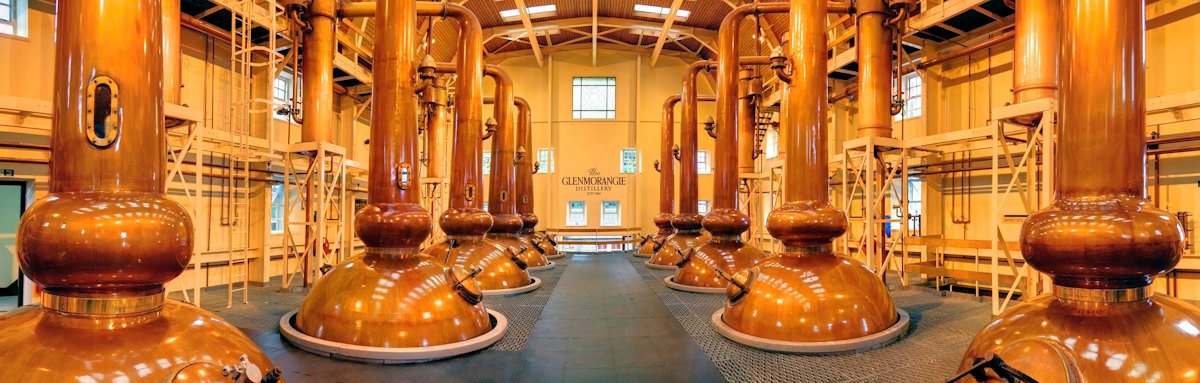
The most expensive habit in craft distilling starts on day one: treating the still as the project. It is the shiny object in every business plan, yet it is usually well under half of the money. ZenBusiness’s September 2026 startup guide puts a typical craft spirits distillery at $500,000 to $1.5 million to open. At the other extreme, Oregon State University’s continuing-education distilling blog sketches a bare-bones launch on a hypothetical $50,000.

Both numbers can be right for 2027 planning. The gap between them is mostly made of decisions, and the costliest of those decisions are mistakes first-time owners repeat: buying equipment before the building is approved, laying down whiskey with nothing to sell in the meantime, misreading the federal tax rules, and treating the tasting room as an afterthought. Each one is priced below, in roughly the order founders make them.
How a $500,000-plus build-out divides up
Here is the line-item budget ZenBusiness publishes for a craft spirits distillery with a tasting room. Read the right-hand column as a map of where the mistakes below hide.
| Line item | Published range | Where founders slip |
|---|---|---|
| Commercial still and fermentation tanks | $100,000 to $500,000 | Sizing for year five instead of year one |
| Build-out and plumbing upgrades | $50,000 to $250,000 | Signing a lease before code review |
| Bottling and labeling equipment | $20,000 to $100,000 | Custom glass ordered too early |
| Tasting room furniture and fixtures | $20,000 to $80,000 | Cutting it to pay for the still |
| Oak barrels for aging | $15,000 to $50,000 | Filling barrels with no clear spirit for cash flow |
| Lease deposit and initial rent | $10,000 to $50,000 | Rent running for months before the permit |
| Initial raw materials | $10,000 to $30,000 | Rarely the problem |
| Licensing, permits and legal fees | $5,000 to $15,000 | Assuming every state charges the same |
Source: ZenBusiness, last updated September 28, 2026. The line items total about $230,000 to $1.08 million by our arithmetic; the rest of the headline range is, in our reading, room for staff, working capital and the months before steady sales.
Mistake 1: Signing for the building before the fire marshal sees it
A distillery stores and heats high-proof ethanol, and local building and fire officials review that very differently from a brewery or a restaurant. Drains, ventilation, electrical work near vapor, sprinklers and fire separation can all land on the build-out line, which is why ZenBusiness gives it a range as wide as $50,000 to $250,000. The cheapest space on the listing can be the most expensive one to approve.
The fix costs little: bring a floor plan and a still spec sheet to the local building and fire departments before signing a lease, and ask the landlord for a contingency or a rent-free period tied to permit approval. Every month of rent you pay while waiting is money that never reaches a bottle.
Mistake 2: Buying the still for the distillery you hope to be in year five
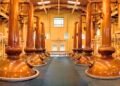
Still prices scale fast. As a current retail example, GW Kent lists a 250-liter Brewmation copper pot still with a column, dephlegmator and gin basket at $45,763, marked down from $57,203.75. Oregon State’s blog describes a high-end 40-gallon German still at about $50,000, an economical alternative at roughly a quarter of that, and a 10-gallon lab still under $3,000. Add fermenters, pumps and a boiler and you reach ZenBusiness’s $100,000 to $500,000 equipment line quickly.
Oversizing hurts twice: the purchase itself, and the bigger room, utilities and permits it drags along. A smaller still that runs often, while you learn what sells, protects cash better than a showpiece that runs twice a week. If what really draws you is a taproom full of locals rather than grain-to-glass spirits, compare the numbers with what a 7-barrel brewery costs to open before committing to copper.
Mistake 3: Expecting the state license to be a rounding error
Federal approval comes from the Alcohol and Tobacco Tax and Trade Bureau, but the state license is where geography changes the bill. The spread between three states shows how much the class you choose matters.
| State and license | Fee | Key limit |
|---|---|---|
| New York Class A distiller | $50,800 (36-month term) | No production cap |
| New York Class A-1 micro distiller | $1,450 (36-month term) | 75,000 gallons a year |
| New York Class D farm distillery | $937.60 (36-month term) | 75,000 gallons; 75% New York ingredients |
| Texas distiller’s and rectifier’s permit | $3,350 | Per TABC fee list |
| Colorado manufacturer’s license (distillery) | $300 | State fee only |
Sources: New York State Liquor Authority distillery quick reference; Texas Alcoholic Beverage Commission permit fee list; Colorado Department of Revenue form DR 8500 (07/30/24).
The New York numbers carry the lesson. A founder who files for a Class A license out of habit pays $50,800; a micro or farm license costs a small fraction of that and covers up to 75,000 gallons a year, more than most new distilleries will make for some time. Read the class definitions before the application, not after. Pouring cocktails in the tasting room can also trigger separate retail rules, so check how liquor license prices climb from beer permit to full bar in your state.
Mistake 4: Filling barrels with nothing to sell while they age
Whiskey is a cash trap by design. Every barrel holds spirit you have already paid to make and warehouse space you are paying rent on, and it earns nothing until it is ready. The barrel alone is not cheap: GW Kent prices a new 53-gallon American oak whiskey barrel at $775. ZenBusiness’s $15,000 to $50,000 barrel budget buys roughly 19 to 64 of them at that price, by our math.
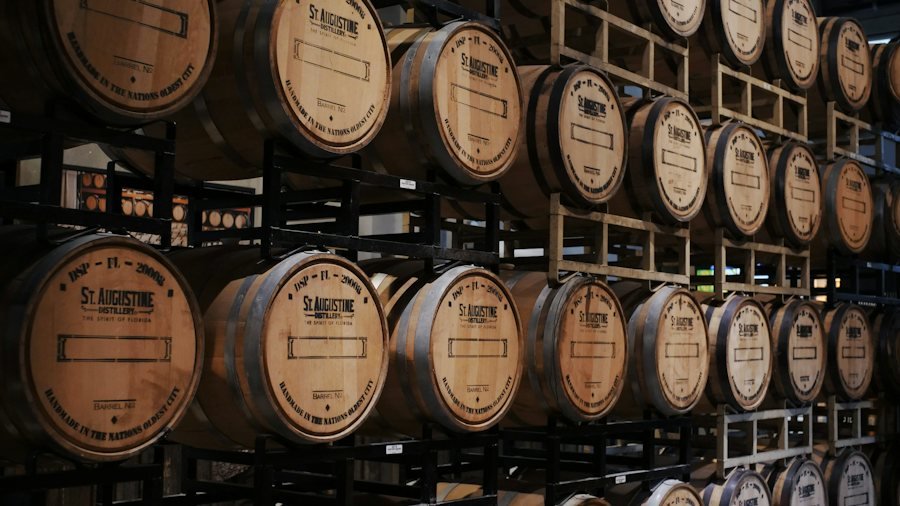
That is why so many craft distilleries open with gin, vodka, unaged spirits or liqueurs. They can be bottled within weeks and keep the doors open while brown spirits sit. Plan the release schedule as carefully as the recipe: which products ship in month three, which in year two, and which only once the first barrels are worth opening.
Mistake 5: Misreading the federal excise tax and the bond rule
Federal excise tax is owed when spirits leave bonded storage, and the rate depends on who made them. TTB’s current rate table charges $2.70 per proof gallon on the first 100,000 proof gallons and $13.34 per proof gallon from there up to 22,230,000. The standard $13.50 rate applies to spirits the plant did not distill or process itself, including spirits it only bottled. TTB notes that Congress made the reduced craft rates permanent in December 2020, and nothing announced so far changes them for 2027.
The trap is the brand built on sourced whiskey. Bottling someone else’s spirit is a legitimate way to get to market, but it can be taxed at five times the craft rate. That matters again for the bond: under the PATH Act, TTB exempts taxpayers from bond requirements if they reasonably expect no more than $50,000 a year in alcohol excise tax, owed no more than that the previous year, and pay semi-monthly, quarterly or annually.
Example: how the tax math shifts on 5,000 proof gallons
Hypothetical example. A proof gallon is one gallon at 100 proof. Removing 5,000 proof gallons of spirit you distilled yourself costs $13,500 in federal tax at $2.70, comfortably under the $50,000 bond threshold. The same 5,000 proof gallons of bottled-only sourced spirit at the $13.50 standard rate costs $67,500, which crosses the threshold and brings the bond requirement back. At the $2.70 rate, you would need to remove roughly 18,500 proof gallons a year before reaching $50,000 in tax. Confirm your own rate and bond status with TTB or a beverage-alcohol accountant.
Mistake 6: Ordering custom glass before the name is protected
Packaging sells craft spirits, and founders know it. Oregon State’s blog notes that a custom bottle mold alone can run $20,000 to $70,000, before a single bottle is filled, and ZenBusiness budgets another $20,000 to $100,000 for bottling and labeling equipment. Stock glass with a strong label is a reasonable first release; a custom mold can wait until a product has proved it sells.
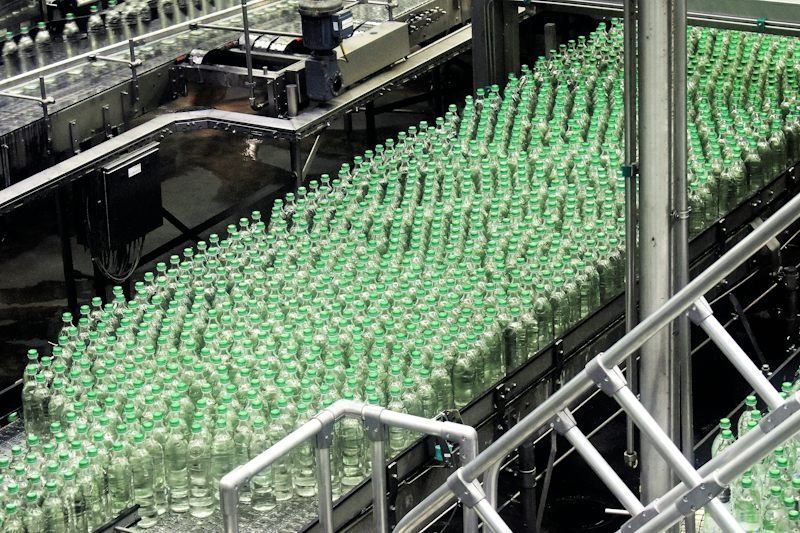
The name on that glass deserves protection first. Spirits brands collide often, and a cease-and-desist letter after you have embossed 10,000 bottles is a painful way to learn it. Price out the ten-year bill for trademarking a name and run a clearance search before the mold order goes in.
Mistake 7: Treating the tasting room as optional
The market data argues for selling at your own counter. Whisky Advocate’s report on the 2026 American Craft Spirits Association data counts 2,131 active U.S. craft distillers through August 2026, with closures outpacing openings for the first time. Craft spirits sales fell 3.7% to $7.3 billion in 2025, the third straight annual decline, and volume dropped 8%. The tasting room’s share of craft distillery sales, meanwhile, has risen from 14% in 2015 to 26%.
Those direct sales carry the best margins in the business because no distributor or retailer takes a cut. ZenBusiness budgets $20,000 to $80,000 for tasting room furniture and fixtures, and that is the last line to sacrifice when the still quote comes in high. If you plan a full cocktail program, much of the build starts to resemble the budget for opening a bar, staffing included.
Spend in this order
- A building that local code officials have reviewed for distilling, with rent tied to permit approval.
- The state license class that fits your first two years of volume, not your best-case decade.
- A trademark search and filing for the brand name.
- A still sized to run often, plus clear spirits you can sell within weeks.
- A tasting room that can carry the business while barrels age.
- Barrels, custom glass and distribution, once the first products are moving.
Distillery startup questions owners ask next
Do you really need $4 million to start a distillery?
No. Oregon State University’s distilling blog notes that some consultants cite as much as $4 million to start and market a new distillery, but calls that the high end and by no means the rule. Published budgets for a craft distillery with a tasting room more often run $500,000 to $1.5 million.
Does a small distillery need a federal bond?
Not always. Under the PATH Act, TTB exempts taxpayers who reasonably expect no more than $50,000 a year in excise tax on spirits, wine and beer, owed no more than that the prior year, and pay semi-monthly, quarterly or annually. Confirm your status with TTB before you apply.
How much is a micro distillery license in New York?
The New York State Liquor Authority lists the Class A-1 micro distiller’s license at $1,450 for a 36-month term, with a 75,000-gallon annual production limit. The farm distillery license is $937.60 but requires 75% New York ingredients.
Can I start by bottling sourced whiskey under my own label?
Yes, many brands do, but TTB applies the standard $13.50 per proof gallon tax rate to spirits a plant did not distill or process, including spirits it only bottled. Distilling your own spirit can qualify for the $2.70 craft rate on the first 100,000 proof gallons.
How many craft distilleries are there in the U.S.?
Whisky Advocate, reporting American Craft Spirits Association data, counts 2,131 actively operating craft distillers through August 2026, up from 1,315 in 2015, with closures outpacing openings for the first time.
Where the figures come from
- How to Start a Craft Spirits Distillery in 8 Steps, ZenBusiness (updated September 28, 2026)
- How Much Does It Cost to Start a Craft Distillery?, Oregon State University PACE
- 250L Copper Pot Still (from Brewmation) and Whiskey Barrel (New), GW Kent product listings
- Tax Rates, Alcohol and Tobacco Tax and Trade Bureau (updated May 9, 2022)
- PATH Act Bond Requirements for Alcohol Industries, Alcohol and Tobacco Tax and Trade Bureau
- Distillery Quick Reference, New York State Liquor Authority
- TABC Permits with Fees, Texas Alcoholic Beverage Commission, and Liquor Enforcement Division Fee Schedule (DR 8500), Colorado Department of Revenue (2024)
- Craft Spirits Are Down Again, But Some Perspective Is Needed, Whisky Advocate (October 13, 2026)
More startup budgets to compare
- Cost to start a brewery for a 7-barrel taproom
- What it costs to open a liquor store
- LLC cost by state over five years
- Logo design cost, five tiers compared
- What four kinds of farms cost to start
- Small business startup costs: the complete guide
Pricing method: prices were researched in November 2026 for 2027 planning and may change. License fees, tax rates and equipment prices come from the official agencies and retailers cited above; budget ranges are published estimates, not quotes. Confirm requirements with TTB, your state alcohol regulator and a licensed attorney or accountant. See our disclaimer.