It is late July. The air conditioner has run since breakfast, the house is a cool 74 degrees, and it still feels like a locker room. The towels never quite dry, and the basement smells faintly of wet cardboard. That is the moment most people start pricing a whole-house dehumidifier.

Short answer: a whole-house unit usually costs $1,300 to $3,500 installed. Angi’s cost data puts the normal range at $1,300 to $2,800, and HomeGuide lands at $1,500 to $3,500 with a $2,200 national average. A good portable unit costs a tenth of that, and a crawl space system sits in between. Which one you need depends on where the damp is.
So this guide starts from the symptom, not the machine. Find the situation that sounds like your house, and you will find the fix and the price that go with it. If the dehumidifier is part of a bigger heating and cooling job, our HVAC replacement cost calculator prices the rest.
Step zero: put a number on the damp
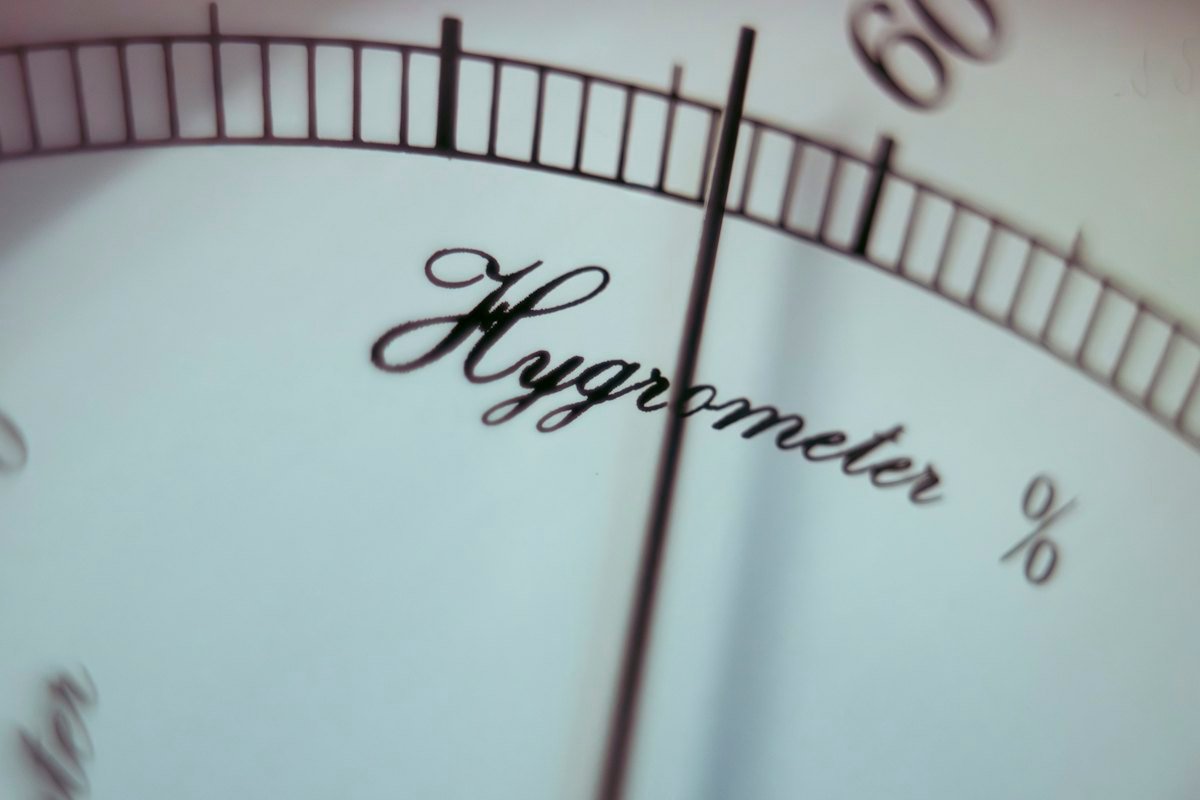
Clammy is a feeling. Relative humidity is a reading, and it decides everything that follows. Buy a basic digital hygrometer, leave it in the room that bothers you for a few days, and check it morning and evening.
“Maintain low indoor humidity, below 60 percent relative humidity (RH), ideally 30 percent to 50 percent, if possible.”
U.S. Environmental Protection Agency, Mold Course Chapter 9
That target comes from the EPA’s mold prevention guidance, and ENERGY STAR says much the same: readings above roughly 50% may promote mold growth. If your gauge sits in the low 50s, you may need nothing more than a running bathroom fan. If it sits at 60% or higher for days at a time, keep reading.
Match your house to the right machine
Most humidity complaints fall into one of five patterns. The prices below are installed costs unless noted, drawn from HomeGuide’s whole-house and crawl space cost pages and Angi’s figures for the two-stage air conditioner.
| What you are dealing with | Usual fix | Typical price |
|---|---|---|
| One damp room, mostly in summer | Medium portable (11 to 45 pints a day) | $130 to $300, no installation |
| Musty unfinished basement | Large standalone basement unit | $1,100 to $2,800 installed |
| Wet crawl space, clammy floors above | Crawl space dehumidifier (50 to 70 pints) | $1,000 to $3,000 installed |
| Whole house sticky with the AC running | Ducted whole-house unit (70 to 200+ pints) | $1,500 to $3,500 installed |
| Sticky house and an AC near the end of its life | Two-stage air conditioner | $5,000 to $7,000 |
Notice how much the ranges overlap. A big basement unit and a ducted system cost about the same, so the decision is rarely about the sticker. It is about whether the moisture problem lives in one space or in the air the whole house breathes.
“The basement smells like a wet cardboard box”
This is the most common call, and usually the cheapest to solve well. An open, unfinished basement behaves like one big room, so a single high-capacity unit with a hose to the floor drain or sump can hold it below 50% without touching the ductwork upstairs.

HomeGuide puts installed basement units at $1,100 to $2,800. Angi’s range for the unit alone is $800 to $2,000. Sizing matters more than brand: Bob Vila’s cost guide notes that a 60- or 75-pint unit may be enough for a small basement, while basements over 2,500 square feet may need 100 pints or more.
One caution before you buy. A dehumidifier treats damp air, not water coming through the walls. If you see efflorescence, puddles after rain or a high-water line on the stored boxes, the money belongs in foundation waterproofing first. Otherwise the machine will run all summer pulling water the foundation keeps letting in.
“The crawl space is wet and the floors above feel clammy”
Air from a crawl space rises into the living space, so a damp one makes the whole first floor feel worse. The fix here is a low-profile unit built for tight, cool spaces. HomeGuide prices crawl space dehumidifiers at $300 to $2,000 for the unit and $700 to $1,000 for labor, or $1,000 to $3,000 installed in total.
The catch is that a dehumidifier in a vented, dirt-floor crawl space is fighting the outdoors. That is why many contractors sell it as part of encapsulation: a vapor barrier, sealed vents and the dehumidifier together. HomeGuide puts that package at $3,000 to $8,000. If insulation is also on the list, our crawl space insulation cost guide shows how those jobs are usually bundled and which parts you can skip.
“Upstairs feels sticky even with the AC running”
This is the case a true whole-house unit was built for. In tight, well-insulated homes, an air conditioner can hit the thermostat setting before it has run long enough to wring moisture out of the air. A ducted dehumidifier ties into the return and supply ducts and dries the air the whole system circulates, even when the compressor is idle.
Installed ranges vary by source. HomeGuide sits at $1,500 to $3,500 with a $2,200 average, and Homewyse’s May 2026 estimate runs higher, at $2,774 to $3,285 for basic mid-range work before contractor markup and tax. Our read: budget $2,000 to $3,000 for a typical ducted job and treat anything below that as a simple installation with short duct runs.
For a real-world equipment price, Sylvane lists the AprilAire E100, a 100-pint ENERGY STAR model rated for up to 5,200 square feet when ducted, at $2,009 on sale against a $2,299.99 regular price. Bob Vila’s survey puts Aprilaire and Honeywell whole-house units at roughly $1,000 to $2,000 and Santa Fe at $1,200 to $2,500, though those figures date to 2023. HomeGuide’s capacity tiers show how quickly size adds up:
- 70 to 80 pints a day: $1,100 to $1,700 for the unit, $1,500 to $2,900 installed
- 90 to 100 pints a day: $1,300 to $2,000 for the unit, $1,700 to $3,200 installed
- 120 to 200 pints a day: $1,500 to $2,300 for the unit, $1,900 to $3,500 installed
If the air conditioner is old anyway, price the alternative. Angi puts a two-stage AC at $5,000 to $7,000. Its longer, slower low-stage runs remove more moisture than a single-stage unit cycling on and off, and you replace an aging system in the same visit. Our guide to new HVAC system cost walks through that bigger decision.
“It is one room, and only in August”
A home office over the garage, a laundry room, a guest room with a north wall: one damp space does not justify ductwork. HomeGuide lists medium portables at $130 to $300 and larger standalone portables at $250 to $450, with no installation at all. Pick one with a continuous-drain fitting so you are not emptying a bucket twice a day.
Before buying anything, rule out the free fixes. Run the bathroom fan for 20 minutes after showers, make sure the dryer vents outdoors and not into the basement, and keep lids on simmering pots. Those habits will not fix a wet crawl space, but they can take a borderline room from 58% to the low 50s.

“There is already mold on the drywall”
Then the dehumidifier is step two. Drying the air stops new growth, but it does not remove what is already there. Clean or remediate first, then control the humidity so it does not come back. Our mold remediation cost guide prices that work room by room, and the EPA’s 30% to 50% target is the number to hold afterward.
Line items that stretch an installer’s quote
The unit is usually the biggest number on the bill, but the extras decide whether you pay $1,800 or $3,500. Typical prices for each, according to HomeGuide, Angi and Bob Vila:
- Labor: $400 to $1,200 (HomeGuide), or a flat $500 to $700 at many shops (Angi)
- Short new duct run: $270 to $500 (HomeGuide); bigger duct work can reach $1,000 to $2,700 (Angi)
- Internal condensate pump: adds $150 to $500 when no floor drain is nearby; an external pump runs about $125
- Electrical work: $50 to $100 an hour if the unit needs a new circuit or outlet
- Permits: $50 to $200 where required (Bob Vila)
Regional labor moves the total too. Angi’s city figures for a unit plus labor run $2,500 to $3,000 in Dallas, $2,800 to $3,400 in Los Angeles and $3,200 to $3,800 in New York. Ask every bidder to quote the same capacity and list the drain method in writing. A $400 gap between two quotes is often just one installer including a pump and the other assuming you have a floor drain.
Power bills, refrigerants and next year’s prices
A dehumidifier is a small appliance with a long electric tail. HomeGuide estimates running costs of $10 to $30 a month, or $120 to $360 a year, and Bob Vila’s range is $180 to $300 a year. Over a ten-year life, power can cost as much as the machine. According to ENERGY STAR’s dehumidifier page, certified units use about 20% less energy to remove the same amount of moisture, and its current specification took effect October 1, 2025. To check your own rate, see our average electricity cost guide.
The bigger change for 2027 shoppers is under the hood. Manufacturers are moving to newer A2L refrigerants. Santa Fe’s long-running Ultra98, for example, is listed by SupplyHouse as discontinued on February 17, 2026, with the Ultra V100 A2L named as its replacement, and the AprilAire E100 above uses R-32. No major brand has published 2027 price lists. Expect some model numbers to change, and if you find older stock on clearance, ask the installer about parts and service support before buying.
The one-line rule
If one room is damp, buy a $250 portable. If one level is damp, put a standalone unit there. If the whole house reads above 55% with the air conditioner running, and the AC still has years left in it, a ducted whole-house dehumidifier at $2,000 to $3,000 installed is the fix that holds up. If the AC is near the end of its life, get a two-stage system quoted alongside it. And if you see actual water, call a waterproofing contractor before you call anyone about air.
Questions homeowners ask next
Can I install a whole-house dehumidifier myself?
Some handy owners do. HomeGuide puts a DIY whole-house installation at $800 to $2,300, mostly the unit. Ducted units involve cutting into ductwork and often a new circuit, so many owners hire an HVAC technician for that part.
How long does a whole home dehumidifier installation take?
HomeGuide says a two-person HVAC team usually takes 3 to 6 hours, at $75 to $150 an hour per technician.
How many pints a day does a whole-house dehumidifier remove?
Lower-capacity whole-house units start around 60 to 70 pints a day, and large models remove 150 pints or more. HomeGuide suggests 70 to 100+ pints for 1,500 to 2,500 square feet at very high humidity.
What does crawl space dehumidifier repair cost?
HomeGuide puts typical crawl space dehumidifier repairs at $70 to $400. Clean the filter and check the drain line regularly to avoid most service calls.
What warranty comes with a whole-house unit?
It varies by model. Sylvane lists a 5-year replacement and 1-year parts warranty on the AprilAire E100, and SupplyHouse lists a 6-year warranty on the Santa Fe Ultra98. Ask whether the installer’s labor is covered separately.
Price sources
- How much does a dehumidifier cost to install?, HomeGuide
- How much does a crawl space dehumidifier cost?, HomeGuide
- How Much Does a Whole-House Dehumidifier Cost? [2025 Data], Angi
- Cost to Install Whole House Dehumidifier, Homewyse (May 2026)
- How Much Does a Whole-House Dehumidifier Cost?, Bob Vila (2023)
- AprilAire E100 100 Pint Energy Star Whole House Dehumidifier, Sylvane
- Dehumidifiers, ENERGY STAR, U.S. EPA
- Mold Course Chapter 9, U.S. EPA (updated November 10, 2026)
Keep pricing the damp-house fixes
- Home improvement costs in 2027: the complete guide
- Foundation waterproofing cost and the mistakes that inflate it
- Crawl space insulation cost
- Mold remediation cost, room by room
- New HVAC system cost for a 2,000-square-foot home
- Cost to finish a basement
- HVAC replacement cost calculator
More related guides: Atmospheric water generator prices and 10-year costs
Pricing method: figures were researched in November 2026 for 2027 planning and may change. Installed ranges come from the cost-data and retailer pages listed above; the budget suggestion for ducted jobs is our estimate based on those ranges. Local labor, permits and equipment availability vary. See our disclaimer.