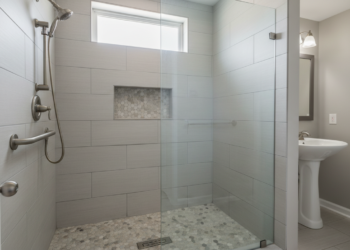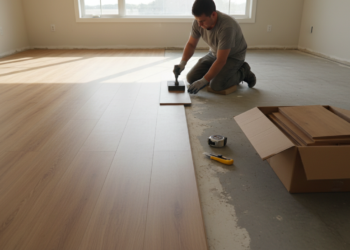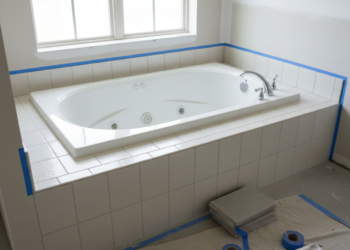

Why would one contractor price your basement at $25,000 and the next at $60,000 for what sounds like the same job? Usually because it is not the same job. HomeAdvisor puts the national average to finish a basement at $32,000, with most projects landing between $15,000 and $75,000, or about $7 to $23 per square foot. Zonda’s 2025 Cost vs. Value report priced a fuller version, a 20-by-30-foot rec room with a wet bar and a full bathroom, at $52,012.

The gap between those numbers lives in a handful of quote lines. So rather than another list of averages, this article takes one sample bid apart, line by line, and marks what is fair, what tends to be padded and what a suspiciously cheap bid leaves out.
Short answer for 2027 budgets: a basic open rec room in a dry basement often fits the $15,000 to $35,000 band. Add a bedroom with an egress window and you are near $40,000 to $45,000. Add a bathroom and the full package can pass $60,000 on a 1,000-square-foot space. Set aside another 10% to 20% for surprises, as This Old House advises.
A $60,840 basement quote, taken apart
The bid below is a hypothetical example, not a real contractor’s invoice. It describes a 1,000-square-foot basement in a typical poured-concrete foundation: one open family room, one bedroom, one full bathroom, a mechanical closet, and a sump pump that needs upgrading. Each line uses a figure inside the 2026 national ranges published by HomeAdvisor and This Old House, so you can hold your own bids against it.
| Quote line | Example amount | Published national range | Verdict |
|---|---|---|---|
| Permits and inspections | $1,500 | $1,200 to $2,000 (HomeAdvisor) | Fair. Required for finishing work in most towns |
| Waterproofing and sump allowance | $4,400 | Waterproofing $1,900 to $6,500; sump pump $600 to $1,600 (This Old House) | Check it. Only fair if someone diagnosed a moisture problem |
| Framing | $1,400 | $700 to $1,400 (This Old House) | Fair, at the top of the range |
| Insulation | $3,000 | $1,500 to $4,000 (This Old House) | Fair. Ask what product and R-value |
| Electrical | $6,500 | $1,300 to $12,000 (This Old House); $3,000 to $8,000 (Angi via NerdWallet) | Fair if itemized by circuit and fixture |
| Bathroom plumbing and fixtures | $9,000 | $2,500 to $15,000 (This Old House) | Depends on whether drains run below the slab |
| HVAC extension | $4,000 | $2,000 to $11,000 (This Old House) | Fair. Ask about return air |
| Egress window with well | $5,000 | $2,500 to $5,300 for basement egress windows (This Old House) | Usually required. Price excavation separately |
| Drywall | $3,000 | $800 to $3,000 (This Old House) | Fair, top of range |
| Ceiling | $2,500 | $1,600 to $3,600 (This Old House) | Drywall or drop ceiling? It matters later |
| Flooring | $4,500 | $2,000 to $12,000 (This Old House) | An allowance. Find out what it buys |
| Painting | $2,000 | $1,250 to $3,500 (This Old House) | Fair. Easy DIY savings |
| Subtotal | $46,800 | ||
| Contractor overhead and profit (20%) | $9,360 | About 20% of the budget (HomeAdvisor) | Normal for a general contractor |
| Contingency (10% of subtotal) | $4,680 | 10% to 20% recommended (This Old House) | Fair, if unused money comes back to you |
| Total | $60,840 |
Notice what drives the total. Plumbing, electrical, HVAC and the egress window together come to $24,500, more than half of the subtotal. The materials people picture when they imagine a basement (drywall, paint, carpet or vinyl) add up to less than $12,000.
Four lines you should not try to negotiate down
Permits. A contractor who offers to skip the permit is offering to save you $1,200 to $2,000 now and cost you much more at resale, when an inspector or buyer’s agent asks for the paperwork. This Old House draws the line clearly: cosmetic renovation of an already finished basement often needs no permit; turning raw space into living space does.
Egress. Model building codes require an emergency escape opening in a finished basement and in every basement bedroom. This Old House lists the minimums: a clear opening of at least 5.7 square feet (5 square feet at grade level), 24 inches tall, 20 inches wide, with the sill no higher than 44 inches off the floor. Its 2026 survey found the window itself averages only $516 installed; the money goes into cutting the concrete and building the well, which it estimates at $3,000 to $7,000. Your local building department has the final word on which rooms need one.
Electrical rough-in. Basements need more circuits than people expect: lighting, outlets on every wall, often a dedicated circuit for a bathroom fan or a dehumidifier. HomeAdvisor prices individual outlets at $100 to $450 and light fixtures at $150 to $900 each. A bid that holds electrical to a few hundred dollars has either skipped the permit or skipped the work.
Overhead and profit. Twenty percent pays for scheduling, insurance, warranty callbacks and the electrician who actually shows up. You can remove it by managing subcontractors yourself, but that turns a homeowner into an unpaid project manager for the length of the job.
Where a basement quote quietly gets fat
Padding rarely shows up as an obviously inflated line. It hides in the vague ones. These are the places to push:
- Waterproofing “allowances” with no diagnosis. HomeAdvisor’s average waterproofing job is about $4,400. That money is well spent on a basement with a known water problem and wasted on one that has stayed dry for twenty years. Ask what moisture test or inspection the number is based on.
- Flooring and fixture allowances. A $4,500 flooring allowance sounds generous until you learn it assumes builder-grade carpet. Ask for the price per square foot and the product the allowance was built on, and compare it with a showroom quote.
- A doubled cushion. Some bids pad each line by 10% and then add a separate contingency. One cushion is prudence; two is profit. The contract should say that unspent contingency is credited back.
- Lump-sum trades. “Electrical: $9,000” with no count of circuits, outlets or fixtures cannot be compared with anything. An itemized bid can.
- Premium framing and insulation with no reason. Upgraded wall systems can be worth it, but ask the contractor to price a conventional insulated stud wall alongside so you can see the premium.
What the cheapest bid usually leaves out
A $20,000 bid on the same basement is not necessarily a bargain. Line it up against the sample quote and look for gaps.
Items that often disappear from low bids
- A permit, which can also mean no inspections of the wiring and plumbing.
- The egress window, or a promise to “just call the room an office” so no escape opening is needed.
- Heating and cooling. A basement with no supply and return air is chilly, damp and harder to sell as living space.
- Moisture control at the slab and walls, which is far cheaper before drywall goes up than after.
- Doors, trim and closet build-outs, which some bids quietly treat as extras.
- Haul-away of construction debris.
The EPA adds one item that costs little and belongs before any bid: a radon test. Its home buyer’s guide says that if you are converting an unfinished basement into living space, “it is especially important to test the area before you begin,” and to test again when the work is done. The agency recommends fixing a home at 4 pCi/L or higher, and a mitigation fan and pipe are much easier to route before the ceiling is closed.
Drop three lines and the bill falls by almost $24,000
Run the same example quote again with the expensive rooms removed. Overhead and contingency are recalculated on each smaller subtotal.
| Version of the project | Lines removed | Example total |
|---|---|---|
| Full package: family room, bedroom with egress, full bath, waterproofing | None | $60,840 |
| Family room and bedroom, dry basement, no bath | Plumbing ($9,000), waterproofing ($4,400) | $43,420 |
| Open family room only, existing compliant window or walkout | Plumbing, waterproofing, egress ($5,000) | $36,920 |
Even the stripped version sits above HomeAdvisor’s $32,000 average because the example keeps a full HVAC extension, 20% overhead and a contingency. Owners who paint, install click-lock flooring and hire trades directly can land well below it. This Old House considers painting, flooring and simple finish work reasonable DIY, and says electrical, plumbing and HVAC belong with licensed pros.
Size matters less than people think. HomeAdvisor’s ranges scale almost evenly, from $3,500 to $11,500 for 500 square feet to $14,000 to $46,000 for 2,000 square feet, but a bathroom or an egress well costs about the same in a small basement as in a large one. That is why small basements with baths look so expensive per square foot.
Will the money come back when you sell?
Partly. In Zonda’s 2025 Cost vs. Value report, the $52,012 basement remodel added an estimated $36,905 in resale value, a 71% recovery. Redfin, citing a 2022 National Association of Realtors report, puts the average recoup closer to 86%. Neither number means a finished basement pays for itself.
Appraisals explain why. Appraisers count above-grade space as gross living area and measure finished basement space separately. Redfin notes that finished basement square footage is typically valued at roughly 50% to 60% of the per-square-foot value of main-floor space. A finished basement is a good place to spend money you will enjoy for years, and a poor place to spend money you hope to recover in eighteen months.
For 2027, no national price index for basement finishing has been published, and remodelers set their own rates. Budget from current bids, keep the contingency, and ask each contractor how long its price holds.
Questions owners ask once the bids are in
How long does it take to finish a basement?
HomeAdvisor estimates four to eight weeks for a typical project once work starts. Permit approval, inspections between stages and custom items such as an egress window or cabinetry can stretch that, so ask each contractor for a schedule that shows inspection points.
Is it cheaper per square foot to finish a bigger basement?
Somewhat. Framing, drywall, paint and flooring scale with size, but fixed items such as a bathroom, an egress window and the permit cost roughly the same in any basement. Spreading those fixed costs over more square footage lowers the per-foot price, which is why a 600-square-foot basement with a bath can look expensive next to a 1,500-square-foot one without.
Can I finish part of the basement now and the rest later?
Yes, and many owners do. Plan the full layout first, then rough in plumbing drains, electrical circuits and ductwork for the later phase while walls are open. Roughing in now costs far less than opening finished walls and slab later. Check whether your permit can cover a phased project.
How do people usually pay for a basement finish?
Common options are savings, a home equity loan or HELOC, a cash-out refinance or a personal loan. Each has different rates, fees and risks, and a home equity product uses your house as collateral. Compare offers and talk with a lender or financial adviser about which fits your situation.
Should I hire a basement-finishing company or a general contractor?
Both can do good work. Specialized basement companies often sell a packaged system with set pricing, while a general contractor may build with conventional framing and offer more design flexibility. Get at least three itemized bids in the same format and compare line by line rather than by total.
Three calls to make before a contractor walks down your stairs
- Your local building department. Ask what permits a basement finish needs, the fee, which rooms require an egress opening and the minimum ceiling height. Those answers set the floor for every bid.
- A radon test kit. Test the basement before work starts, as the EPA recommends, so any mitigation system can be built into the plan instead of cut in afterward.
- Someone who looks at water, not walls. A foundation or waterproofing pro can tell you whether that $4,400 allowance is necessary. If the basement is dry, cross the line off and save the money for the bathroom.
Other basement and remodeling jobs we have priced
- Home improvement costs in 2027: the complete price guide
- Drywall cost, DIY vs pro, stage by stage
- What vinyl plank flooring installation costs
- Bathroom remodel cost, same layout or moved plumbing
- Foundation waterproofing cost and the mistakes that inflate it
- Sump pump installation cost
- Mold remediation cost, room by room
More related guides: Home addition costs, from first sketch to final bill · Laminate flooring installation cost by room and grade
Pricing method: prices were researched in November 2026 for 2027 planning and may change. Figures come from HomeAdvisor and NerdWallet (Angi data), This Old House’s 2026 basement and egress window cost guides, Zonda’s 2025 Cost vs. Value report via the Journal of Light Construction, Redfin and the EPA. The sample quote is a hypothetical example built from those ranges, not a real bid. Local prices vary; confirm code requirements with your building department. See our disclaimer.