
The technician has spent forty minutes in your side yard, and now he is at the back door with a tablet: the compressor in your 12-year-old air conditioner is finished, and the fix is $2,400. Most HVAC repairs never get near that number. Fixr puts the 2026 national average at $350, with typical jobs between $150 and $650, but compressor and coil work runs $1,000 to $3,000 or more, and at that price the question stops being “how much” and becomes “should I fix this at all?”

This guide answers that second question. It prices the common repairs, tests the popular $5,000 rule against today’s replacement prices, and walks four example quotes to a verdict. If you are already leaning toward a new system, our HVAC replacement cost calculator gives you the other side of the comparison.
The charges that land before any part is replaced
Every repair starts with a trip fee. Fixr lists diagnostic or service-call fees of $75 to $200 for 30 to 60 minutes of troubleshooting, and This Old House puts the average service call around $129. Many companies credit that fee toward the repair if you approve the work the same day, so ask before the truck arrives if yours does.
Labor beyond the diagnosis generally runs $75 to $150 an hour, according to both Fixr and Angi. Timing matters more than most homeowners expect: Fixr says nights, weekends and holidays cost 50% to 100% more than standard rates, or a flat $100 to $300 on top. A system that quits on a Saturday in July is the most expensive repair you will ever buy, which is why a room fan and a Monday appointment are sometimes the smartest $0 you can spend.
Thumbtack’s own job data, updated in June 2026, shows most HVAC repairs billed between $191 and $842, with a low of $64 and a high of $2,578. That spread is the whole story: the cheap end is a part that costs less than a pizza, and the expensive end is a part that keeps the whole system alive.

Ten common HVAC repairs, priced and sorted by how much they should worry you
The installed prices below come from This Old House, Angi and Fixr cost data published in 2026. The last column is our read on whether the repair alone should make you think about replacement.
| Repair | Typical installed price | Does it point to replacement? |
|---|---|---|
| Capacitor | $80 to $400 (average $175) | No. Fix it at any age. |
| Contactor or relay | $100 to $450 | No. |
| Clogged condensate drain line | $80 to $250 | No. |
| Thermostat | $100 to $500 | No. |
| Control circuit board | $200 to $800 | Only on a system past 15 years. |
| Outdoor fan motor | $300 to $800 | Rarely. |
| Indoor blower motor | $300 to $900 | Rarely. |
| Refrigerant leak repair | $200 to $1,500 or more, plus refrigerant | Often, if the leak is in a coil. |
| Evaporator or condenser coil | $700 to $2,700 or more | Yes, past about 10 years. |
| Compressor | $1,000 to $3,000 or more | Yes, unless the system is young or under warranty. |
Notice the gap between the part and the bill on the cheap end. This Old House says a capacitor costs $8 to $45 as a part, yet the installed average is $175. That markup pays for the truck, the license and the diagnosis, and a fair price is somewhere in that $80-to-$400 band. A $600 capacitor is not.
The $5,000 rule, and why it now flags too many systems
The rule most contractors quote is simple. Multiply the age of your system by the repair estimate. As CBS News explained in June 2026, a result above $5,000 suggests replacement deserves a serious look, while a result below it favors the repair. Its own examples: a 12-year-old system with a $500 repair scores $6,000, and a 7-year-old system with a $400 repair scores $2,800.
The trouble is the other side of the ledger. Trane now puts a full replacement at $5,800 to $17,000, and This Old House quotes $2,500 to $15,000 for central air alone. By the rule’s math, a $500 repair on a 12-year-old system sends you shopping for a five-figure replacement. That is a weak trade for a system that may have years left; CBS says many central air systems last 15 to 20 years.
A better test: three questions instead of one formula
- Does the repair exceed half the price of a new system? Fixr and This Old House both use 50% as a replacement threshold.
- Is it a major component on an older system? Fixr flags compressor or heat exchanger repairs over $1,000 as a point where replacement often wins.
- Does the system run on R-22? If so, nearly any refrigerant repair is money spent on equipment that cannot be cheaply serviced again.
Use the $5,000 figure as a flag that tells you to get a replacement quote, not as a verdict. Two yes answers to the questions above are a stronger signal than any single multiplication.
Refrigerant: the line item that ages a system on paper
What your system is charged with can matter as much as how old it is. Angi lists R-410A, the refrigerant in most systems installed from roughly 2010 to 2025, at $40 to $75 a pound to homeowners, and This Old House puts it at $50 to $80 a pound installed. A typical system holds about 3 pounds per ton, so a full recharge on a 3-ton system lands around $480 to $800 by Angi’s estimates. Fixr prices the newer R-454B at $60 to $100 a pound and the old R-22 at more than $150 a pound, with R-22 recharges running $500 to $2,000 or more.
R-410A systems are not orphans. Under the federal HFC phasedown, new self-contained R-410A equipment could not be made or imported after January 1, 2025, and older stock had until January 1, 2026 to be installed. Trane says there will be “an ample supply of R-410A for years to come,” and advises repairing units under 10 years old when the work is minor. The thing to avoid is paying to top off a leak more than once. Refrigerant does not get used up; if a system needs more, it is leaking, and This Old House prices leak repair at $400 to $1,500. Ask the technician where the leak is before you pay for a recharge.
Four example quotes, run through the test
These are hypothetical homes built from the price ranges above, each compared against an assumed $9,000 replacement, a figure inside Trane’s range.
| Example home | System age | Repair quote | Age × quote | Share of a $9,000 replacement | Our call |
|---|---|---|---|---|---|
| A: dead capacitor | 7 years | $175 | $1,225 | 2% | Repair |
| B: leaking evaporator coil | 11 years | $1,800 | $19,800 | 20% | Check warranty, then decide |
| C: compressor, warranty expired | 13 years | $2,500 | $32,500 | 28% | Replace |
| D: R-22 leak and recharge | 16 years | $1,500 | $24,000 | 17% | Replace |
Home A is easy. Home D is easy in the other direction: R-22 is expensive, the system is past the 12-to-15-year life This Old House cites, and a leak will likely come back. Home C fails two of the three questions, a major part on an aging system, and the remaining components are just as old as the compressor that died.
Home B is the hard one, and it is where most real decisions sit. The formula screams replace, yet the repair is a fifth of the price of a new system. Trane notes that most equipment warranties last 5 to 10 years, so pull the paperwork: if the coil is still covered, the part may be free and you pay labor and refrigerant only. If it is not, and the system has needed other repairs in the last two years, get two replacement quotes before you approve the coil.
Five free checks that cancel a surprising number of service calls
Before paying a $75 to $200 trip fee, spend ten minutes on the problems a technician will check first anyway:
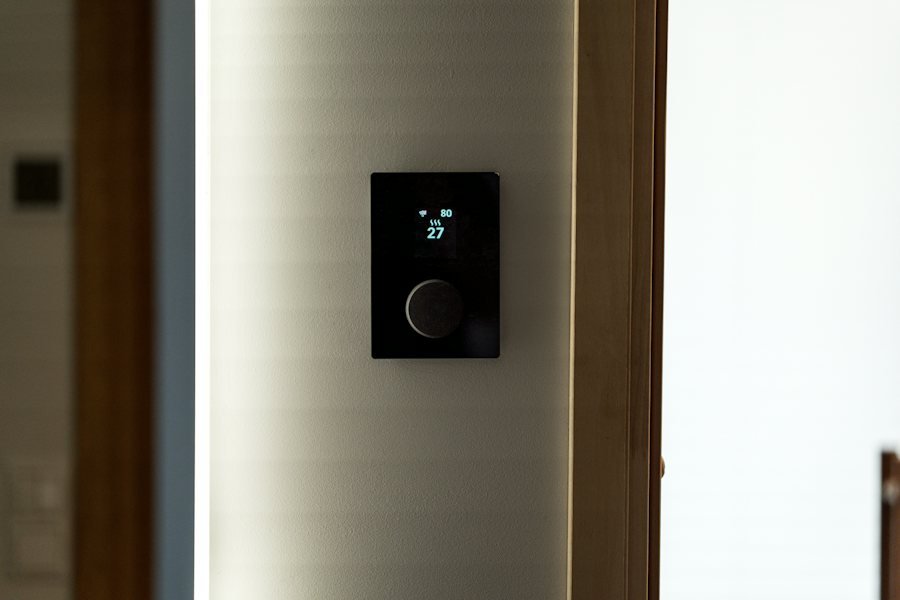
- Confirm the thermostat is set to the right mode and replace its batteries if it has them.
- Look at the breaker panel for a tripped HVAC or furnace breaker, and check the service switch beside the indoor unit.
- Pull the air filter. A clogged one can freeze an AC coil or trip a furnace’s high-limit switch.
- Check the condensate pan under the indoor unit. Many systems shut down on purpose when a float switch senses a full pan.
- Clear leaves, grass and anything stored against the outdoor unit.
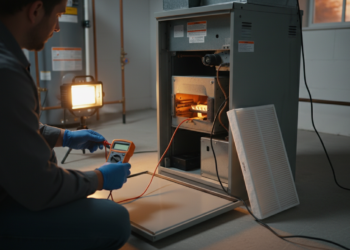
Leave anything electrical inside the cabinets, and anything involving refrigerant, to a licensed technician. Handling refrigerant requires EPA certification, and This Old House notes that fines can reach $10,000. For heating-side symptoms such as a burner that lights and then shuts off, our furnace repair cost guide matches each problem to its likely part.
What the replacement side of the ledger looks like for 2027
New equipment is getting pricier, which tilts close calls toward repair. Carrier told investors in late 2026 that it was raising residential HVAC equipment prices, citing tariffs and higher material, freight and fuel costs:
An 8% residential HVAC equipment price increase, effective toward the end of the fourth quarter of 2026.
Carrier’s announced increase, as reported by ACHR News, November 2, 2026
Carrier’s CEO called it too early to give guidance for 2027, so no 2027 price figure has been announced. Federal help has also shrunk: the 25C Energy Efficient Home Improvement Credit, which covered up to $2,000 of a qualifying heat pump, ended for equipment installed after December 31, 2025. Check your utility and state for rebates instead. For full replacement pricing by home and system type, see our walk-through of what a new HVAC system costs, along with the separate guides to central air and heat pumps.
Warranty status changes the math on the expensive repairs too. Angi prices a compressor replacement at $600 to $1,200 when the part is under warranty and $1,300 to $2,500 when it is not; the warranty covers the part, not the hours of labor and refrigerant around it. And Angi notes that shoulder seasons, around March and September, are cheaper times to schedule work that can wait.
Questions homeowners ask between the diagnosis and the decision
How much is an HVAC service call?
Most companies charge $75 to $200 for a diagnostic visit, according to Fixr, and This Old House puts the average around $129. Many credit the fee toward the repair if you approve the work during the same visit.
How much more does emergency HVAC repair cost?
Fixr reports that nights, weekends and holidays run 50% to 100% above standard rates, or add a flat $100 to $300. If the house is safe, waiting for a weekday appointment usually saves money.
How much does heat pump repair cost?
Fixr lists an average heat pump repair at $410, with most jobs between $161 and $661. Compressor and coil failures on a heat pump cost about the same as on a central air conditioner.
Can I add refrigerant to my AC myself?
Not legally in most cases. Handling refrigerant requires EPA certification, and This Old House notes fines of up to $10,000. A system that needs refrigerant also has a leak, which should be found and fixed first.
When is the cheapest time to schedule HVAC repair?
Angi points to the shoulder seasons, around March and September, when contractors are less busy. Non-urgent repairs and tune-ups booked then avoid peak summer and winter demand.
The verdict, in two columns
Pay for the repair if
- The part is electrical or a drain, under about $900
- The system is under 10 years old
- A major part is still under the manufacturer’s warranty
- It runs on R-410A and this is its first leak, found and sealed
Get replacement quotes if
- The repair tops half the price of a new system
- A compressor or coil fails after year 12
- The system still uses R-22
- This is the second costly repair in two years
Keep reading on heating and cooling bills
- Home improvement costs in 2027: the complete guide
- HVAC replacement cost calculator
- 8 furnace problems and what each repair costs
- New HVAC system cost for a 2,000 sq ft home
- Central air conditioner cost, quote by quote
- Heat pump cost vs a new furnace and AC
- HVAC inspection cost
Pricing method: prices were researched in November 2026 for 2027 planning and may change. Repair ranges come from 2026 cost data published by This Old House, Angi, Fixr and Thumbtack; equipment and warranty notes come from Trane and ACHR News. Examples are hypothetical. Get written quotes from licensed local contractors. See our disclaimer.