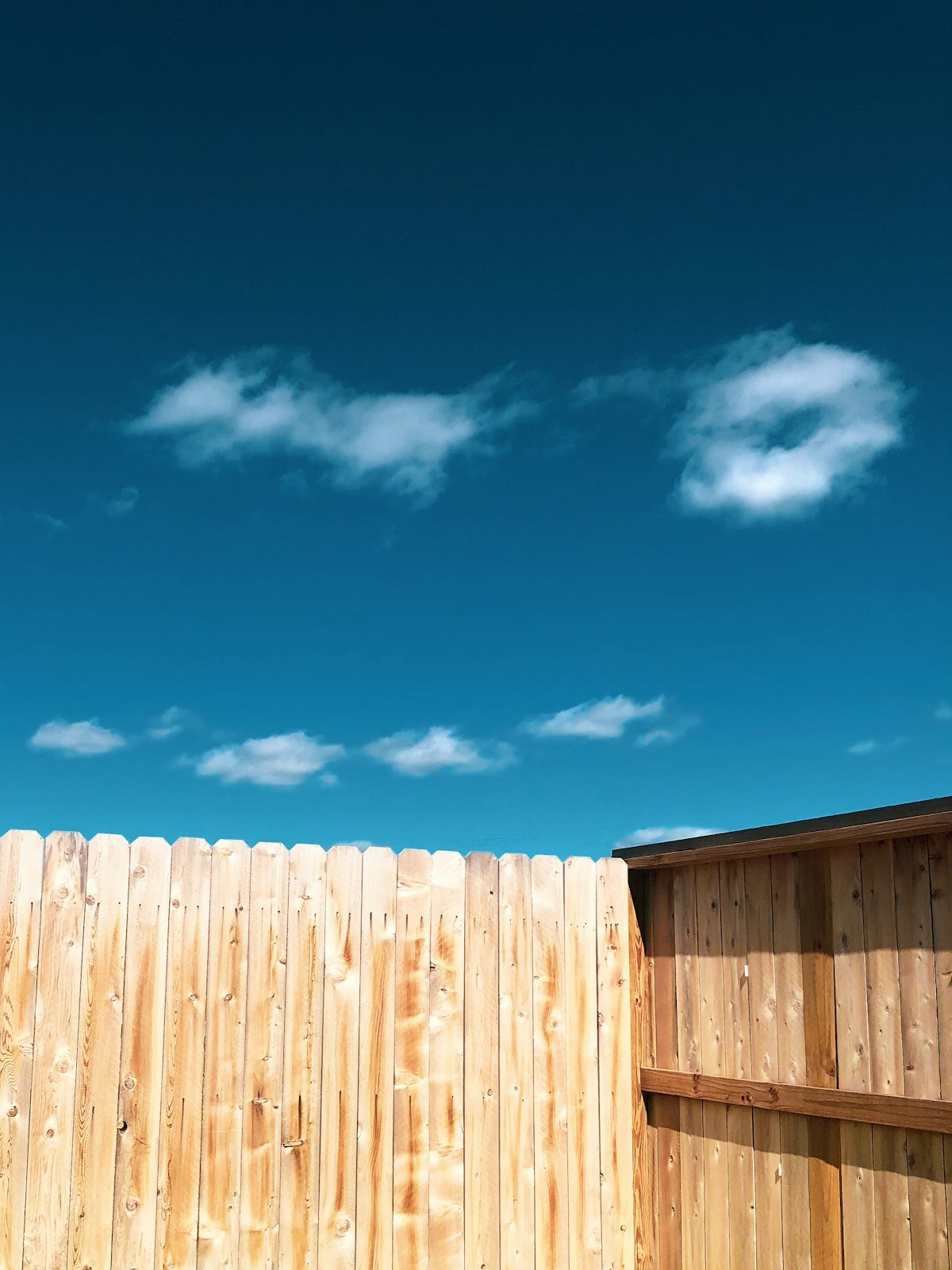
Since October 2025, softwood lumber entering the United States has carried a 10% Section 232 tariff, stacked on top of the roughly 35% in duties Canadian mills were already paying, according to Fastmarkets’ 2026 wood products outlook. That matters because the cheapest privacy fences are built from pine and cedar boards.

For now, the going rate holds: HomeGuide puts a 6-foot privacy fence at $25 to $60 per linear foot installed, or about $3,750 to $9,000 for a typical 150-foot backyard. Thumbtack’s June 2026 data shows most homeowners paying $1,418 to $5,459, with big jobs reaching $11,790.
The wide spread is not random. Privacy fencing comes in rungs, and each one buys something different. The surprise for most buyers is that the privacy itself stops improving early. Past a solid six-foot wall of boards, extra money buys lifespan, looks and freedom from maintenance, not a better screen.
Every rung priced for a 150-foot backyard
The per-foot ranges below are installed prices from HomeGuide’s privacy fence breakdown. The 150-foot totals are our math, so treat them as a planning range rather than a quote.
| Rung | Per foot, installed | 150 ft (our math) | What the extra money buys |
|---|---|---|---|
| Chain link with privacy slats | $14 to $48 | $2,100 to $7,200 | Partial screening on a fence you may already own |
| Pressure-treated pine or cedar, 6 ft | $25 to $50 | $3,750 to $7,500 | Full privacy, plus a staining schedule |
| Vinyl, 6 ft | $40 to $60 | $6,000 to $9,000 | Same privacy, almost no upkeep |
| Composite, 6 ft | $55 to $85 | $8,250 to $12,750 | Wood look without rot or splinters |
| Wood or vinyl, 8 ft | $50 to $85 | $7,500 to $12,750 | Two more feet of screen, often a permit |
| Aluminum privacy panels | $75 to $130 | $11,250 to $19,500 | Metal durability and a modern look |
Angi’s figures run lower. Angi’s privacy fence cost guide puts a 150-foot fence at about $2,700 in wood, $3,700 in vinyl and $4,200 in composite, with a national average of $4,300. The gap mostly comes down to region and post spacing, so get three local quotes and expect them to land somewhere between the two sources.
Rung one: chain link with slats, the stopgap
If a chain link fence already runs along your lot line, weaving vinyl slats through it is the cheapest route to a screen. Expect gaps, a utilitarian look and slats that fade and crack in strong sun. It suits a dog run or a side yard, but it rarely satisfies someone who wants a backyard that feels like a room. Count it as a holding pattern, not a destination.
Rung two: pressure-treated pine, where most yards land
The dog-ear six-foot wood fence is the default for a reason. Trex’s fence dealer knowledge base says a simple 6-foot wood fence can start around $25 a foot, with high-quality pre-stained wood at $40 and up. HomeGuide prices labor for wood at $15 to $20 a foot, which is why a crew job can cost twice the lumber.
The upgrades within this rung are worth knowing by name. Board-on-board overlaps the pickets so no gaps open as the wood shrinks in its first summer; Angi notes it costs more than a standard side-by-side style. Shadowbox alternates boards on each side of the rails, which looks good from both yards but lets light and glimpses through at an angle. Cedar costs more than pine and resists rot better without chemical treatment.
This is also where tariffs bite first. Fastmarkets expects the higher levies and tighter supply to push softwood lumber prices up through 2026. No fence-specific price change for 2027 has been announced, so price your boards when you get the quote and ask how long it holds.
Rung three: vinyl, paying now to skip the brush
A 6-foot vinyl privacy fence screens no better than pine. What it buys is time. There is no stain to apply, no boards to replace after a wet spring and nothing to paint before you sell the house. HomeGuide prices vinyl labor at $10 to $15 a foot, a little less than wood, because the panels slide into routed posts.
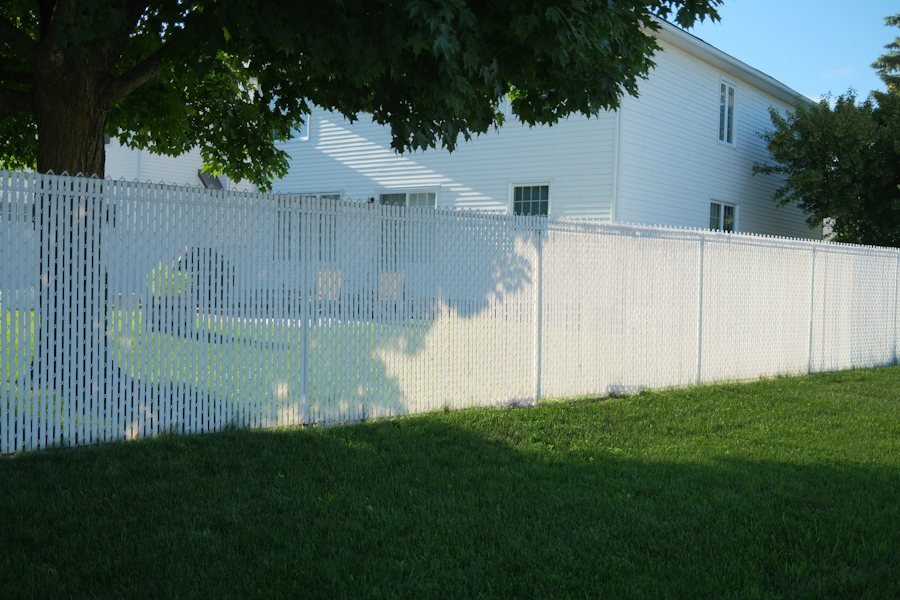
The tradeoff: cheap vinyl looks cheap. Thin panels flex in wind, and Trex’s dealer guide says the bargain end of vinyl prices out close to cheap wood while high-end vinyl runs more than $50 a foot for materials. If you are buying vinyl to avoid maintenance, buy the thicker panels with metal-reinforced rails, or you will pay for repairs anyway.
Rung four: composite and the $55-a-foot material bill
Composite boards blend wood fiber and plastic, so they look like stained wood and do not rot. Trex says its 6-foot composite privacy fence costs about $55 a foot for materials alone, before installation of $10 to $25 a foot. HomeGuide’s installed range is $55 to $85. Angi’s composite fencing guide quotes a lower $22 to $34 a foot for 5- to 6-foot composite with labor, likely reflecting budget brands, so read any composite quote closely to see whose boards you are getting.
This is where the curve flattens. Composite and aluminum privacy panels at $75 to $130 a foot last longer and look sharper, but a neighbor on the other side cannot see you any less than through pine. Spend here only if you plan to stay at least a decade and hate maintenance.
Going from six feet to eight
Height is the one upgrade that actually adds privacy, mostly on sloped lots or next to a two-story house. It is also expensive. Angi’s estimates for a 150-foot run:
About $4,700 for a 6-foot privacy fence, about $6,300 for 8 feet: roughly 34% more for two extra feet.
Angi privacy fence cost data; percentage is our math
Paperwork changes too. Many building codes based on the International Residential Code exempt fences up to 7 feet from a building permit. Mohave County, Arizona, for example, exempts fences and block walls not over 7 feet high, measured from the lowest adjacent grade. An 8-foot fence can push you into a permit, engineered posts and inspection, and zoning or HOA height limits apply no matter what the building code says.
Four lines a low bid tends to leave off
Quotes compare cleanly only if they cover the same scope. These are the lines that most often appear later.
Tearing out the old fence
HomeGuide lists removal and disposal at $10 to $20 a foot, while Angi puts it at $3 to $5 a foot. That is up to $3,000 extra on a 150-foot run at the high end, so ask whether the quote includes haul-away.
Permits and the property line
HomeGuide puts fence permits at $40 to $150 and a land survey at $200 to $1,200. Skip the survey on an unmarked line and you risk building on your neighbor’s land and paying to move it.
Gates
Angi puts an average manual wood gate at about $400. A wide drive-through gate or one with a self-closing latch for a pool costs more.
Stain and sealer for wood
HomeGuide prices staining or painting at $2 to $14 a foot, and Angi puts a full job at $750 to $4,250. Wood needs it again every few years, which is the running cost vinyl and composite buyers are paying up front to avoid.
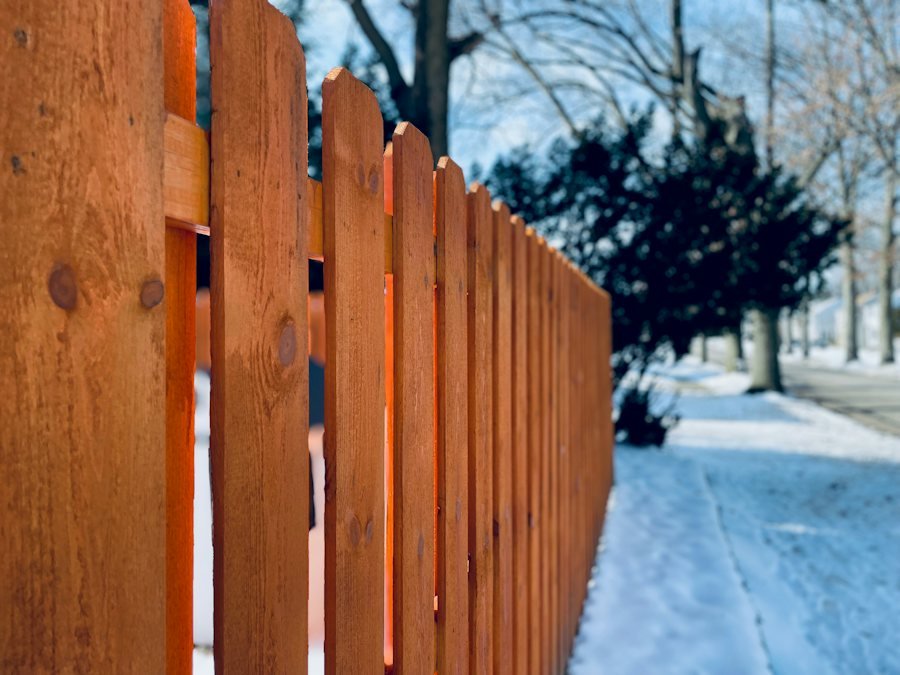
Run the example over ten years. A 150-foot pine fence stained three times at HomeGuide’s per-foot range adds roughly $900 to $6,300 to its install price (our math). That can close much of the gap to vinyl, which is the honest case for climbing a rung.
Splitting the bill with the neighbor
A fence on the shared line is a boundary fence, and Nolo’s explainer on shared fences notes that both owners are normally responsible for keeping it in good repair. That duty covers repair, not upgrades. If you want to replace a sound chain link fence with 6-foot cedar for your own privacy, your neighbor generally does not have to chip in.
Rules vary by state, and some states have their own fence statutes, so check yours or ask a local real estate attorney before you send anyone a bill. In practice, the cheapest path is a conversation before the crew arrives: many neighbors will split a fence they also benefit from, especially if they get the finished side facing their yard.
Where to stop on the ladder
- Renting, or selling within five years: pressure-treated pine, standard dog-ear. A premium fence mostly benefits the next owner.
- Staying 10 years or more and dislike upkeep: thick, reinforced vinyl. Same privacy, no stain bills.
- Want the wood look with no rot: composite, but only after comparing whose boards each quote uses.
- Overlooked by a two-story house or on a slope: spend on height before material, and check the permit line first.
- Need a screen this season on a tight budget: slats in the existing chain link, then save for a real fence.
Smaller privacy fence questions
How much does a 100-foot privacy fence cost?
HomeGuide puts a 100-foot, 6-foot wood or vinyl privacy fence at $2,500 to $6,000 installed. Angi’s per-foot range of $10 to $50 gives $1,000 to $5,000 for the same length.
What is the cheapest privacy fence?
Chain link with privacy slats starts around $14 a foot installed, and bamboo runs about $20 to $30 a foot, according to HomeGuide. Both screen less fully and wear out faster than a solid wood fence.
How much does a gate add to a privacy fence?
Angi puts the average manual wood gate at about $400. Wider double gates for driveways and pool-code latches cost more, so price each gate separately on the quote.
Do I need a land survey before installing a privacy fence?
Not always, but it is cheap insurance when the property line is unmarked. HomeGuide puts a land survey at $200 to $1,200, far less than moving a fence that ends up on a neighbor’s lot.
Price sources
- How much does a privacy fence cost?, HomeGuide
- How Much Does a Privacy Fence Cost to Install? [2025 Data], Angi
- Composite fencing cost guide, Angi
- How much does a 6 foot privacy fence cost?, Trex Fencing FDS Knowledge Base (2021)
- How much does a privacy fence cost?, Thumbtack (updated June 9, 2026)
- Tariffs and policy uncertainty: the wild card in the 2026 wood products market, Fastmarkets (July 2026)
- Work Exempt from a Building Permit, Mohave County, Arizona
- Shared fence replacement and who pays, Nolo Legal Encyclopedia
Keep pricing the yard
- Home improvement costs in 2027: the complete price guide
- Fence cost per foot and per year, by material
- Vinyl fence prices, from big-box panels to pro grade
- Chain link fence cost and how to read the spec sheet
- Land survey cost and which survey a fence job needs
- Wood vs composite: the cost to build a deck
Pricing method: prices were researched in November 2026 for 2027 planning and may change. Per-foot ranges come from the sources cited; 150-foot totals and ten-year staining figures are our estimates based on those ranges. See our disclaimer.