For homeowners who pay their own way, the federal tax break that used to knock 30% off a geothermal system ended with 2025. The National Ground Water Association’s summary of the budget law confirms the Residential Clean Energy Credit was eliminated after December 31, 2025. That leaves the full price on your side of the table: Fixr’s 2026 cost data puts a typical installed geothermal heat pump at $12,000 to $32,000, with an average of $17,300.

So the question for 2027 is not whether geothermal is efficient. It is. The question is whether a system bought at full price earns its premium back over the 20 years you will probably own it, compared with the air-source heat pump a contractor will happily quote you instead. Below we price both, line by line, and show where the answer flips. For a quick estimate on conventional equipment, our HVAC replacement cost calculator gives you the other half of the comparison.
The loop, not the heat pump, drives the quote
The box in your basement is the cheap part. Labor makes up 50% to 70% of the total, by Fixr’s count, and most of that labor goes into the ground loop: the buried pipe that swaps heat with the earth. How that loop gets into your yard sets the bulk of the bill.
| Loop type | Fixr range (2026) | Angi range (2026) | Usually chosen when |
|---|---|---|---|
| Open loop (well water) | $10,000 to $35,000 | $10,000 to $28,000 | A good well and local rules allow discharge |
| Pond or lake | $10,000 to $45,000 | $10,000 to $32,000 | A deep enough body of water sits on the property |
| Horizontal | $15,000 to $50,000 | $15,000 to $34,000 | There is open land to trench, often in new construction |
| Vertical | $20,000 to $70,000 | $20,000 to $38,000 | The lot is small or rocky and wells must go deep |
Source: loop ranges from Fixr’s geothermal heat pump cost page (updated January 2026) and Angi’s geothermal heat pump cost guide, which lists a $15,206 national average.
The Department of Energy’s Energy Saver page calls horizontal loops generally the most cost-effective choice for homes, while vertical loops go 100 to 400 feet down when land is tight. That is why suburban retrofits, with small lots and finished landscaping, tend to land at the top of the ranges. Angi adds $5,000 to $15,000 for yard work alone, including excavation and regrading.
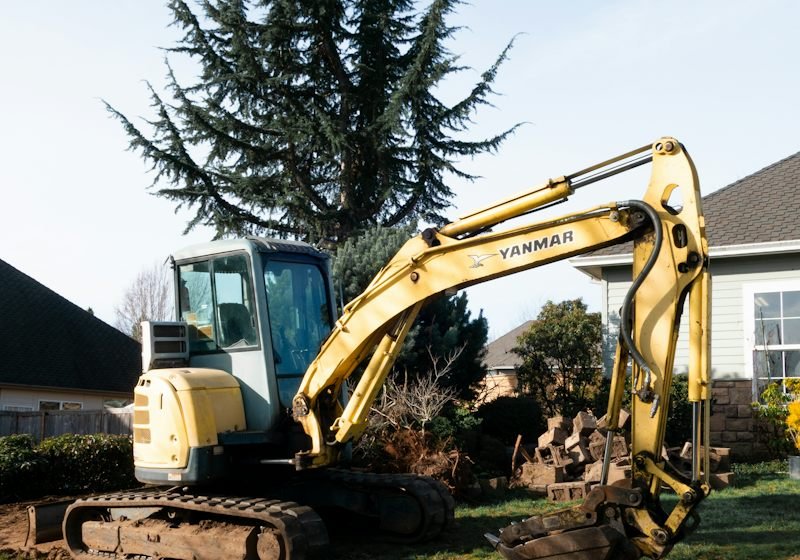
Two add-ons catch retrofit buyers off guard. Fixr prices new or modified ductwork at $1,400 to $6,000, which matters if you heat with a boiler or baseboard today. Houses with older electrical service may also need a panel upgrade before a contractor will wire in the new unit.
Who still collects a federal credit: the companies that own the loop
The same law that ended the homeowner credit kept the commercial one. NGWA reports that the Section 48 investment tax credit for geothermal survives through 2034, and that opened a door for third-party ownership: a company installs the system, owns it, claims the credit and leases it to you.
Dandelion Energy was early to the model. NGWA’s October 2025 report on Dandelion’s lease program says buyers of new homes could pay as little as $10 to $40 a month, while retrofit customers in New York and Connecticut typically pay $200 to $300 a month. The program started with homebuilders in 16 states with strong geothermal incentives. Availability for existing homes is far narrower, so treat a lease as a regional option for 2027 rather than a national one.
Twenty years of owning one, line by line
Here is a hypothetical 2,000-square-foot house that needs about 3 tons of capacity. We compare an average geothermal quote, a high retrofit quote at the top of Fixr’s national range, and an air-source heat pump at the This Old House 2026 heat pump price of $12,000 for a home that size. This is an example built from published ranges, not a real quote.
| 20-year cost line | Geothermal, average quote | Geothermal, high quote | Air-source heat pump |
|---|---|---|---|
| Installation | $17,300 | $32,000 | $12,000 |
| Second unit around year 15 | $0 | $0 | $12,000 |
| Service visits at $150 a year | $3,000 | $3,000 | $3,000 |
| One major repair | $1,700 | $1,700 | $798 |
| Electricity for heating and cooling | $18,500 | $18,500 | $30,500 |
| 20-year total | $40,500 | $55,200 | $58,298 |
Our estimate. Geothermal running cost uses the midpoint of Fixr’s $800 to $1,050 a year; the air-source column assumes it costs $600 a year more to run. Repair figures are a geothermal compressor and This Old House’s average air-source repair. The second air-source unit reflects its rule-of-thumb 15-year life. No inflation or rate increases.
The average quote wins comfortably, and most of its edge comes from one fact: the air-source unit gets replaced around year 15, while the geothermal loop does not. The high quote is a closer call. It beats the air-source heat pump only if the yearly running-cost gap is more than about $445. If your air-source unit would last the full 20 years, the average geothermal quote needs a gap of roughly $310 a year to stay ahead.
System life is estimated at up to 24 years for the inside components and 50+ years for the ground loop.
U.S. Department of Energy, Energy Saver
That life span is the hidden asset in the math. A second owner who replaces the indoor unit at year 20 or so inherits a loop that is already paid for, which is why the DOE still estimates the extra cost can come back in energy savings in 5 to 10 years, depending on local energy prices and incentives.
Repair calls cost more when they come
Geothermal owners pay less to run the system and more to fix it. In This Old House’s homeowner survey, the average geothermal repair came to $1,500, against $798 for an air-source heat pump. HomeAdvisor’s geothermal repair cost page shows where the money goes:
- Compressor: $750 to $1,700, the big one, and the repair that pushes a bill past $1,700.
- Reversing valve: $450 to $600.
- Blower or pump motor: $100 to $500.
- Loop leak: $75 to $200 when it is caught early.
- Hard-water flush for open-loop systems: $150 to $200.
The reassuring line on that page is about the ground: correctly installed loops rarely need repairs until about the 50-year mark. The parts that fail are indoors, where any HVAC technician who knows heat pumps can reach them. Ask before you buy whether local contractors service the brand you are quoted, because a rare system with one dealer in the county is the one that leaves you waiting in January.
Rising power prices help geothermal more than they hurt it
Geothermal runs on electricity, so it is fair to ask what higher rates do to the math. The EIA’s October 2026 Short-Term Energy Outlook puts the average U.S. residential price at 17.3 cents per kilowatt-hour in 2025, 18.2 cents in 2026 and a forecast 18.7 cents in 2027. Both systems in our table get more expensive to run as rates climb. Because the geothermal system uses less electricity for the same heat, the dollar gap between them widens, which pulls the payback date closer.
The comparison changes if you heat with cheap natural gas today. A gas furnace owner is not choosing between two electric systems, and the savings case for geothermal over gas depends heavily on local gas and power rates. Get both bills from the last 12 months in front of the contractor before you accept any savings estimate.
When the payback never arrives
- You plan to sell within seven or eight years. You carry the full premium and hand the 50-year loop to the next owner, who may not pay you for it.
- The only option is a deep vertical loop on a tight lot. At $32,000 and up, the system needs a running-cost advantage above roughly $445 a year just to match an air-source heat pump over 20 years.
- The house is small or already tight. A low heating load means a small bill to cut, and a small bill cannot repay a five-figure install quickly.
- The quote includes ductwork, yard restoration and a panel upgrade. Each is legitimate, but together they can add $8,000 or more to an otherwise average job.
Leasing math: no check at signing, a bill every month
A retrofit lease at $200 to $300 a month works out to $2,400 to $3,600 a year in payments, before electricity. Over 20 years that would be $48,000 to $72,000 if the payment held steady for that long, which is more than the average owned system costs including service and repairs in our table. The trade is that the leasing company carries the install risk and, in many contracts, the maintenance. Ask what the term is, whether payments escalate, who fixes the compressor, and what happens to the lease if you sell the house.
For buyers of new homes in builder communities, the arithmetic is different. A $10 to $40 monthly payment is small enough that the savings on a well-built house should cover it from the start, which is exactly the pitch builders are making for 2027.
What else buyers ask about geothermal pricing
How much does a geothermal heat pump cost per ton?
Angi puts geothermal heat pump cost at $2,500 to $8,000 per ton installed. A 2,000-square-foot home typically needs about 3 tons, which Angi prices at $7,500 to $24,000 before unusual site work.
Do I need a permit to install geothermal?
Usually, yes. Angi lists typical permit costs of $100 to $650, and Fixr reports a wider $50 to $2,000 depending on the jurisdiction and whether wells must be registered. Your installer normally pulls the permits and includes them in the quote.
Can I still claim the 30% credit for a system installed in 2025?
The Residential Clean Energy Credit ended for expenditures after December 31, 2025. If your system was installed and paid for in 2025, it may still qualify on your 2025 return. Confirm the details with a tax professional or the IRS before filing.
Will I need an electrical upgrade for geothermal installation?
Sometimes. Fixr prices a 200-amp electrical service upgrade at $1,300 to $3,000 when the existing panel cannot handle the new load. Older homes with 100-amp service are the most likely to need one.
Is geothermal cheaper to install in new construction?
Fixr says new construction is almost always more affordable, because the yard is not yet landscaped and ducts can be run before the walls close. Angi notes the same ductwork advantage for new builds.
Where these prices come from
- How Much Does a Geothermal Heat Pump Cost?, Fixr (updated January 22, 2026)
- How Much Does a Geothermal Heat Pump Cost? [2026 Data], Angi
- How Much Does a Heat Pump Cost? (2026 Pricing), This Old House (updated October 14, 2026)
- How Much Does it Cost to Repair a Geothermal Heating or Cooling System?, HomeAdvisor
- Geothermal Heat Pumps, U.S. Department of Energy, Energy Saver
- Short-Term Energy Outlook: Electricity, Coal, and Renewables, U.S. Energy Information Administration (October 6, 2026)
- Final budget reconciliation bill has major implications for geothermal and solar tax credits, National Ground Water Association (July 2025)
- Dandelion Energy unveils groundbreaking geothermal lease program, National Ground Water Association (October 22, 2025)
Compare it with other heating and energy bills
- The complete home improvement and home ownership cost guide
- Air-source heat pump cost against a new furnace and AC
- What a new HVAC system costs for a 2,000-square-foot home
- The average monthly electricity bill, by rate and usage
- Attic insulation prices, from top-ups to full tear-outs
- Electrical panel replacement and upgrade costs
- HVAC replacement cost calculator
Three calls to make before the first quote
- Your utility and your state energy office. Ask about geothermal rebates and special electric rates for heat pumps. These programs vary widely and can change the math more than any contractor discount.
- Two or three geothermal installers, not one. Ask each for a written heat-loss calculation, the loop type and length they propose, and the line items for ductwork, yard restoration and electrical work.
- A leasing company, if one serves your area. Get a monthly figure with the term and escalator in writing, then set it next to the 20-year ownership numbers above.
Pricing method: prices were researched in November 2026 for 2027 planning and may change. Ranges come from the sources listed above; the 20-year comparison is our own hypothetical estimate built from those ranges. Tax rules and local incentives vary, so confirm with a licensed contractor and a tax professional. See our disclaimer.