About 28 cents an hour. That is what a standard 1,500-watt space heater burns at full blast when electricity costs 18.7 cents per kilowatt-hour, which is the average U.S. residential rate the Energy Information Administration’s October 2026 Short-Term Energy Outlook projects for 2027. Run it eight hours a night and you are near $2.25 a day, or roughly $65 to $70 a month if it never cycles off.

Almost nobody’s bill looks like that tidy number, though. The heater’s thermostat cycles, your state’s rate may be half or double the average, and the hours you run it vary wildly. So instead of one average, we priced four households with very different winters. The math is simple enough to redo with your own rate, and if the heater is a stopgap for a tired furnace, our HVAC replacement cost calculator gives the other side of the comparison.
The three-step math behind every number here
- Convert watts to kilowatts. A 1,500-watt heater draws 1.5 kW on high. Many models drop to roughly half that on low.
- Multiply by hours of actual heating. A heater with a thermostat shuts its element off once the room is warm, so eight hours plugged in may be four hours of real draw.
- Multiply by your rate per kWh. Use the energy charge plus delivery charges from your bill, not just the supply line.
Rate is the variable people underestimate. FOX 5’s March 2026 roundup of EIA data put the national average at 17.24 cents, with Hawaii at 41.62 cents and North Dakota at 11.02 cents. The same 1,500-watt heater therefore costs about 62 cents an hour in Honolulu and about 17 cents in Bismarck. If you have never looked at what drives your own rate, our breakdown of how rate and usage shape a monthly electric bill is a useful first stop.
Four households, four very different heating bills
Each household below is a hypothetical example built on real inputs: state rates from SolarReviews’ 2026 table of EIA-based residential rates and the standard 1,500-watt draw. Where a heater has a thermostat, we assume it cycles on about half the time, which is our estimate for a closed room that is not badly drafty.
| Household (example) | Rate | Daily use | Per day | Per month | Per winter |
|---|---|---|---|---|---|
| Home office, Ohio | 18¢ | 6 hrs, cycling 50% | $0.81 | $17.82 (22 workdays) | $89 (5 months) |
| Cold bedroom, Massachusetts | 31¢ | 8 hrs, cycling 50% | $1.86 | $55.80 | $223 (4 months) |
| Weekend garage, Washington | 14¢ | 8 hrs a week, full power | $1.68 a weekend | about $7.30 | about $36 (5 months) |
| Three heaters, no furnace, Ohio | 18¢ | 12 hrs, full power | $9.72 | $291.60 | $1,458 if it lasted 5 months |
Those figures line up with published estimates. HomeGuide prices a 1,500-watt heater at $0.26 an hour at a 17-cent rate and lands at $60 to $90 a month for eight to twelve hours a day of steady use.
The Ohio home office: under $20 a month
This is the case space heaters were made for. One person, one small room, six working hours, and a heater with a built-in thermostat set to a comfortable temperature. At 18 cents a kilowatt-hour, 4.5 kWh of actual draw costs 81 cents a day. Across 22 workdays that is $17.82 a month and about $89 for a five-month heating season.
The catch is what happens to the rest of the house. That $89 is a pure add-on unless the central thermostat drops while the office heater runs. Lower the house a few degrees during working hours and the furnace savings can cover the heater and then some. Leave it alone and you have simply bought a second heating system.
The Massachusetts bedroom: $1.86 a night
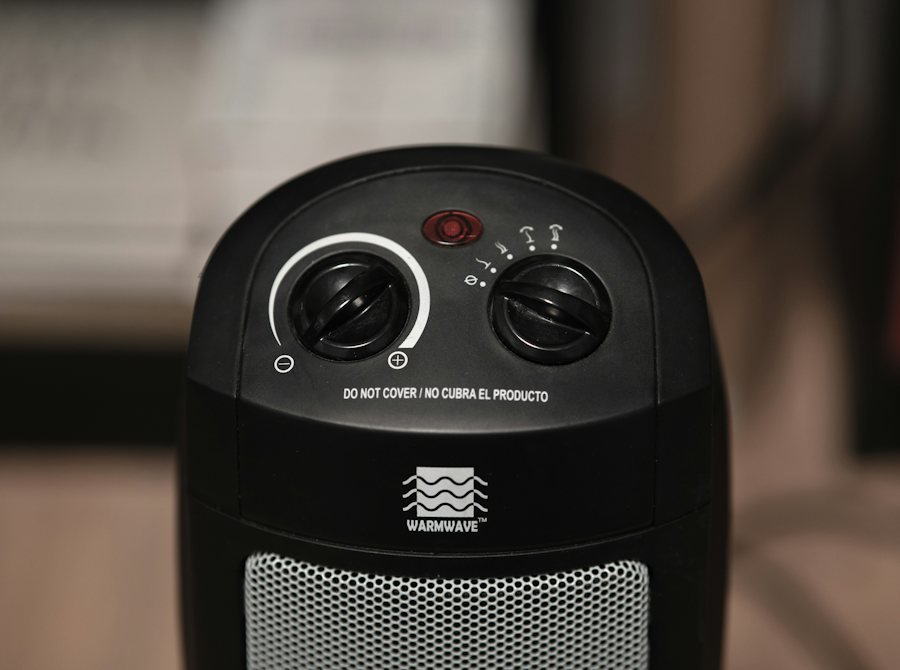
Same heater, same cycling, but a 31-cent rate and eight overnight hours. Six kWh a night comes to $1.86, or $55.80 a month. Over a four-month winter, that bedroom adds about $223 to the bill. In a high-rate state, the heater’s hourly cost nearly doubles even though nothing about the heater changed.
Overnight use also raises the safety stakes. The Department of Energy’s Energy Saver guidance says to buy a heater with a UL label and a tip-over safety switch and to plug electric units directly into a wall outlet. A bedroom heater should meet all three, and it should sit on a level floor well away from bedding and curtains.
Space heaters and heating stoves were involved in 29 percent of the 38,881 home heating fires U.S. fire departments responded to each year from 2019 to 2023.
NFPA findings, as summarized by ANSI in February 2025
The Washington weekend garage: pocket change
An uninsulated garage is a terrible place to keep heat, so the heater runs flat out with no cycling. It barely matters. Eight hours of weekend tinkering at 1.5 kW is 12 kWh, and at Washington’s 14-cent rate that is $1.68 a weekend, around $7.30 a month. Low hours forgive a lot of inefficiency.
The same logic flips once the space gets daily use. If a garage, sunroom or bonus room is becoming a full-time office, the heater is treating a symptom. Air leaks and thin ceilings are the usual cause, and what attic insulation costs to top up is often less than two winters of running a heater nonstop.
The Ohio house with a dead furnace: nearly $300 a month
This is the scenario where portable heat gets expensive. Three heaters covering a living room and two bedrooms, twelve hours a day at full power because the rest of the house is cold, adds up to 54 kWh daily. At 18 cents, that is $9.72 a day and $291.60 a month. Stretch it across a whole winter and you are near $1,460, and those three heaters still will not keep the pipes in an empty kitchen safe.
The reason is the price of each unit of heat. Omni Calculator’s October 2026 analysis puts resistance heat at about $52 per million Btu, against roughly $15.25 for a 95 percent efficient gas furnace and $17.40 for an air-source heat pump. As a whole-house plan, space heaters cost about three times as much per unit of warmth. If a repair is the holdup, check what common furnace repairs cost, since an igniter or flame sensor often costs less than a month of this.
Why a $36 heater and a $70 heater cost the same to run
Every plug-in resistance heater turns electricity into heat at essentially the same rate, so a 1,500-watt model produces the same warmth per kilowatt-hour whatever it cost. At Home Depot, a Lasko 1,500-watt tabletop ceramic heater lists at $36.43. Lasko’s 11.25-inch oscillating 5409 sells for $53.99, and an oscillating ceramic tower, the LKO-5521, was $69.22 when we checked.
What the extra money buys is control and comfort: a digital thermostat that holds a set temperature instead of running full tilt, a timer, oscillation that spreads warmth, and a quieter fan. The thermostat is the one feature that changes your bill, because it decides how many of those eight plugged-in hours are real draw. Marketing claims of heaters that “cut your bill in half” are about lowering the central thermostat, not about the heater being special.
When the heater beats the furnace, and when it loses
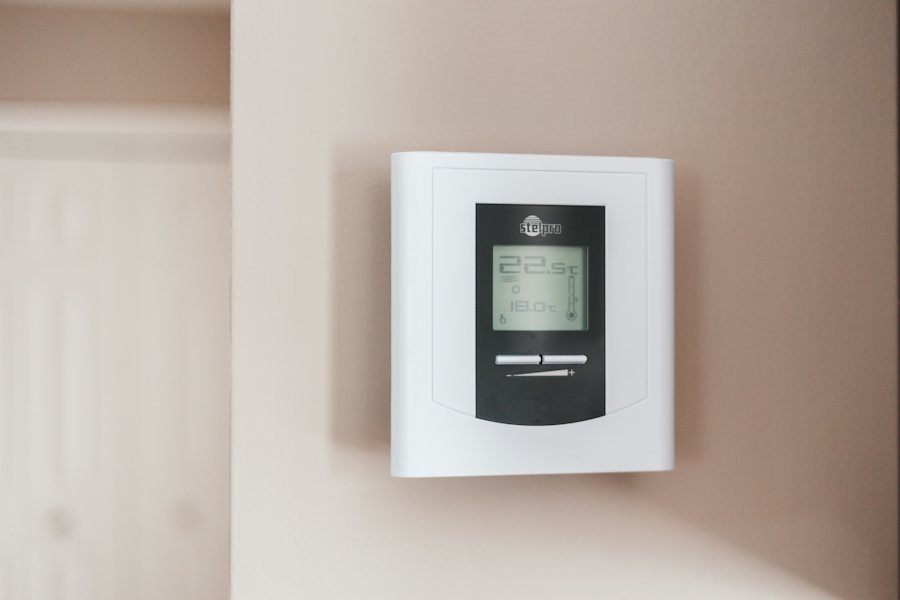
The Energy Department’s position is measured: small heaters “can be less expensive to use if you only want to heat one room,” but electric units can cost more to operate than combustion heaters. Omni’s numbers show both halves. One heater warming a room for an eight-hour evening cost about $2.14 at a 17.83-cent rate, while an 80,000 Btu furnace cycling 40 percent of the time ran about 49 cents an hour, or around $3.90 for the same evening.
The heater usually wins when…
- One or two people use one room for a few hours and the rest of the house is set back.
- The room is small and closes off with a door.
- Your electric rate is near or below the national average.
The heater usually loses when…
- You run several at once to heat most of the house.
- The furnace or heat pump stays at its usual setting anyway.
- You live in a high-rate state such as Hawaii, California or Massachusetts, where rates run 30 cents and up.
For 2027, rates are expected to keep climbing slowly. The EIA’s outlook has the average residential price rising from 17.3 cents in 2025 to 18.2 cents in 2026 and 18.7 cents in 2027. On a 1,500-watt heater that is less than a penny an hour of difference, but over a season of heavy use it adds up. If you find yourself pricing heaters for every room, it may be time to look at what a new HVAC system costs for a typical home.
Five checks for a cheaper, safer heater season
- Find your all-in rate per kWh on a recent bill and multiply by 1.5 to get your true hourly cost on high.
- Buy a model with an adjustable thermostat, a UL label and a tip-over switch; skip models without them, however cheap.
- Turn the central thermostat down whenever the space heater is on, or the heater is a cost, not a saving.
- Close the door to the room you are heating and run the heater on low once the room is warm.
- Plug it straight into a wall outlet and never leave it running in an empty room.
Other questions about space heater electricity costs
Is it cheaper to run a space heater on low?
Yes, per hour. HomeGuide’s table shows a 750-watt setting costing about $0.13 an hour at a 17-cent rate, half the $0.26 of a 1,500-watt setting. In a cold room, though, the low setting may need to run longer to reach the same temperature.
How much does it cost to run a space heater for 24 hours?
A 1,500-watt heater running nonstop uses 36 kWh a day. At the EIA’s projected 2027 average of 18.7 cents per kWh, that is about $6.73 a day, before any thermostat cycling.
Are oil-filled radiators cheaper to run than ceramic heaters?
Not per kilowatt-hour; a 1,500-watt oil-filled unit and a 1,500-watt ceramic unit draw the same power on high. Oil-filled models hold heat and release it slowly, which suits long, steady use, while fan-forced ceramic models warm a room faster for short sessions.
Can I plug a space heater into an extension cord or power strip?
The Department of Energy says electric space heaters should be plugged directly into a wall outlet. If a cord is unavoidable, it recommends the shortest possible heavy-duty cord of 14-gauge wire or larger.
Rate and price sources
- Short-Term Energy Outlook: Electricity, Coal, and Renewables, U.S. Energy Information Administration (October 6, 2026)
- Small Space Heaters, U.S. Department of Energy, Energy Saver
- Heating one room with a space heater costs $2.14 a night. Your furnace costs nearly twice that, Omni Calculator (October 16, 2026)
- Cost to Run a Space Heater, HomeGuide
- Here’s where Americans pay the most, and least, for electricity, FOX 5 New York (March 16, 2026)
- How Much Does Electricity Cost? 2026 Electric Rate Data, SolarReviews (2026)
- Lasko 1500-Watt 9.2 in. Electric Forced Air Ceramic Tabletop Space Heater 754200, The Home Depot (price checked November 2026)
- NFPA Releases Findings on Home Heating Fires, American National Standards Institute (February 6, 2025)
Next reads for a warmer, cheaper winter
- HVAC replacement cost calculator
- HVAC repair cost vs a new system
- Blown-in insulation cost
- Crawl space insulation cost
- Wood stove installation cost
- Geothermal heating cost and payback
- Home improvement costs in 2027: the complete guide
Pricing method: prices and electricity rates were researched in November 2026 for 2027 planning and may change. Household examples are hypothetical and use the state rates shown; your utility’s rate and your heater’s settings will change the result. See our disclaimer.